

If you’ve ever driven through Sneedville, a small town in East Tennessee, you know exactly what kind of place it is. Everyone knows your last name, Sunday church attendance is required, and a child with a strong pitching arm is practically considered local royalty. That’s where Morgan Wallen was raised, and knowing where he came from makes his path—education included—feel much less unexpected than people think.
On the surface, Morgan Wallen’s formal education took a rather typical course. Tommy and Lesli Wallen welcomed him into the world on May 13, 1993. His mother was a schoolteacher, and his father was a pastor. Wallen attended Gibbs High School in Corryton, Tennessee, after the family moved to Knox County when he was a teenager. In 2011, he received his degree. His academic background is limited to that, and he would likely be the first to tell you so without feeling ashamed.
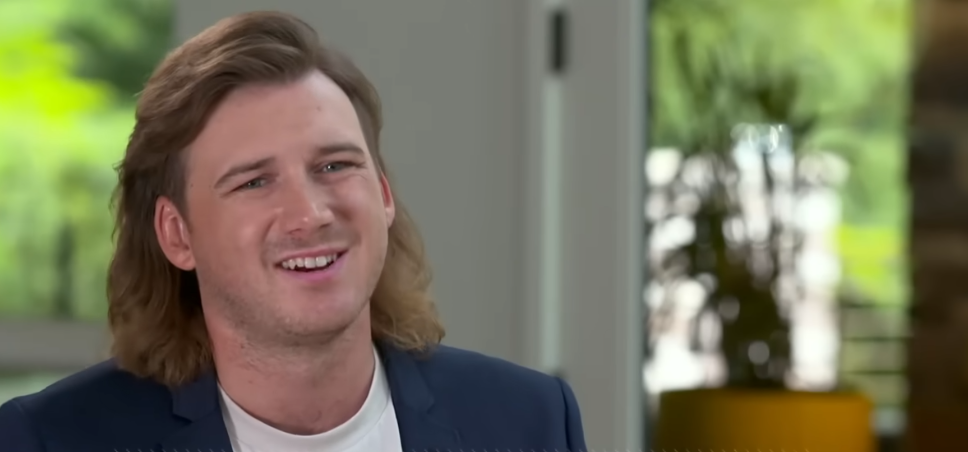
But it wasn’t academics that gave his time at Gibbs significance. Baseball was the game. By his senior year, Wallen had developed to the point where college scouts were interested in him as a pitcher and shortstop. Being a teenage athlete in a small town comes with a certain kind of ambition: the idea that sport is the ladder out, the thing that shapes the future. That was Wallen’s goal. He played with such seriousness that it was evident. The ladder vanished after he tore his ulnar collateral ligament during his senior year.
It’s difficult not to see that injury as one of those odd turning points that subtly changes everything. There was no college scholarship awarded. There was absolutely no college that followed. After graduating, Wallen found himself working in landscaping, which must have been extremely confusing for someone who had built his entire identity around baseball. He has described that time in his life as “adrift,” and when you say that about someone who would go on to break Billboard records, it carries weight.
But music had always been close by. Wallen had taken violin and piano lessons as a child. As early as age three, he learned three-part harmonies with his younger sisters while singing at his father’s church. He was drawn to Breaking Benjamin, Nickelback, and Lil Wayne when he was a teenager; this disorganized combination reveals something genuine about how his ear was growing. He returned to everything after the injury. He took the guitar seriously. He started basing his sound on musicians like Eric Church and Keith Whitley, who were aware of how powerful country music can be.
He was trying out for The Voice by 2014. He released his debut album in 2018. He was selling out arenas by 2023 and “Last Night” was at the top of every major American chart. There was no diploma attached to any of that.
Interestingly, Wallen has returned to Gibbs High School as a patron and symbol rather than as a student. His foundation gave the school $1.2 million for a cutting-edge sports complex in April 2026. Previous contributions had already paid for a local youth sports complex, baseball upgrades, and band programs. Morgan Wallen Field is the new name for the school’s baseball field. Wallen continues to wear a Gibbs Eagles jersey to concerts, according to a principal who cited his career achievements and charitable contributions as the reason for the honor.
All of that is sincere, and it doesn’t seem like a publicity stunt. It seems more like a man who is still thinking about the exact beginning of his story—a ripped ligament, a church pew, or a guitar he picked up out of need. The majority of Morgan Wallen’s formal and informal education took place outside of classrooms. It just so happened to result in something that no curriculum could have anticipated.
