

Approximately 32% of teenagers in the United States fit the description of an anxiety disorder. Nobody outside of the clinical psychology community has given much thought to that figure, which has been sitting in the research literature for years.
However, the American Psychological Association has begun to make a stronger statement that breaks through the typical academic hedging: what’s happening to American children today isn’t a phase that will pass, something they’ll outgrow, or a problem that families and schools can discreetly handle on their own. A federal response is required. Whether Washington is truly paying attention is the question.
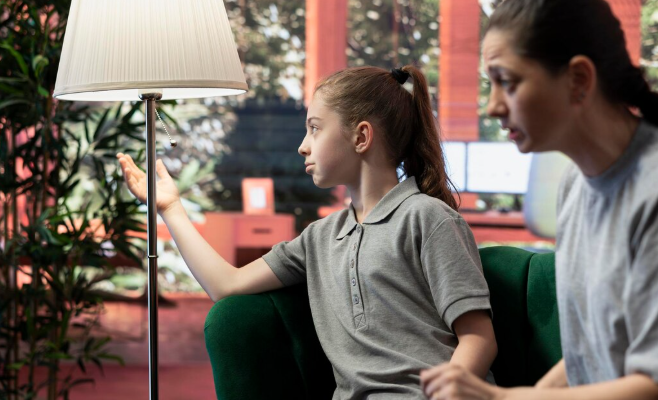
Witnessing a seven-year-old decline to attend a birthday celebration is a unique form of heartache. The anticipation of it—the strangers, the noise, the loss of control—has become truly intolerable, not because she is shy per se. This is a common sight for clinicians. When parents notice it, they frequently believe it’s a phase, a quirk, or something that will go away by middle school. However, the data gathered from decades of long-term research indicates otherwise. Childhood anxiety usually doesn’t go away without help. It changes into substance abuse, depression, dysfunctional relationships, and in the worst situations, suicidality.
Golda Ginsburg, a psychologist at the University of Connecticut Health, has spent years pointing out that the majority of children with anxiety disorders never receive any treatment at all. That is a significant care gap. That is a systemic failure that goes unnoticed. Anxiety manifests differently in children than in adults, which contributes to the issue. Examples include stomachaches prior to school, clinging at drop-off, and a persistent refusal to interact with anything unfamiliar. Instructors confuse it with behavioral issues. Sometimes pediatricians completely overlook it. Additionally, parents frequently attempt to smooth the edges rather than address the core because they are torn between instinct and fatigue.
This research on parenting styles is truly unsettling to read. According to studies, well-intentioned parents who take away every source of conflict in their child’s life—such as negotiating with teachers or removing potentially uncomfortable social situations—can eventually make anxiety worse. The child never learns that it’s okay to be uncomfortable. The paradox is nearly intolerable: the more protective the parent, the more nervous the child may become. In lab settings, behaviorally inhibited toddlers were physically prevented from exploring their surroundings by their parents, according to psychologist Kenneth Rubin. He referred to it as “warm bubble wrap.” It’s hard to hear that phrase without thinking of whole generations who grew up with it.
The directness of the APA’s current stance is what makes it important. Research consistently shows that cognitive behavioral therapy is effective. Approximately 80% of children receiving a combination of CBT and medication demonstrated significant improvement, according to a large multisite study. However, access to evidence-based treatment is still incredibly uneven, concentrated in cities, reliant on insurance, and frequently postponed for years after the onset. About eleven is the median age at which anxiety first manifests. Many kids don’t see a specialist until much later in high school, if at all.
The precise form of a federal response is still unknown. It seems obvious that school-based mental health programs should be expanded, and some pilot projects have shown great promise. Early results of prevention programs aimed at children of anxious parents, who are clearly at higher risk, have been startling. One study found that a relatively short intervention reduced the number of new anxiety diagnoses from 30% in a control group to 5%. Such findings ought to be sparking large-scale policy discussions. Most of the time, it hasn’t.
Speaking with professionals in this field gives the impression that they have been waiting a long time to be taken seriously. There is science. There is documentation of the need. The political will to address childhood anxiety as the public health emergency it already is—and has been, covertly, for decades—has been lacking.
