

There was a Tom Brady who was virtually nonexistent. Not the seven-time Super Bowl champion, not the man with more rings than fingers on one hand, but the one who was so defeated by two years of spectating from the sidelines that he almost left Michigan to transfer to California. The most crucial chapter in comprehending Brady’s development is likely that version of him—the irritated, disregarded backup on one of the top programs in the country.
Brady was raised in San Mateo, California, a suburb of Northern California where 49ers fans were fervent. He went to Junípero Serra High School, which would later name its football stadium in his honor. However, no one could have predicted that when he started as a backup on a junior varsity team that had finished 0-8 and failed to score a touchdown all season. In the end, he became a varsity starter, threw for more than 3,700 yards, was named All-State, and, since there was no other option in 1995, sent highlight tapes to college programs via actual mail.
Brady’s early education is remarkable for more reasons than just what he learned on the field. By all accounts, he was a true multi-sport athlete. His left-handed catching ability impressed enough Montreal Expos baseball scouts to select him in the 18th round. According to reports, the team’s general manager thought Brady had a chance to become one of the greatest catchers in history. Instead, he went with football, specifically Michigan, and it’s worth considering the implications of that choice. When faced with two completely different futures, an adolescent chose the more difficult path.
It wasn’t easy at the University of Michigan. After redshirting his first year after moving to Ann Arbor in 1995, Brady watched Brian Griese lead the Wolverines to an undefeated season and a share of the national championship for two seasons. At one point, Brady was ranked seventh on the depth chart. Seventh. In order to deal with the frustration, he hired a sports psychologist, a choice that, in retrospect, shows something about his self-awareness even at the time. In order to boost his confidence, he met with assistant athletic director Greg Harden once a week. Later, Brady told 60 Minutes that Harden assisted him in overcoming personal challenges unrelated to football.
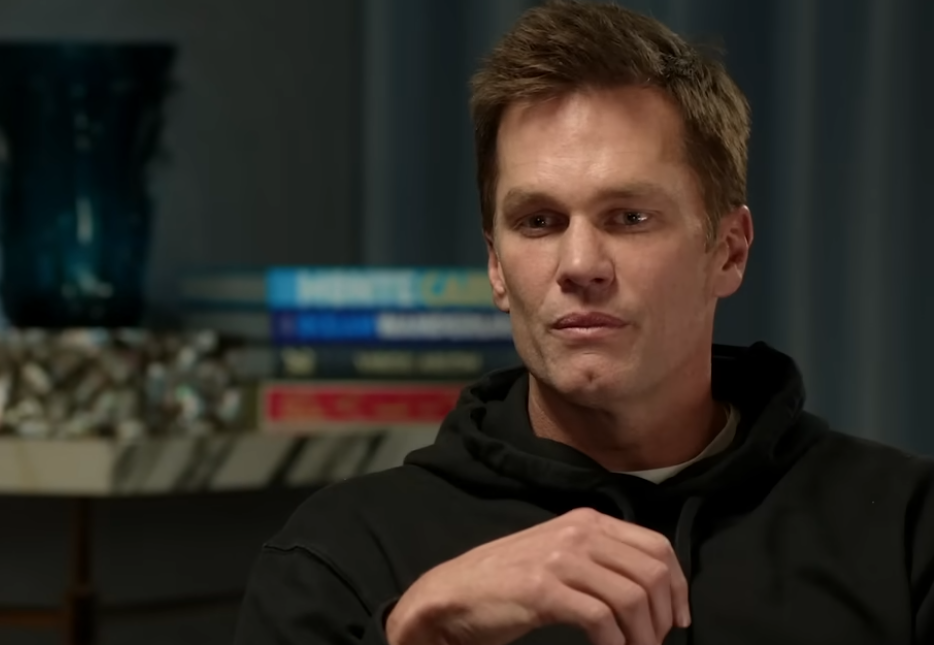
It’s difficult to ignore how influential that time of near-invisibility must have been. No whiteboard was used to illustrate the lessons. They came from choosing to stay when it would have been simpler to leave, from riding the bench, and from seeing others gain attention. While still a college student, Brady worked as an intern at Merrill Lynch during the summers of 1998 and 1999. Although this detail is often overlooked in favor of Super Bowl highlights, it reveals something genuine about his outlook on the future. He wasn’t relying solely on football.
Brady responded with precisely the kind of clutch performances that would later define his professional reputation when he did start, during his junior and senior seasons. Two comebacks in the fourth quarter. a Citrus Bowl victory of 45-31. He recovered from two 14-point deficits and threw for 369 yards and four touchdowns in the Orange Bowl’s spectacular overtime victory over Alabama. He earned a Bachelor of Arts in General Studies in December 1999. Perhaps it wasn’t a glamorous degree, but he completed it quietly and with little fanfare.
Brady was once again informed by the NFL Draft that he wasn’t highly desired. His average arm, slow forty-time, and unimpressive vertical were all noted by scouts at the combine. He was eliminated in the sixth round, ranking 199th overall. The majority of players who are taken that late are afterthoughts. The reason the sixth round is still discussed at all is because of Brady.
Brady’s education, both formal and informal, seems to have focused more on endurance than knowledge. The student mailing tapes from high school. To maintain his composure, the Michigan backup is seeing a psychologist. The intern at Merrill Lynch is open-minded. When a Patriots quarterback suffered an injury in 2001, a young man no one had really chosen took the field and never looked back. All of this was quietly creating something that would eventually come to light.
