

A version of the Ozzy Osbourne tale starts with Black Sabbath, featuring Randy Rhoads, bat-biting, stadium-filling, and reality TV. However, the true story, which explains nearly everything, starts much earlier, in a small two-bedroom home on Lodge Road in Aston, Birmingham, where a dyslexic boy with a nervous energy and no clear future was silently attempting to figure out where he fit.
Growing up in working-class Birmingham in the late 1940s and early 1950s, John Michael Osbourne—nicknamed Ozzy since he was a young boy—was surrounded by factory shifts, limited resources, and low expectations. His father was a toolmaker who worked nights at the General Electric Company. His mother worked long hours at a Lucas factory. The tiny house was occupied by six people. No one was discussing world tours or record deals. More pressing was the question of what trade the boy would learn and whether he would be able to learn it at all.
By most conventional standards, Ozzy Osbourne’s formal education was difficult. He dealt with dyslexia during a period when schools had little to say about it, let alone organized assistance. Teachers in 1950s Birmingham would not have known that what appeared to be inattention or stubbornness was probably a brain that processed words differently. His involvement in school productions, such as Gilbert and Sullivan’s The Mikado and H.M.S. Pinafore, suggests that he felt at ease performing, being observed, and experiencing the peculiar intimacy of an audience. He might have only felt present in that classroom.
At fifteen, he dropped out of school. No trade, no diploma, no obvious way forward. The jobs that followed read almost like a dark comedy: construction worker, trainee plumber, apprentice toolmaker, car factory horn-tuner, and slaughterhouse worker. Every one of them represented a unique learning experience and a daily struggle with the harsh, physical realities of working-class existence. At sixteen, standing in a slaughterhouse teaches you something about the world that no textbook can. It’s difficult to say for sure if that knowledge influenced the weight he would later put into his music. However, it’s difficult to ignore the connection.
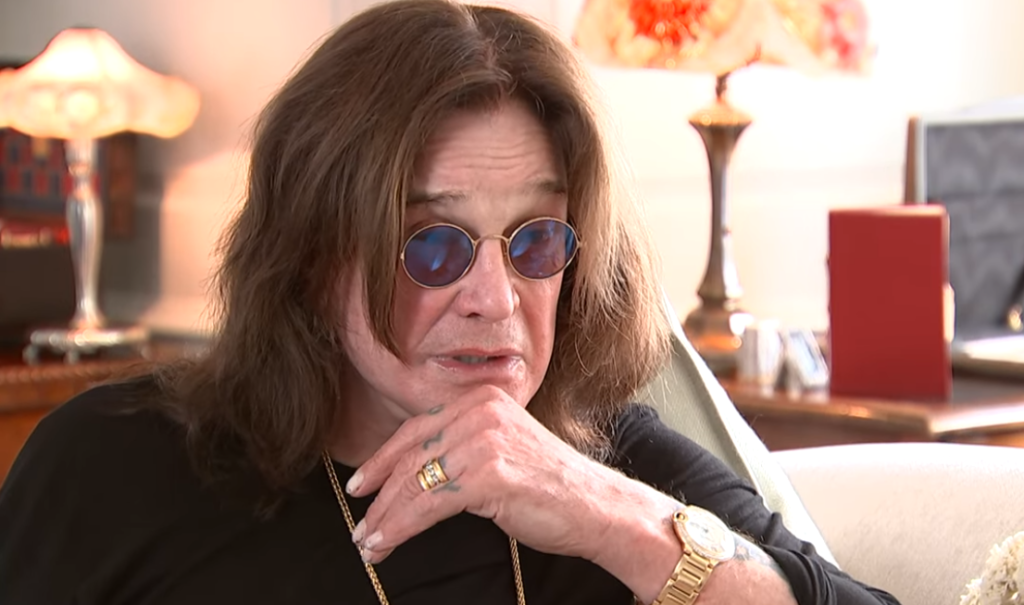
Then came the moment that completely altered the course. When he first heard “She Loves You” by the Beatles at the age of 14, something changed. He later claimed in the 2011 documentary God Bless Ozzy Osbourne that he realized at that moment that he would spend the rest of his life as a rock star. That’s the kind of belief that seems absurd until it proves to be accurate. After hearing John Lennon while working the slaughterhouse circuit, a dyslexic child from Aston decided, “That’s it, that’s the thing.” It has an almost ridiculous quality, but it also makes perfect sense.
He was found guilty of robbing a clothing store at the age of 17. Osbourne spent six weeks in Winson Green Prison after his father purposefully refused to pay the fine in order to teach him a lesson. That was also a unique kind of education. He emerged and continued to move. In a matter of years, he was performing in bands, literally discovering his voice, and working toward something for which formal education had provided him with no guidance at all.
He was a co-founder of Black Sabbath by 1968. He was packing arenas by the 1970s. He sold albums that would eventually surpass 100 million copies collectively, making him one of the most well-known musicians in the world by the 1980s. In 2006, he was inducted into the Rock and Roll Hall of Fame with Black Sabbath, and in 2024, he was inducted as a solo artist. The Ivor Novello Lifetime Achievement Award was given to him. The Hollywood Walk of Fame features a star for him.
A boy with dyslexia and a criminal record who dropped out of school at age 15 was not supposed to experience any of that. Perhaps the most intriguing aspect of Ozzy Osbourne’s education is that it took place completely on terms that were neither planned nor authorized by any institution. He was roughly, unevenly, and occasionally brutally educated by life. In the only classroom he could attend, he paid attention.
