

A three-year-old in a Nashville preschool classroom goes silent for a brief period of time, which is easy to miss if you’re not paying close attention. A patient assistant, who keeps a steadying hand close to her shoulder, has adjusted her headset twice because it is a little too big for her face. She is no longer in her classroom on the screen within that headset. She is maneuvering through a hallway that is too small for her wheelchair. There is no confusion in the silence that ensues. It’s more in line with comprehension.
Early childhood education programs in Nashville have been discreetly implementing pilot programs that use virtual reality to help children between the ages of three and five develop empathy. VR for toddlers, a group still figuring out how doors and shoe buckles work, seems almost ridiculous at first. However, it’s important to pay attention to why the educators behind these pilots seem genuinely convinced they’re onto something.
It’s a simple theory. Developmental researchers have long maintained that empathy is more than just an emotional ability that develops on its own. It develops through exposure, experience, and putting the brain in circumstances outside of its comfort zone, even through simulation. Stories and role-playing are two ways that traditional classroom resources can engage kids. When VR works well, it does something a little different. It substitutes presence for narration. A peer who uses a mobility aid is not disclosed to the child. She is walking through that hallway by herself for ninety seconds.
Some of the Nashville-based initiatives are linked to more extensive platforms for coaching and observation, which are already in use throughout Tennessee to monitor and improve teacher practice. This is not the first time that technology has been incorporated into early childhood development. The goal is different: integrating that technology into children’s real-world experiences as well as how teachers instruct. Researchers are still figuring out how to measure that important step.
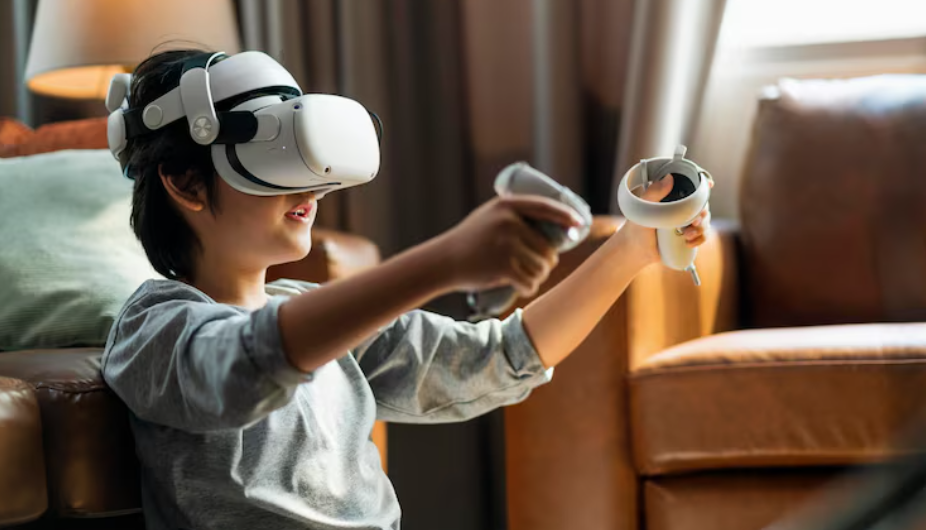
The extent to which a three-year-old’s processing of a virtual reality scenario results in long-lasting behavioral change is still unknown. In terms of development, children at this age are exceptional, developing social wiring at a rate that sharply slows down after early childhood. Teachers are drawn to the experiment in part because of this urgency. The window is actually quite small. There’s a sense that the educators participating in these pilots are aware that they’re working against a clock that most parents haven’t considered.
There are legitimate issues that need to be acknowledged. Pediatric researchers continue to disagree about screen time for very young children, and headsets—even the lighter models made for smaller users—introduce physical factors that longer-term studies haven’t addressed. Some child development experts are still dubious about the idea that immersive simulation is suitable for brains that are still developing their most fundamental conceptions of reality, rather than empathy education in general.
And yet. The kids themselves appear strangely unconcerned. Like kids, they quickly adjust, navigating virtual worlds with the same casual acceptance that they apply to everything new. The questions a three-year-old asks when the headset is removed are what remain with the adults in the room. Why was that difficult? Why was she unable to connect? Can we assist?
These are not insignificant questions. They may be precisely the point, in fact. Preschool VR trials in Nashville are preliminary, flawed, and likely costly to expand. However, the kids posing those queries aren’t holding out for the research to catch up. They’re thinking already.
