

Seeing the terms “LEGO” and “humanitarian crisis” in the same sentence is almost disorienting. The brand evokes images of vivid plastic bricks, instruction manuals strewn all over living room floors, and perhaps a painful foot in the dark. But for the past forty years, the organization behind those bricks has been quietly constructing something much more significant and less colorful, and its most recent action may be the most audacious to date.
The LEGO Foundation Fellowship, a new international research program that offers up to ten early- and mid-career researchers USD 300,000 each over three years, was announced on June 1, 2026, by the philanthropic arm of the family behind the toy empire, which is based in the small Danish town of Billund. That amounts to about $3 million in flexible research funding, which is managed by the Social Science Research Council in New York and is specifically focused on figuring out how kids flourish in situations where it seems almost impossible. Applications close on July 31, 2026, and the fellowship period runs from early 2027 to the end of 2029.
It’s not just the money that sets this apart from a standard academic grant. It’s the main point. The fellowship focuses on three areas that seem remarkably specific for a toy-related foundation: how children learn and grow in a world increasingly shaped by artificial intelligence; children caught in crisis and conflict settings; and the inclusion and wellbeing of neurodivergent children. Every theme has a distinct weight. When combined, they create an image of childhood that is very different from the one found on a LEGO box.
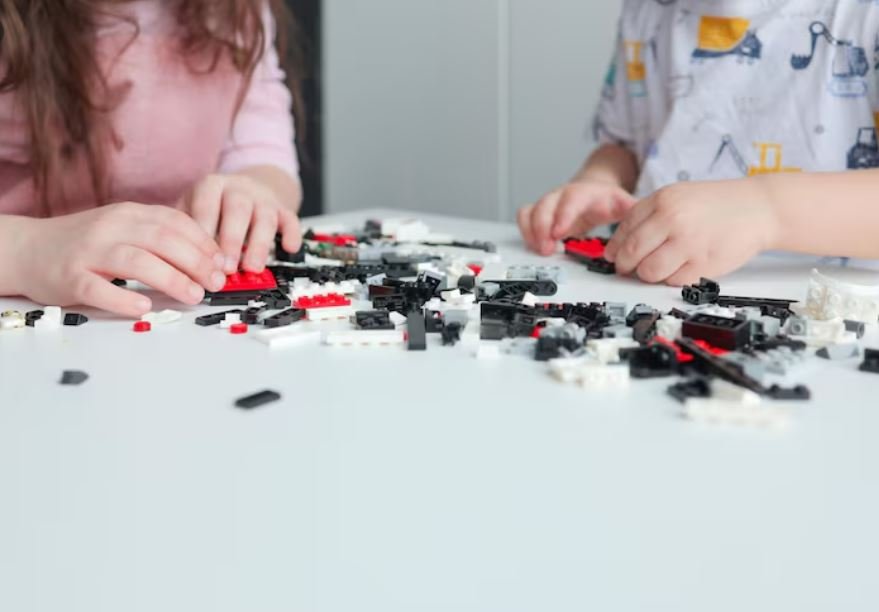
The first theme focuses on the youngest children, from birth to age eight, who are affected by prolonged displacement, humanitarian crises, and the gradual deterioration of stability that follows conflict. Researchers may look into how to scale interventions that are effective in refugee camps and host communities, resilience mechanisms, or providing care under extreme stress. There is little proof in this area, and the stakes are very high. “Play” is not a luxury in displacement camps, as anyone who has been close to one will attest. For kids, it’s frequently the only remaining structure.
Autism and ADHD are the main topics of the second area, neurodivergent children. The fellowship encourages work on pre-diagnosis, inclusive classrooms, family environments, and the challenging transitions that can shatter a child’s sense of belonging, such as starting school, switching schools, and entering adolescence. The idea that neurodivergent children require more than just accommodations is becoming more widely acknowledged, though it is still uneven and incomplete. They require a fundamental rethinking of systems that were never intended for them.
AI comes next. AI as it permeates children’s everyday lives, influencing how they learn, interact with adults, and effectively tackle challenging issues—not AI in the abstract, buzzing Silicon Valley sense. Researchers are asked by the fellowship to investigate the effects of algorithms mediating an increasing amount of a child’s experience on social and emotional development. The majority of tech companies don’t seem interested in providing an honest response to this question.
According to Joe Savage, Vice President of Impact and Evidence at the LEGO Foundation, the fellowship is “an invitation to researchers around the world to help build the evidence needed to improve the future of childhood.” The language is meticulous, methodical, and bordering on bureaucratic. However, there is a lot of ambition behind it. In honor of the foundation’s 40th anniversary, this program is searching for individuals who don’t neatly fit into a single academic lane across a variety of disciplines, including psychology, neuroscience, data science, economics, disability studies, and humanitarian research.
It’s possible that a few hundred thousand dollars for each researcher won’t be sufficient to change how organizations view children in crisis, neurodivergent students, or the pernicious effects of artificial intelligence on developing brains. These are huge, complex issues. However, there are some noteworthy aspects of the approach, such as flexible funding, openness across disciplines, and a cohort model that prioritizes exchange over isolation. It seems less like a conventional grant and more like a conscious effort to create a network of individuals who are posing more challenging questions than those that are currently receiving funding.
For forty years, the LEGO Foundation has maintained that play is a serious business. They seem to mean it based on this fellowship.
