

Like many things, it began with an unexpected question. “Grandma, what exactly are children’s rights?” The adults in the room most likely hesitated a beat too long before responding to a question posed by a child in The Hague sometime around 2024. That hesitation and pause turned into the beginning of something much more than a family discussion. It evolved into the Global Children’s Rights Online Project, an initiative that is currently working toward what its founders refer to as the International Online Children’s Rights Museum, which is scheduled to open in 2026. The project has discreetly collected drawings, words, and observations from children of more than twenty nationalities.
The idea is surprisingly straightforward. Children should be asked to illustrate what their rights mean to them. Allow them to speak in their own words. Then treat those drawings seriously as authentic representations of how young people perceive their place in the world, not as ornamentation or classroom chores. The Hague-based coordinators of the project, Mary Boon and Juultje Harmsen, began with fifty-four kids from twenty different countries. Eventually, the resulting book, Children’s Rights Seen Through Children’s Eyes, was given to UN employees. Not in a novel way. as proof.
Seeing international organizations treat a book of crayon drawings with the same seriousness they might a policy white paper is both endearing and a little unsettling. However, that tension is precisely what’s intended. Most adults are unable to name five of the fifty-four articles that make up the UN Convention on the Rights of the Child. In the meantime, a six-year-old in Amsterdam drew a picture of a house with an open door and wrote in shaky handwriting that all children should have a safe place. It’s difficult to ignore how much clearer the child’s version is than the legal text.
This was not the first effort to close the gap between adult policy language and children’s comprehension. The Children’s Rights Center at Cape Breton University created the coloring book Color it Rights in 2009 for kids between the ages of four and seven. With simplified language for teachers to read aloud, each illustration related to a particular UNCRC article. One of the first resources for preliterate children, it was funded by the Canadian government and filled a gap that most educators hadn’t even realized existed. The accompanying teacher’s guide was realistic, grounded, and modest. No technical terms, no lofty pedagogical claims. Just talking and crayons.
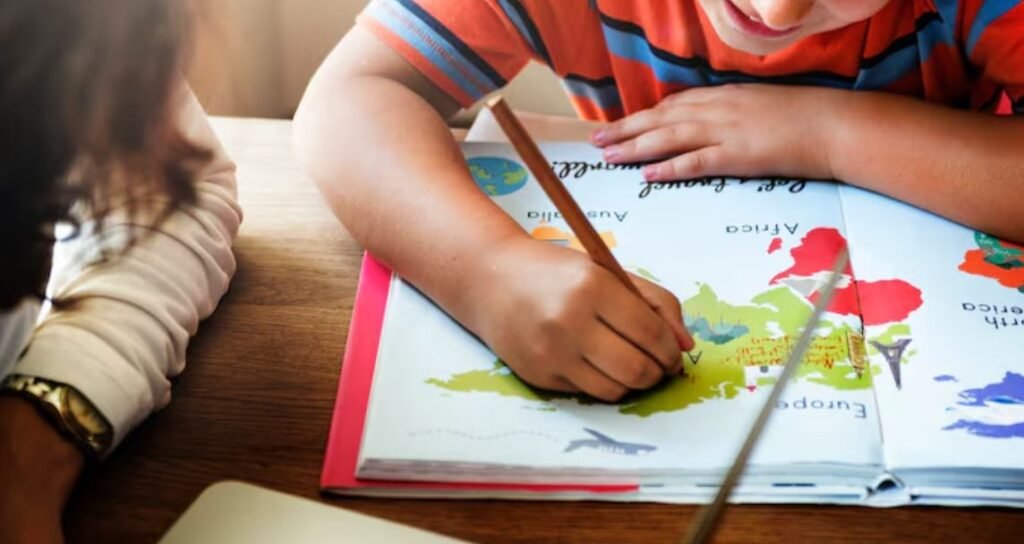
The scale and ambition of the more recent Global Children’s Rights Online Project are what set it apart. There will be more than just drawings archived in the proposed virtual museum. It will arrange them according to nationality, ethnicity, and the child’s own perception, producing something that resembles a living survey of how childhood is experienced worldwide. Through virtual tours, visitors will be able to see the same rights filtered through radically different everyday realities as they move from a drawing created in Nairobi to one created in Rotterdam. It’s unclear if legislators will truly use this as a consultation tool. However, the infrastructure is being constructed as if they will.
Organizations that encourage children to express themselves through art and storytelling include OMEP, KidsRights, and Save the Children. Since at least 2022, the Kids 4 Human Rights competition has specifically sought to empower students via artistic expression. In 2025, Open Global Rights released a study that examined children’s perceptions of their own economic status, treating young voices as data that should be examined rather than as sentimental ornamentation. Advocates for children’s rights are beginning to believe that consultation with children shouldn’t be an afterthought added to frameworks created by adults. It ought to be the beginning.
However, skepticism is not irrational. Power structures don’t usually change because a seven-year-old picked up a green marker, despite the power of drawings. Whether children’s art can maintain its emotional clarity in the face of institutional bureaucracy is the true question that looms over all of this. Whether a virtual museum turns into a legitimate resource for policy debates or just a well-intentioned archive that officials visit once and then move on. The Hague’s founders appear to think the former is feasible. They might be correct, given how the project has grown from a single grandmother’s kitchen table to a presentation at the UN. However, advocacy for children’s rights has a long history of evoking sentiment rather than action, and possibility and certainty are two very different things.
