

Entering a Spanish preschool classroom in 2026 and discovering a shiny interactive display on the wall, a cart of fully charged tablets, and a single overworked teacher attempting to supervise twenty-three four-year-olds who, to be honest, would much rather stack blocks is almost comical. The screens are brand-new. They are not the staffing ratios. The World Organization for Early Childhood Education’s Spanish chapter, OMEP Spain, has been raising an issue that no one in the Ministry of Education seems eager to address: why has the government spent significantly more money on digital gadgets than on the teachers of young children?
It’s difficult to dispute the numbers. The government of Spain set aside about €996 million to equip classrooms with gadgets and interactive digital systems under the DigEdu Plan, which is a component of the larger Digital Spain 2026 agenda. This included €150 million for portable devices intended to bridge the so-called “digital gap” and €827 million for the installation and updating of screens in over 240,000 classrooms. In the meantime, €19 million was allocated to the budget line for instructing teachers on how to operate that equipment. Not a typo. Nineteen million people, dispersed throughout the seventeen independent communities. It’s the type of ratio that prompts you to stop and go over the spreadsheet again.
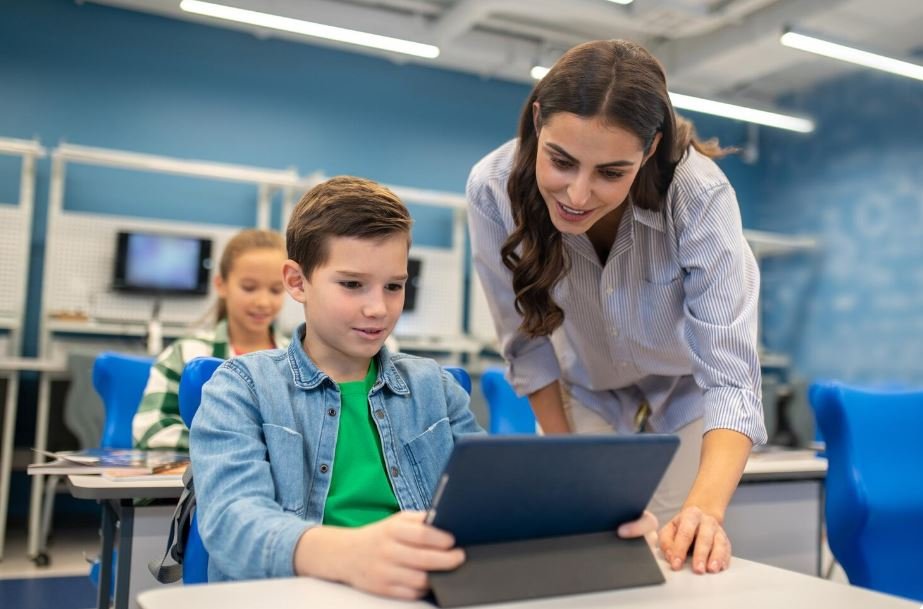
However, OMEP Spain’s concerns extend beyond training spending. The organization has long maintained that there is a structural issue with early childhood education because the nation views preschool as a service industry rather than a profession that requires significant investment in human resources. Reducing group sizes, increasing salaries to competitive levels, and hiring more qualified educators have not garnered nearly the same political fervor as device procurement. Purchasing tablets is visually appealing. Staff-to-child ratio adjustments are not.
Of course, Spain isn’t the only country doing this. The post-pandemic push for digitization in Europe led to a sort of “gold rush” mentality regarding spending on educational technology. A pallet of Chromebooks arriving at a school loading dock is far more appealing to governments seeking tangible evidence of modernization than a revised curriculum for the early years. However, because of the concurrent events on the restriction side, OMEP’s complaint has a stronger edge in Spain. Recently, the Community of Madrid decided to restrict screen time to two hours per week and outlaw the use of individual tablets and smartphones in elementary schools. Therefore, the nation finds itself in a peculiar situation where it is spending huge sums of money to equip classrooms with technology while simultaneously enacting regulations to prevent kids from using it freely. There is a whiplash.
The sentiment was aptly expressed by the Spanish education nonprofit Fundación Parentes, which observed that technology entered classrooms “without preparation, without adequate teacher training, and without deep reflection.” The notebook was replaced by the tablet, but teaching methods remained unchanged. Innovation remained purely aesthetic. Additionally, the disparity between hardware and human investment feels particularly stark in preschool environments, where the developmental relationships between adults and children are more important than in any other stage of education.
All of this contains a generational irony. According to data published by Fortune, one in five toddlers in Spain who are three or four years old own a smartphone. Preschoolers are coming in well-versed in screens. They require a trained, well-supported adult in the classroom who can help them develop language, control their emotions, and navigate social situations—things that no app has been able to teach. This is something that OMEP Spain frequently states in reports and at conferences. It’s genuinely unclear if anyone with budgetary authority is paying attention.
Spain might eventually change its direction. The screens are already bolted to the walls, and the device spending has already been completed. Preschool teachers will either be treated as the infrastructure they truly are in the next round of education funding, or the profession will continue to be subtly undervalued while the hardware shines. The direct question posed by OMEP merits a direct response. It hasn’t received one yet.
