

A four-year-old is learning how to fold paper cranes in a classroom somewhere in Valencia. It may seem insignificant until you see the connection between that child and a worldwide movement that has been making the case—quietly at times, loudly at others—that early childhood experiences do not prepare children for formal education. It is authentic education. The core of what OMEP’s network of partners is currently doing throughout Spain and the larger Iberian Peninsula is this argument, which is steadfast, increasingly well-funded, and supported by decades of research.
The World Organization for Early Childhood Education, or OMEP, was founded in 1948. It defends the rights of young children in more than 60 countries. However, what is taking place in Spain in particular seems to be a rare combination of institutional energy, political will, and timing. More than 670 million euros have been invested in early childhood education infrastructure by the Spanish government since 2021, opening up new locations in public ECEC systems throughout autonomous communities. The money didn’t just happen to show up. The argument was supported by networks like OMEP’s, which are based on years of advocacy, research cooperation, and relationships with educators.
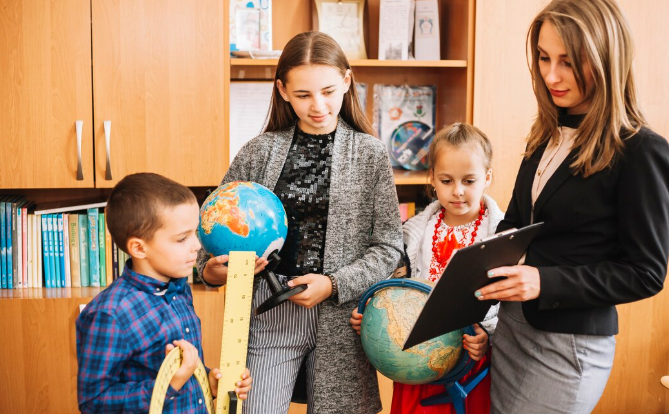
You notice something that isn’t always included in policy documents when you walk into any regional OMEP partner event in Spain. Everyone in the room is acquainted with one another. There is a density of relationships between educators, researchers, local administrators, and representatives of non-governmental organizations that takes years to develop and that no government program can produce on schedule. The informal network of practitioners who trust one another enough to share what isn’t working may be OMEP Spain’s most underappreciated asset, not the publications or conferences.
The 76th OMEP World Assembly, which took place in Bangkok in July 2024, provided an insightful look at the organization’s philosophy and, consequently, how its Iberian partners are being shaped. The scope of what they referred to as a “polycrisis”—climate disruption, forced migration, erosion of democratic norms, and economic precarity—was openly discussed by experts. In Spain, these are not hypothetical dangers. Teachers deal with the nation’s large immigrant populations, regional inequality, and gaps in digital infrastructure on a daily basis. These difficulties are not being hypothesized by OMEP’s Peninsula partners. They are navigating them, sometimes with more optimism than the data clearly justifies and frequently without adequate support.
The early learning environment in Spain is truly complicated. Early childhood education is offered in more than 22,000 schools, roughly divided between public and state-funded private providers. OMEP’s network is uniquely positioned to address the coordination issues caused by the sheer scale, not through top-down mandates but through shared professional standards, cross-regional communication, and training frameworks that cut across autonomous community boundaries. It’s still unclear if this model can completely close the gaps that UNESCO’s data consistently shows: pre-primary education funding consistently lags behind other education levels worldwide, and trained teacher ratios continue to be an issue.
Speaking with those involved in this work gives me the impression that Spain is at a turning point. There is actual funding. For the time being at least, the political attention is real. Sustainable early childhood education reform, however, necessitates a cultural belief that these formative years are just as important as any subsequent ones. This is more difficult to legislate than funding. Along the Iberian Peninsula, OMEP’s partners are doing more than just improving classrooms. They are debating the true purpose of education in a slower, more subdued manner. And that argument is already forming in the folds of a paper crane in Valencia.
