

Matt Freese once described a moment that sticks in your memory. Ten years old, he was by himself in his bedroom, carefully lifting his feet to avoid the wooden bed frame as he repeatedly threw himself onto a mattress and caught invisible balls. He was attempting to learn how to dive. Eventually, the bed broke. Most likely, his mother had inquiries. However, there was a seed in that peculiar, self-made training session that has led to him playing goal for the United States at a home World Cup.
It’s difficult not to think that detail is more illuminating than any highlight reel.
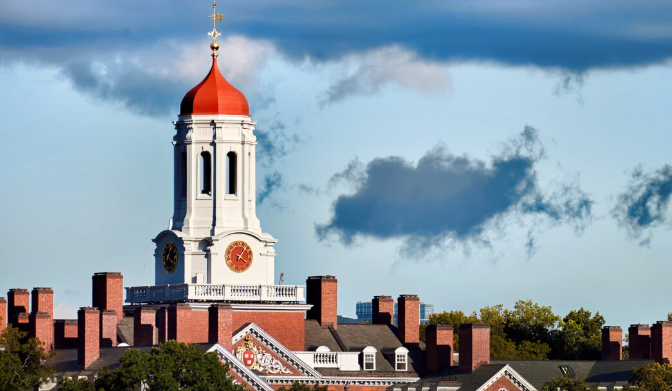
Growing up in Bryn Mawr, Pennsylvania, Freese was the grandson of German scientists who immigrated to work at the National Institutes of Health following World War II and the son of a neurosurgeon with a PhD from MIT who attended Harvard. Katherine, his aunt, works as an astrophysicist studying dark matter. In this family, academic success was not only expected but also encouraged. The response at home to a teenage Matt’s announcement that he wanted to play professional football ranged from skepticism to outright disbelief. He was reportedly told by Katherine that it would never work.
Father and son mediated what became known as the Matt Freese Harvard compromise. Matt would play for the Crimson, study economics at Harvard, and put his career aspirations on hold, at least for the time being. Rather, Harvard did more than simply postpone his football aspirations. They were silently sharpened by it. He wrote a lengthy research paper on penalty-kick analytics, which is the type of project that most students studying sports science would tackle with generic statistics and a weak conclusion. It appears that Freese took it seriously.
After two seasons, he left to sign with the Philadelphia Union in 2018. During the pandemic, he completed his degree online and graduated in 2022. His father, who had feared his son would be completely engulfed by the sports industry, did not live to witness it. In 2021, Andrew Freese passed away. The World Cup narratives often overlook the weight of that fact.
What’s intriguing—and possibly paradoxical—is how closely Freese’s approach to his position has been influenced by the academic mindset. He describes goalkeeping as geometry and diagnosis, continuously scanning to maximize the surface area he covers, rather than shot-stopping. He prioritizes morning sunlight, meditates, and restricts his use of social media before games. It sounds more like a scientist controlling variables than an athlete’s regimen. Maybe that’s the whole point.
Additionally, he reportedly made a decision that nearly took him in a completely different direction. At one point, Manchester United called. Instead, he chose Harvard. It’s unclear if that choice was solely motivated by education or by something more elusive, such as the need to demonstrate that the less-traveled route could still lead to something remarkable. However, it’s the kind of decision that, depending solely on what transpires next, appears either courageous or stupid in retrospect.
Regardless of the official line, Freese has started fifteen of the United States’ last eighteen national team games. This is the kind of statistic that implies Mauricio Pochettino has already made his decision. Alexi Lalas, a Fox Sports analyst, is still not convinced, pointing out in public that Freese hasn’t yet made a save that goes against expectations. Actually, that is a valid criticism. The pivotal World Cup goalkeeping moments, such as Brad Friedel’s wall-like presence in 2002 and Tim Howard’s sixteen saves against Belgium, typically occur when teams need miracles.
It’s still genuinely unclear if Matt Freese is that goalie. It’s difficult not to feel that the story was already worth telling, though, after witnessing him reach this point through a broken childhood bed, a Harvard economics degree, a research paper on penalties, and a family of scientists who doubted him.
