

In the weeks leading up to a new school year, a parent may experience a certain type of quiet concern. It isn’t the big, dramatic kind of worry. It’s the kind that comes at night, when the children are asleep, and the parent is doing mental arithmetic on a salary that was never quite enough. Transport, shoes, notebooks, and uniforms. Every child desires that stiff, stitched badge of belonging, which every struggling household secretly fears.
There are systems in place in Pakistan specifically to deal with this. The Workers Welfare Fund, operating through a web-based Management Information System and a mobile application, allows registered workers and employees to submit educational claims for their children. The claims cover more than just tuition. School uniforms, books, stationery, and transport are all part of what eligible families can receive — with payments for uniforms and supplies made directly to workers through online transfer. It’s a well-thought-out, useful structure. Whether it reaches the people who need it most is a different question.
The registration process itself is straightforward enough on paper. Employees register with their National Identity Card number and provide supporting documentation, such as an appointment letter and an EOBI or Social Security card. Children must register individually and provide an identity document from NADRA, a student photo, and an admission letter or fee challan from the school. A fee invoice, a prior result, and the location of the family’s home and the school are then needed for claims. Schools are paid directly from the fund. Payments for uniforms and materials are deposited into the employee’s account. The system attempts to minimize friction, at least in its design.
The number of eligible workers who actually finish this process is still unknown. Those who are accustomed to using bureaucratic systems typically find them to be effective. After working two shifts and coming home to his three kids, a factory worker in Faisalabad might not automatically consider himself to have access to a MIS portal. Children suffer real consequences as a result of the discrepancy between what welfare infrastructure provides and what regular working families think is accessible to them.
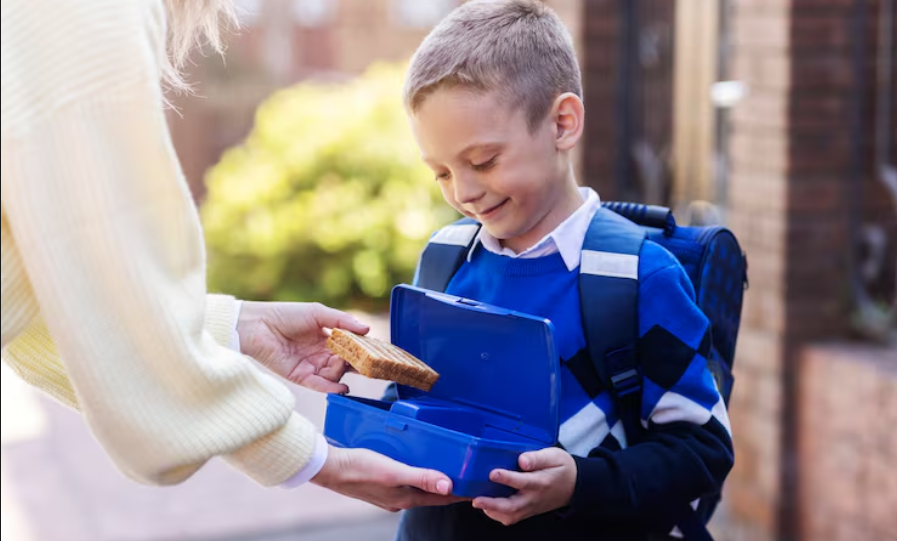
A different, more subdued discussion is taking place in the field of social welfare, which is partially fueled by nonprofits. School uniforms are framed as emotional turning points rather than administrative line items by SOS Children’s Village Pakistan, which operates throughout the nation, including Rawalpindi. A child who has grown up in difficult circumstances, who arrives at a school gate in worn or borrowed clothes, experiences something specific when they receive a uniform that actually fits and belongs to them. It’s not a minor issue. It lets the child know that they are a part of something, as well as their peers. That they are not outside looking in.
What’s interesting is how both approaches — government welfare transfers and charitable uniform programs — ultimately converge on the same understanding. Belonging matters. Dignity matters. Rarely is a school uniform just a uniform.
The social welfare school uniform payment system, as it functions through the Workers Welfare Fund, does represent a genuine attempt to lighten the load on low-income families. The digital infrastructure is there. The support categories make sense. In terms of outreach, the system could do more to make sure that the parents who are most likely to be eligible are also the ones who are most likely to be aware of the process. The claim procedure already includes SMS notifications to keep applicants updated at every turn. Applying the same energy to initial awareness could significantly alter the numbers for thousands of families.
On the first day of school, a child wearing a spotless, full uniform is not a small detail. For many families, it is the quiet result of a lot of work and a tiny act of faith that education is still worthwhile. Systems that facilitate that moment should be utilized. Families who have earned that assistance ought to be aware of it.
