

In nursery classrooms all over Britain, something subtly amazing is taking place. Sitting cross-legged on colorful mats, toddlers—those who still struggle to distinguish between left and right shoes—are leafing through pamphlets that introduce concepts like access to clean water, food poverty, and renewable energy. Not in scholarly, abstract terms. in images. in queries. In times when a three-year-old feels, in some way, entirely natural.
With a kind of word-of-mouth momentum that no marketing budget can adequately account for, the I-Care Booklet Series has been making its way into early childhood settings. At the school gates, parents bring it up. Extra copies are ordered by reception teachers. It’s possible that nobody fully expected young children to be so receptive to this kind of content, but here we are.
The United Nations Sustainable Development Goals, a set of seventeen interrelated objectives that world leaders agreed upon as a common roadmap for enhancing life on Earth by 2030, are the direct source of inspiration for the booklets. The objectives range from combating climate change and safeguarding marine ecosystems to eradicating extreme poverty and guaranteeing high-quality education. Nursery-age audiences were never considered in their design. Nevertheless, someone chose to give it a shot.
It sounds weird, but it’s not. At this age, kids are already asking difficult questions like, “Why is that man sleeping outside?” “Why does the river smell funny?” and “Why can’t we leave the tap running?” The I-Care series seems to address those queries with a more structured response rather than a rushed adult response. Each booklet focuses on particular objectives and breaks them down into scenarios that a young child could actually identify. A boy eating lunch together. A young woman sowing seeds. Before leaving a room, a family shuts off the lights. Little deeds, carefully selected.
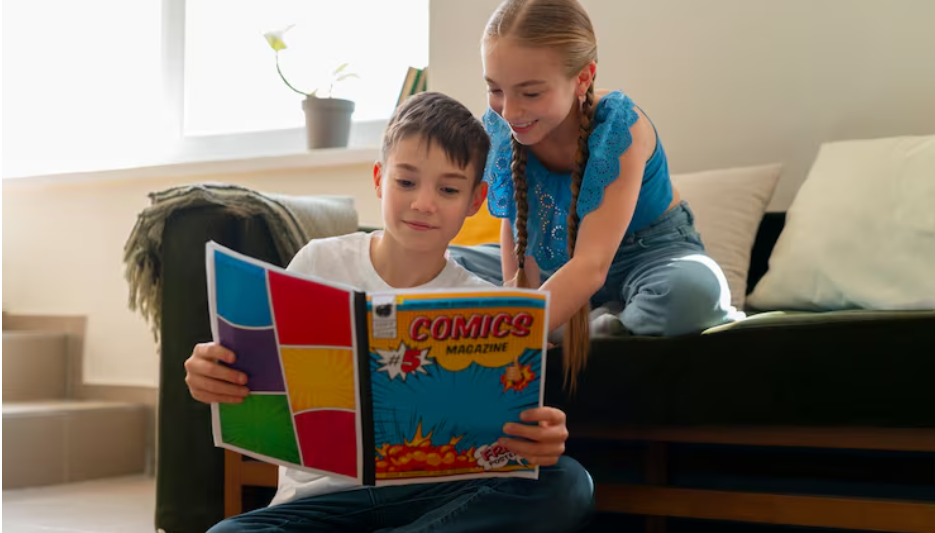
Observing how kids interact with these materials gives the impression that the designers realized something crucial: young children require honesty at the appropriate level rather than simplification. Zero Hunger, the second goal, does not turn into an agricultural policy lecture. It turns into a discussion about the food bank box by the grocery store entrance. That translation is very important, and it’s more difficult than it seems.
It’s important to think about the larger picture here. Sustainable development literacy should start much earlier than secondary school, where it usually appears as part of geography or citizenship programs, according to organizations like the International Curriculum Association. Thought patterns are already developing by that point. Waste, justice, and environmental responsibility attitudes are already spreading, whether or not they do. In essence, the I-Care approach is a wager that children can relate to the UN’s goals even if they don’t fully comprehend its structure.
It’s still unclear if that wager will pay off in the long run and whether the toddler who learned about access to clean water at age four will carry that knowledge into adulthood. Education researchers would correctly note that it is very challenging to measure the long-term impact of early childhood materials. However, it’s difficult to ignore the fact that this generation of kids is inheriting a number of issues that were mostly caused by ignorance in earlier generations. At the very least, it seems worthwhile to try to teach them to care earlier.
It’s not quite a revolution. It’s a booklet. Sometimes, though, that’s where things start—quietly, on a vibrant mat, with a child inquiring as to what will happen next.
