

There is a specific type of institutional enduring power that is rarely acknowledged; this type is developed over decades of patient, frequently underfunded work that most people outside of a specialized field are unaware of, rather than through flashy campaigns or well-funded lobbying. In many respects, Swedish OMEP is precisely that kind of organization. Its UNESCO Prize nomination has garnered some attention lately, but its origins can be traced back to postwar Europe, when a small group of educators and social thinkers believed that young children deserved better.
The World Organization for Early Childhood Education, or OMEP, was established in 1948 in Prague during a conference that brought together delegates from 19 nations on five continents. Alva Myrdal, a Swedish sociologist and politician who would go on to win the Nobel Peace Prize for her work on nuclear disarmament, was one of the people who pushed for the meeting, which had been in the works for years. She was elected as the first World President of OMEP. It’s worth stopping to consider that particular detail. The majority of today’s educators are unaware of this organization, which was founded by a Nobel laureate.
The relationship with Sweden has never truly diminished. Particularly in relation to what the organization refers to as Education for Sustainable Development, or ESD, Sweden’s chapter continues to be one of the more active national committees. Contrary to what the name implies, this work is more tangible. Tens of thousands of children have participated in international projects led by Swedish academics and educators, such as Ingrid Pramling Samuelsson, who has spent decades as one of the most tenacious voices in the field. These projects have documented what young students already know about environmental issues and what they can do with that knowledge. People who believe environmental consciousness develops later in childhood are often surprised by the results.
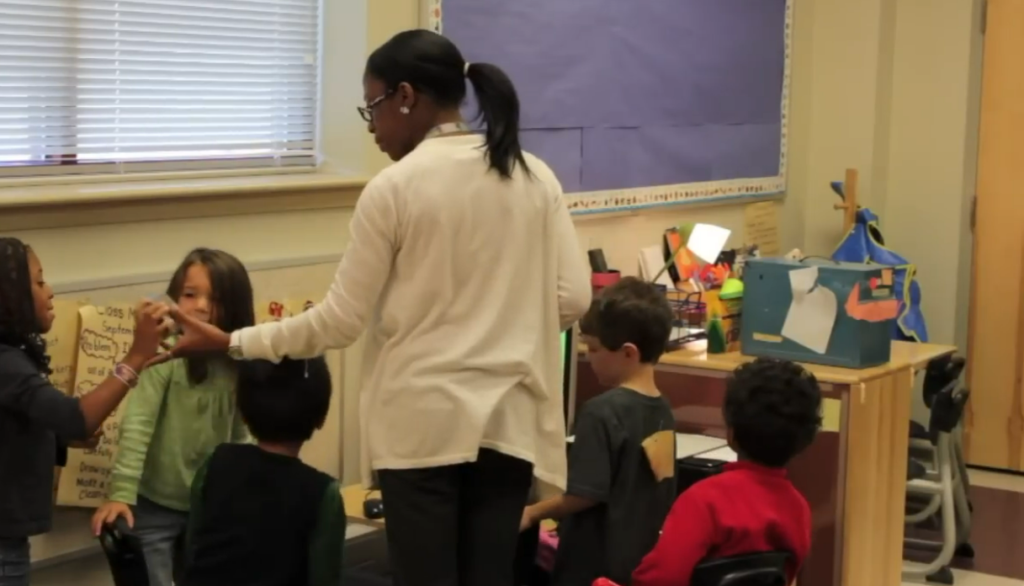
Perhaps the main argument OMEP has made over the past 75 years is that young children are too young for sophisticated thought. The organization has continuously opposed efforts to formalize early education and push kids toward desks, worksheets, and academic standards at an increasingly early age. For OMEP, play-based, child-led learning is not a trendy pedagogical stance; rather, it is a fundamental commitment that they have upheld despite shifting political tides and persistent pressure to make preschool more like school.
The nomination for the UNESCO Prize, which honors exceptional contributions to education in the organization’s areas of expertise, gives work that has seldom been vocal about itself some institutional visibility. Since 1951, UNESCO has given out prizes for everything from press freedom to literacy. The education category, in particular, honors contributions to sustainable development education and access to high-quality education. OMEP from Sweden fits that description. The Swedish committee’s teacher-training materials and the Sustainability from the Start app are useful resources designed for student teachers working in areas with limited early childhood infrastructure.
As this develops, it’s difficult to ignore the fact that the nomination comes at a time when early childhood education is facing financial strain in numerous nations at the same time: budget cuts in the US, funding uncertainty in some parts of Europe, and ongoing access gaps throughout the Global South. It’s unclear if a UNESCO Prize would alter any of that. Compared to resources, these awards typically provide recognition more consistently. However, acknowledgment is not insignificant for an organization that has worked in relative obscurity for the majority of its existence.
It’s a long time to continue arguing the same point for seventy-five years. Nevertheless, OMEP has carried it out, and it appears that the argument has not faded.
