

Rows of desks, glowing screens, and a whiteboard with goals that must be completed before the bell rings are all familiar sights in the majority of American elementary schools. Enter a Waldorf classroom now. The light is the first thing you notice. Next are the wooden toys made by hand in the corner. Then the child was sitting quietly, totally engrossed in kneading beeswax into a tiny figure.
Standing there, it’s difficult not to sense that something radically different is taking place.
In Stuttgart, Germany, in 1919, a cigarette factory owner named Emil Molt asked philosopher Rudolf Steiner to create a school for the children of his employees. This led to the creation of Waldorf education. People are still shocked to learn that the largest independent school movement in the world, with over 1,200 schools spread across 75 countries, has its origins in a tobacco company. Molt adhered to Steiner’s philosophy of anthroposophy, a spiritual perspective based on the notion that people have access to a significant, observable spiritual realm. The school model it created has endured for over a century, regardless of whether one agrees with that premise.
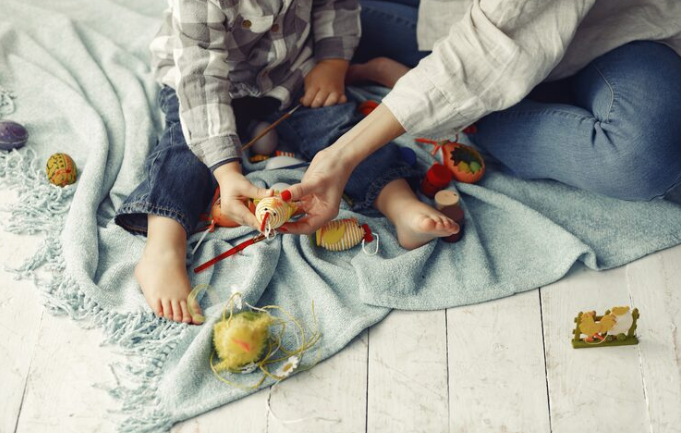
Even though the practice is anything but simple, the fundamental concept is. According to Waldorf theory, childhood occurs in three roughly seven-year phases. From birth to age seven, young children learn through imitation and their senses rather than worksheets or early reading exercises. The best ways for children between the ages of seven and fourteen to interact are through storytelling, imagination, and emotion. Finally, adolescents learn to make their own decisions and think abstractly. Teachers are expected to meet students where they are, not where a standardized benchmark says they should be, and the curriculum purposefully follows this arc.
In 2026, this seems almost countercultural. Waldorf kindergartens continue to send kids outside to play in the mud and hear fairy tales at a time when early literacy standards are being pushed younger and younger. This is deemed naive by critics. Proponents refer to it as “developmentally honest.” A growing body of research indicates that experiential, play-based early childhood learning results in more long-lasting cognitive and emotional outcomes than early academic drilling, at least in recent years.
Instead of being electives, the arts play a major role in the Waldorf curriculum. The teaching of subjects like math and language directly incorporates drawing, painting, music, theater, and movement. An elementary school student could investigate geography by creating detailed maps by hand or learn about fractions by working with rhythm in music. Although it’s still challenging to measure such things precisely, it’s possible that this integration contributes to Waldorf students’ propensity to emerge as self-directed, confident learners.
Then there are the real disputes, which merit direct discussion. The philosophy of Steiner has a lot of baggage. Critics have claimed that some of his writings contain racial ideas that were unsettling even by the standards of the early 20th century and that the movement has not always honestly addressed these ideas. Concerns regarding the treatment of students with special educational needs have also been raised by regulatory reviews in a number of nations. Disease outbreaks have also been linked to the vaccine hesitancy that tends to concentrate in Waldorf communities. These are not small footnotes. They are a part of the whole picture.
Nevertheless, schools continue to expand. When a parent chooses Waldorf, they frequently talk about something they see in their kids that they found difficult to find elsewhere, such as a quality of attention, comfort with imagination, or ease in their own skin. It’s genuinely difficult to determine whether this is due to the pedagogy, the smaller class sizes, or just the self-selective nature of families drawn to this type of education.
What is evident is that, despite its challenges, Waldorf education consistently poses a question that mainstream education seldom stops to think about: what does a child truly need, at every stage of development, to become a complete human being? The discomfort of sitting with a movement that doesn’t neatly fit into any straightforward category may be worth it just for that question.
