

The series of events leading up to Austin Metcalf’s death on April 2, 2025, is extremely disturbing. Not because it was completely unpredictable, but rather because, looking back, a series of minor choices and institutional shortcomings came together in the worst way imaginable. In the middle of that chain was Karmelo Anthony, who had already received a suspension from Frisco Centennial High School prior to attending that track meet. Trial testimony revealed that the suspension had been imposed specifically for carrying a knife on campus.
It’s not a footnote. It’s possibly one of the most crucial details in the whole case. Anthony was prohibited from attending any school-sponsored events, including the 11-5A district championship track meet at Kuykendall Stadium. And yet there he was, on a soggy morning, standing beneath the tent of a rival school with a bag containing another knife. It’s difficult not to question how that occurred and what, if anything, could have prevented it.
Witnesses have painfully detailed the actual circumstances of the confrontation. Anthony was reportedly told to leave the tent his team was using to protect themselves from the rain by Metcalf, a 17-year-old Memorial High School student with a 4.0 GPA and an MVP trophy from his football team. The two were strangers to one another. There was no long-standing animosity or past history between them. Anthony allegedly reached into his bag when Metcalf asked him to leave, told him to “touch me and see what happens,” and then, when Metcalf shoved him, pulled out a black knife and stabbed him in the chest. In the arms of his twin brother Hunter, Austin Metcalf passed away.
Anthony said he was defending himself. His lawyers contended that Anthony reacted out of fear, that the Metcalf brothers were the aggressors, and that their client was the target of physical contact. It’s a legal argument that has worked in other courtrooms and cases. Here, it was unsuccessful. On June 9, 2026, a Collin County jury rejected both the self-defense claim and a lesser manslaughter charge after deliberating for about three hours before returning a unanimous guilty verdict. Anthony was given a sentence of 35 years in state prison, which falls between two years and life in prison.
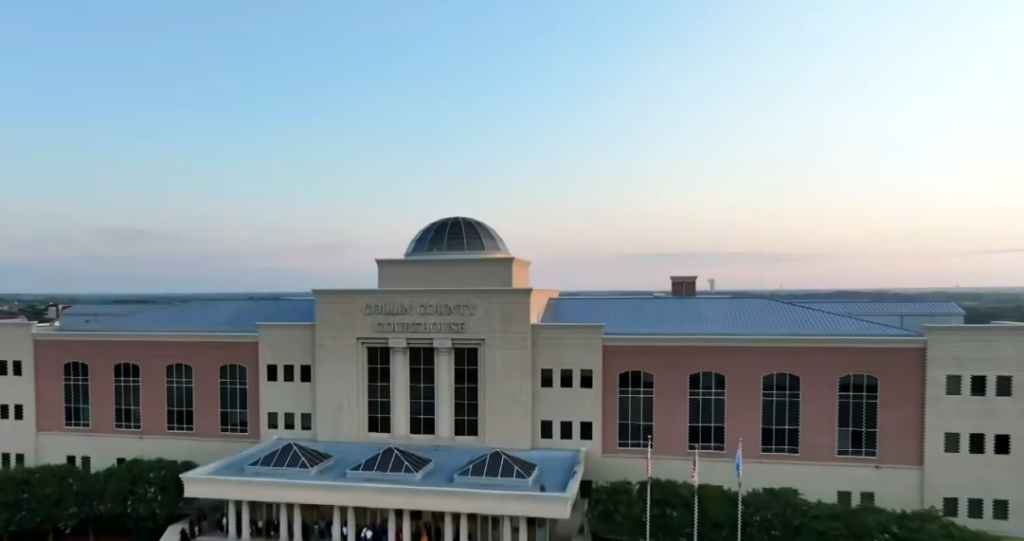
Beyond the obvious tragedy of two teenagers, one of whom is now incarcerated and the other is dead, the way this case spread on social media was what made it so intense. Metcalf was white, and Anthony is black. Almost immediately, the topic of race entered the discourse and was magnified online in ways that were very different from what prosecutors and defense lawyers were actually debating in court. The jury was informed by both legal teams that race had no bearing on the murder. The Collin County District Attorney’s office stated that it considered the case to be a simple murder prosecution. Nevertheless, the trial attracted large crowds outside the courtroom, and on the day of sentencing, several people were taken into custody there.
Following the verdict, Bruce Carter, a community activist, put it simply: “I hate to see a 17-year-old lose his life.” A 17-year-old losing their freedom is something I detest. Regardless of which side they had been supporting, this sentiment most likely represents how many people felt. In court, Metcalf’s mother said that since she had received a life sentence without her son, Anthony should consider himself fortunate to receive a 35-year sentence. Anthony’s mother begged for forgiveness, saying her son was sorry.
The day following his sentencing, Anthony exercised his legal right to file a notice of appeal. According to his lawyers, appellate courts should consider these crucial issues. It’s completely unclear if that process yields a different result. The fact that a teenage boy who had been expelled from school for carrying a knife showed up at a school function with another knife and used it is already known and was established by the trial. At the May graduation, Austin Metcalf’s twin brother accepted a posthumous diploma on his behalf. The stadium where it all took place is still there, just outside of Dallas, and it continues to host rainy April mornings, other kids, and other meets.
