
Close Menu
WorldomepWorldomep
  • Home
  • Privacy Policy
  • Disclaimer
  • Terms of Service
  • About
  • Trending
  • Worldomep
  • News
WorldomepWorldomep
Subscribe
  • Home
  • Privacy Policy
  • Disclaimer
  • Terms of Service
  • About
  • Trending
  • Worldomep
  • News
WorldomepWorldomep
Home»Schools»From Village Elders to Global Policy: The Untold History of Early Childhood Care and Education
Schools

From Village Elders to Global Policy: The Untold History of Early Childhood Care and Education

Nelson RosarioBy Nelson RosarioApril 28, 2026004 Mins Read
Share Facebook Twitter Pinterest Copy Link LinkedIn Tumblr Email Telegram WhatsApp
Follow Us
Google News Flipboard
From Village Elders to Global Policy
Share
Facebook Twitter LinkedIn Pinterest Email Copy Link

The fact that no one recorded it in a policy document for the majority of recorded history is quietly remarkable. Communities took care of young children by feeding them, teaching them to walk, and reading them stories before bed. neighbors, older siblings, mothers, and grandmothers. The village, as the term was originally used. There was no system in place. It was simply life.

In nineteenth-century Europe, the transition to something more formal began to take shape. Kindergartens started to spring up all over Germany, and day nurseries started to open in places like Mexico City, Calcutta, São Paulo, and London. These weren’t the result of a major philosophical discovery. They were largely a pragmatic reaction to industrialization, as working families required a place for their kids to go. On top of necessity, idealism emerged later.

CategoryDetails
TopicHistory of Early Childhood Care and Education
Time Period CoveredPre-19th Century to 21st Century
Key MilestoneEstablishment of kindergartens and day nurseries, 19th Century
First Formal ExpansionRussian Federation, early 20th Century
UN Convention ReferencedConvention on the Rights of the Child (CRC), 1989
First Global DeclarationWorld Declaration on Education For All, Jomtien, Thailand, 1990
Countries of Early DevelopmentEurope, North America, Brazil, China, India, Jamaica, Mexico
France’s Integration Year1886
Key 21st Century FrameworkMillennium Development Goals (MDGs), 2000
Modern Focus AreasHealth, Education, Social & Emotional Well-being, Economic Equity
Reference ResourceUNESCO Early Childhood Education

Looking back, it’s remarkable how long some nations took to participate in what seemed like a straightforward discussion. After incorporating pre-school into its national education system in 1886, France quietly expanded it over the ensuing decades. That is a hundred years ahead of many countries. French children were already enrolled in state-funded classrooms, while other governments were still debating whether young children even required structured care outside the home. It’s difficult to ignore that disparity and wonder what it cost the nations that had to wait.

Despite its complex past, the early Soviet Union was ahead of the curve in one particular area: it made an early commitment to state-provided childcare as a matter of gender equality and education. Although the reasoning was ideological, the infrastructure it created had a long-lasting impact on China, Vietnam, and Cambodia. Sometimes the results are more important than the motivation, and in this instance, the results were millions of kids who might not have otherwise received structured early education.
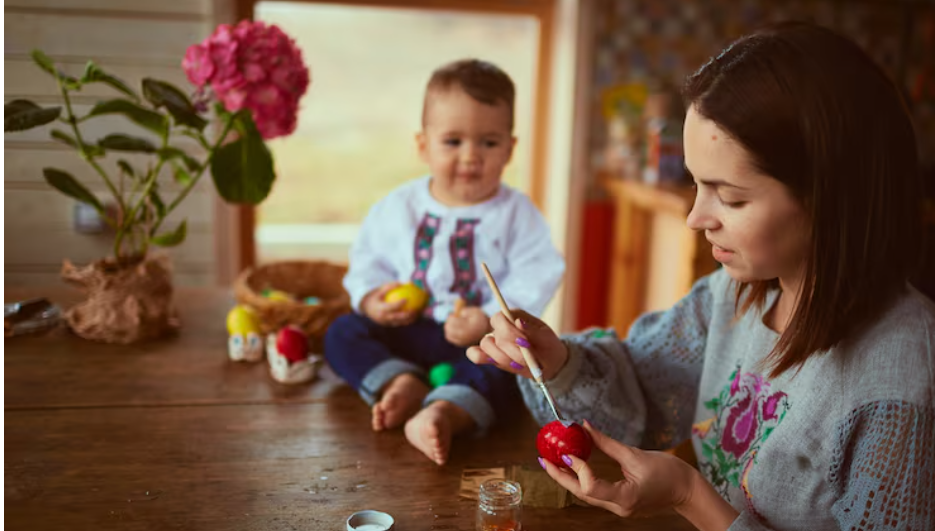
From Village Elders to Global Policy

The true global turning point occurred in 1990 as a result of two nearly simultaneous events rather than a single discovery. The 1989 United Nations Convention on the Rights of the Child had recently been ratified at a rate never seen before. The World Declaration on Education for All was then adopted after educators and decision-makers convened in Jomtien, Thailand, in March 1990. Learning starts at birth, a statement that seems obvious today but was truly revolutionary at the time. For it to be taken seriously, it had to be stated aloud in front of everyone.

Though not always neatly, the 1990s turned into a decade of building on that momentum. The expansion of early childhood care and education was identified as the first of six global education goals in the 2000 Dakar Framework. However, it had no numerical goals associated with it. No standards. Just a wish. There’s a feeling that the world wasn’t entirely ready to commit even then, despite decades of advancement.

Early childhood health was mentioned in the Millennium Development Goals of the early 2000s, such as lowering infant and maternal mortality and increasing access to reproductive health care, but childcare and early learning were largely ignored as independent priorities. It was a significant omission. By then, researchers were gathering compelling evidence that investing in children at a young age had long-term advantages for both individuals and entire economies. The policy frameworks continued to fall behind.

Whether or not the world has learned that lesson is still up for debate. The case has been developed over the past few decades by research communities, civil society organizations, and intergovernmental organizations, who have documented the ways in which early childhood care influences social cohesion, emotional development, educational paths, and health outcomes. There is a lot of evidence. The political will to address it consistently across national boundaries is still uneven. You get the impression that the most difficult aspect of that history was never realizing its significance. Governments and societies made the decision to treat it as they did.

Global Policy Village Elders
Follow on Google News Follow on Flipboard
Share. Facebook Twitter Pinterest LinkedIn Tumblr Email Copy Link
Nelson Rosario

    Nelson Rosario is an Editor at worldomep.org and a law school student who has found, somewhere in the intersection of legal theory and human development, a cause worth building a career around: ensuring that every child has access to quality education and the healthcare they need to thrive. Nelson approaches child advocacy with the analytical precision of a person who has been taught to analyze systems, spot flaws, and make the case for change. His knowledge of how policies are made, where they fall short, and what it would take to hold institutions accountable for the children they are meant to serve has improved as a result of his legal education. His support, however, goes beyond academics. It stems from a sincere belief that early childhood health and education are not being adequately addressed by the legal and social frameworks in many places. Nelson adds a legal and policy perspective to discussions about child welfare through his contributions to worldomep.org, asking not only what ought to be done but also what can be required, safeguarded, and upheld.

    Related Posts

    Study Uncovers How Elite American Schools Circumvent State Suspension Bans to Punish Minority Students

    April 28, 2026

    Banning Cellphones in Classrooms: The Highly Unpopular Policy That Actually Works Wonders

    April 28, 2026

    The ChatGPT Election: How Deepfakes in the Classroom are Forcing a Media Literacy Reckoning

    April 28, 2026
    Add A Comment
    Leave A Reply Cancel Reply

    You must be logged in to post a comment.

    Agentic AI Explained: MIT Sloan’s Guide to the Future of Independent Machine Learning

    Nelson RosarioApril 28, 2026

    A few years ago, generative AI was hardly discussed outside of a few research labs.…

    Study Uncovers How Elite American Schools Circumvent State Suspension Bans to Punish Minority Students

    April 28, 2026

    Banning Cellphones in Classrooms: The Highly Unpopular Policy That Actually Works Wonders

    April 28, 2026

    The ChatGPT Election: How Deepfakes in the Classroom are Forcing a Media Literacy Reckoning

    April 28, 2026

    Why MIT’s Largest Math Dataset Could Revolutionize How Machines Teach Calculus to Teenagers

    April 28, 2026

    The Economic Value of Policies and Programs to Support Children’s Surging Mental Health Needs

    April 28, 2026

    Investing in the Early Years of Life and Gender Equality: Why the World Can’t Afford to Wait

    April 28, 2026
    Most Popular

    Agentic AI Explained: MIT Sloan’s Guide to the Future of Independent Machine Learning

    April 28, 20260 Views

    Study Uncovers How Elite American Schools Circumvent State Suspension Bans to Punish Minority Students

    April 28, 20260 Views

    Banning Cellphones in Classrooms: The Highly Unpopular Policy That Actually Works Wonders

    April 28, 20260 Views

    The ChatGPT Election: How Deepfakes in the Classroom are Forcing a Media Literacy Reckoning

    April 28, 20260 Views

    Why MIT’s Largest Math Dataset Could Revolutionize How Machines Teach Calculus to Teenagers

    April 28, 20260 Views

    The Economic Value of Policies and Programs to Support Children’s Surging Mental Health Needs

    April 28, 20260 Views
    Disclaimer

    All content published on WorldOmep.org — including articles, opinion pieces, research summaries, news updates, and commentary — is intended for informational and educational purposes only. We publish opinions and third-party perspectives as they are, and in no way do we endorse, verify, or recommend acting upon any political, financial, scientific, educational, legal, or medical information presented on this platform without first seeking qualified professional advice.
    Third-party articles, quotes, and opinion pieces published on WorldOmep.org are the sole views of their respective authors. We present them in the spirit of open dialogue and informed public discourse, and their publication does not imply our endorsement.

    About
    About

    WorldOmep.org is an independent digital publication dedicated to the advocacy of early childhood education, child health care, and the holistic wellbeing of young children around the world. We are proudly aligned with the mission and values of OMEP — the World Organization for Early Childhood Education — the oldest and most far-reaching international organization devoted to early childhood education and care since its founding in Prague in 1948.

    • Home
    • Privacy Policy
    • Disclaimer
    • Terms of Service
    • About
    • Trending
    • Worldomep
    • News
    © 2026 ThemeSphere. Designed by ThemeSphere.

    Type above and press Enter to search. Press Esc to cancel.