

There’s a moment that most educators describe in the same way. Unaware that a video, quote, or “news story” they saw online was created by an algorithm that may have taken thirty seconds to produce, a student raises a hand, self-assured and almost proud.
The instructor pauses. How can you explain that what the student just presented as fact never actually happened without undermining their confidence? Right now, these are classrooms. Not in the far future. At this moment.
| Topic Overview | Details |
|---|---|
| Subject | Media Literacy in the AI Era |
| Core Issue | Rise of deepfakes, AI-generated content, and misinformation in education |
| Key Technology | ChatGPT, Deepfake AI, Algorithmic content curation |
| Landmark Study | Stanford University, 2016 — 82% of middle schoolers couldn’t distinguish sponsored content from real news |
| Incident Reference | 2024 U.S. Presidential Election deepfake video — debunked after mass circulation |
| Deepfake Growth Rate | 600% rise in incidents by 2025 (Sensity, cybersecurity firm) |
| Key Tools for Detection | GPTZero, reverse video sourcing, AI content detectors |
| Expert Voice | Alex Chan, cybersecurity expert — advocates educator-tech firm partnerships |
| Affected Age Group | Middle school through college students |
| Broader Implication | Democratic integrity, institutional trust, electoral outcomes |
There is no denying the impact of the 2024 U.S. presidential election. Before anyone could stop it, a deepfake video that purported to show a candidate saying something offensive that they had never said went viral. In the end, it was refuted. However, the damage progressed more quickly than the repair. Millions of people had already seen it, discussed it, and developed opinions based on it. A piece of synthetic media momentarily renegotiated elections, reputations, and the idea of what is “real” in general. The next generation is expected to learn how to resist this horrifying precedent in the classroom.
The underlying issue is not new, but AI has made it much more acute. According to a 2016 Stanford study, 82% of middle school students were unable to distinguish between sponsored content and actual news, or, in other words, between journalism and an advertisement. To be honest, that statistic ought to have raised more red flags than it did. Instead, since their entire revenue model depends on keeping users emotionally engaged long enough to serve them ads that feel like organic posts, the years that followed saw the emergence of social media platforms that are structurally built to blur precisely that line.
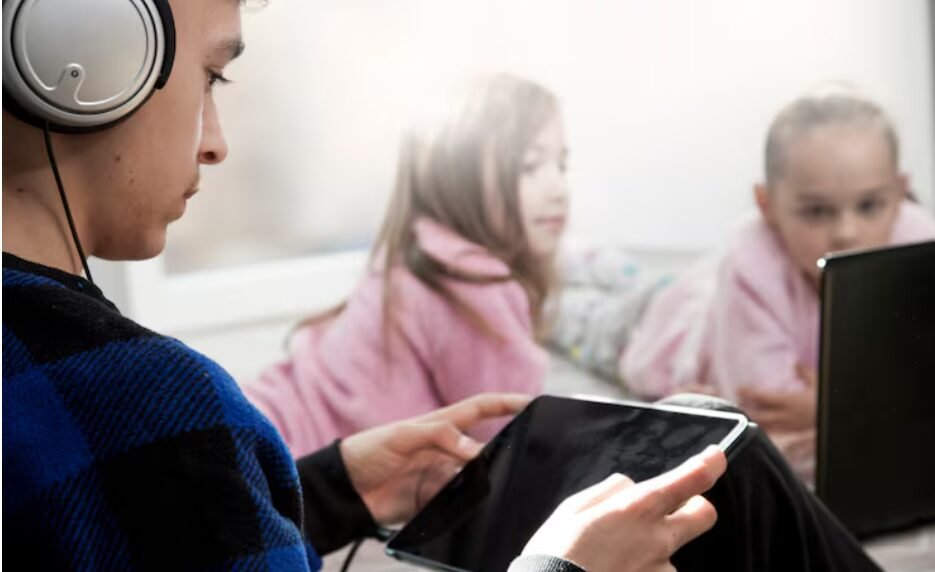
Then ChatGPT appeared. Abruptly, the problem became not only more difficult but also more rapid. At a scale that no human misinformation operation could match, AI tools can now produce confident, fluid, and believable-sounding information. The malicious nature of these tools is not the problem. They’re convincing, which is the problem. When a student asks ChatGPT about a historical event, they may get a well-written paragraph with an untrue fact. It has an authoritative tone. The grammar is flawless. The date is ten years off.
This is further pushed into truly unsettling territory by deepfakes. Video manipulation is more difficult to identify, trace, and explain to someone who already believes what they’ve seen than AI-generated text, where tools like GPTZero can now provide at least partial detection. According to cybersecurity company Sensity, the frequency of deepfake incidents increased by 600% by 2025. It’s difficult to accept that number. It’s possible that the effects of this technology on public trust are still in their infancy.
Speaking with educators and researchers in this field, there’s a feeling that schools are taking on an issue that they didn’t cause and weren’t given the tools to address. Content that elicits strong reactions, such as anger, fear, or disgust, is given priority by algorithms on ad-supported platforms because these reactions increase engagement, which in turn increases revenue. Unknowingly, students are navigating systems designed to prioritize emotional response over accuracy when they browse TikTok or Google for a current event. It takes more than a single media literacy unit sandwiched between algebra and physical education to help children understand invisible pressure.
In order to stay up to date on deepfake detection techniques, educators should actively collaborate with tech companies, according to cybersecurity expert Alex Chan. This will help students not only recognize fakes but also comprehend the mechanisms that underlie them. Although it raises concerns about how well-resourced most schools are to pursue it, that is a reasonable approach. Not every district has the funds or bandwidth. In spite of this, technology continues to advance.
It is becoming increasingly evident that media literacy is not a supplemental skill at this time. It’s more akin to public infrastructure. Today’s students will be voting, exchanging information, and making choices in a world where it will become increasingly difficult to distinguish between real and manufactured. More important than almost everything they learn may be whether or not they have been taught to navigate that world with caution, skepticism, and genuine curiosity about what they’re actually seeing. It’s difficult to avoid feeling that the stakes are exceptionally high as you watch this play out. The election on ChatGPT served as a warning. The next one won’t make an announcement.
