
Close Menu
WorldomepWorldomep
  • Home
  • Privacy Policy
  • Disclaimer
  • Terms of Service
  • About
  • Trending
  • Worldomep
  • News
WorldomepWorldomep
Subscribe
  • Home
  • Privacy Policy
  • Disclaimer
  • Terms of Service
  • About
  • Trending
  • Worldomep
  • News
WorldomepWorldomep
Home»Schools»The ChatGPT Election: How Deepfakes in the Classroom are Forcing a Media Literacy Reckoning
Schools

The ChatGPT Election: How Deepfakes in the Classroom are Forcing a Media Literacy Reckoning

Nelson RosarioBy Nelson RosarioApril 28, 2026005 Mins Read
Share Facebook Twitter Pinterest Copy Link LinkedIn Tumblr Email Telegram WhatsApp
Follow Us
Google News Flipboard
The ChatGPT Election
Share
Facebook Twitter LinkedIn Pinterest Email Copy Link

There’s a moment that most educators describe in the same way. Unaware that a video, quote, or “news story” they saw online was created by an algorithm that may have taken thirty seconds to produce, a student raises a hand, self-assured and almost proud.

The instructor pauses. How can you explain that what the student just presented as fact never actually happened without undermining their confidence? Right now, these are classrooms. Not in the far future. At this moment.

Topic OverviewDetails
SubjectMedia Literacy in the AI Era
Core IssueRise of deepfakes, AI-generated content, and misinformation in education
Key TechnologyChatGPT, Deepfake AI, Algorithmic content curation
Landmark StudyStanford University, 2016 — 82% of middle schoolers couldn’t distinguish sponsored content from real news
Incident Reference2024 U.S. Presidential Election deepfake video — debunked after mass circulation
Deepfake Growth Rate600% rise in incidents by 2025 (Sensity, cybersecurity firm)
Key Tools for DetectionGPTZero, reverse video sourcing, AI content detectors
Expert VoiceAlex Chan, cybersecurity expert — advocates educator-tech firm partnerships
Affected Age GroupMiddle school through college students
Broader ImplicationDemocratic integrity, institutional trust, electoral outcomes

There is no denying the impact of the 2024 U.S. presidential election. Before anyone could stop it, a deepfake video that purported to show a candidate saying something offensive that they had never said went viral. In the end, it was refuted. However, the damage progressed more quickly than the repair. Millions of people had already seen it, discussed it, and developed opinions based on it. A piece of synthetic media momentarily renegotiated elections, reputations, and the idea of what is “real” in general. The next generation is expected to learn how to resist this horrifying precedent in the classroom.

The underlying issue is not new, but AI has made it much more acute. According to a 2016 Stanford study, 82% of middle school students were unable to distinguish between sponsored content and actual news, or, in other words, between journalism and an advertisement. To be honest, that statistic ought to have raised more red flags than it did. Instead, since their entire revenue model depends on keeping users emotionally engaged long enough to serve them ads that feel like organic posts, the years that followed saw the emergence of social media platforms that are structurally built to blur precisely that line.
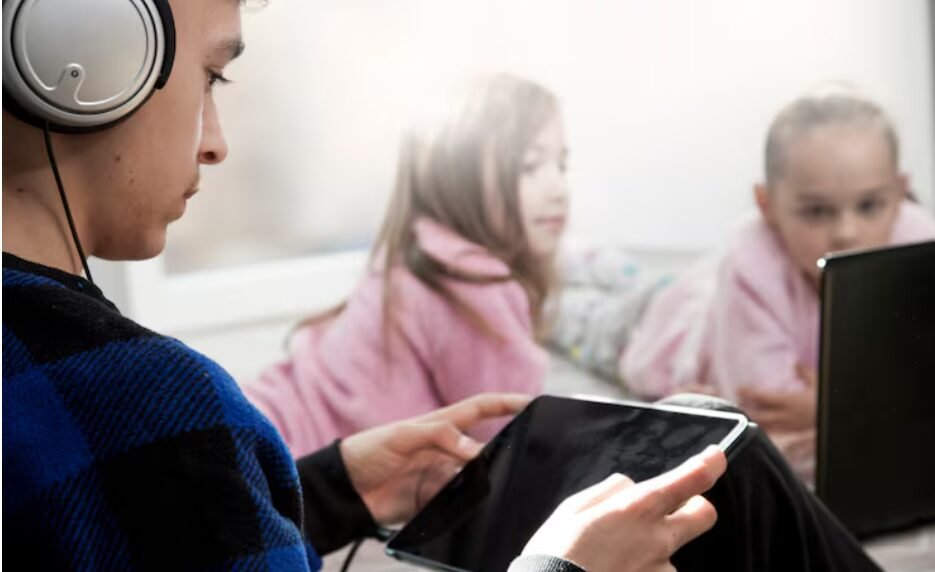
The ChatGPT Election

Then ChatGPT appeared. Abruptly, the problem became not only more difficult but also more rapid. At a scale that no human misinformation operation could match, AI tools can now produce confident, fluid, and believable-sounding information. The malicious nature of these tools is not the problem. They’re convincing, which is the problem. When a student asks ChatGPT about a historical event, they may get a well-written paragraph with an untrue fact. It has an authoritative tone. The grammar is flawless. The date is ten years off.

This is further pushed into truly unsettling territory by deepfakes. Video manipulation is more difficult to identify, trace, and explain to someone who already believes what they’ve seen than AI-generated text, where tools like GPTZero can now provide at least partial detection. According to cybersecurity company Sensity, the frequency of deepfake incidents increased by 600% by 2025. It’s difficult to accept that number. It’s possible that the effects of this technology on public trust are still in their infancy.

Speaking with educators and researchers in this field, there’s a feeling that schools are taking on an issue that they didn’t cause and weren’t given the tools to address. Content that elicits strong reactions, such as anger, fear, or disgust, is given priority by algorithms on ad-supported platforms because these reactions increase engagement, which in turn increases revenue. Unknowingly, students are navigating systems designed to prioritize emotional response over accuracy when they browse TikTok or Google for a current event. It takes more than a single media literacy unit sandwiched between algebra and physical education to help children understand invisible pressure.

In order to stay up to date on deepfake detection techniques, educators should actively collaborate with tech companies, according to cybersecurity expert Alex Chan. This will help students not only recognize fakes but also comprehend the mechanisms that underlie them. Although it raises concerns about how well-resourced most schools are to pursue it, that is a reasonable approach. Not every district has the funds or bandwidth. In spite of this, technology continues to advance.

It is becoming increasingly evident that media literacy is not a supplemental skill at this time. It’s more akin to public infrastructure. Today’s students will be voting, exchanging information, and making choices in a world where it will become increasingly difficult to distinguish between real and manufactured. More important than almost everything they learn may be whether or not they have been taught to navigate that world with caution, skepticism, and genuine curiosity about what they’re actually seeing. It’s difficult to avoid feeling that the stakes are exceptionally high as you watch this play out. The election on ChatGPT served as a warning. The next one won’t make an announcement.

ChatGPT Election
Follow on Google News Follow on Flipboard
Share. Facebook Twitter Pinterest LinkedIn Tumblr Email Copy Link
Nelson Rosario

    Nelson Rosario is an Editor at worldomep.org and a law school student who has found, somewhere in the intersection of legal theory and human development, a cause worth building a career around: ensuring that every child has access to quality education and the healthcare they need to thrive. Nelson approaches child advocacy with the analytical precision of a person who has been taught to analyze systems, spot flaws, and make the case for change. His knowledge of how policies are made, where they fall short, and what it would take to hold institutions accountable for the children they are meant to serve has improved as a result of his legal education. His support, however, goes beyond academics. It stems from a sincere belief that early childhood health and education are not being adequately addressed by the legal and social frameworks in many places. Nelson adds a legal and policy perspective to discussions about child welfare through his contributions to worldomep.org, asking not only what ought to be done but also what can be required, safeguarded, and upheld.

    Related Posts

    Study Uncovers How Elite American Schools Circumvent State Suspension Bans to Punish Minority Students

    April 28, 2026

    Banning Cellphones in Classrooms: The Highly Unpopular Policy That Actually Works Wonders

    April 28, 2026

    From Village Elders to Global Policy: The Untold History of Early Childhood Care and Education

    April 28, 2026
    Add A Comment
    Leave A Reply Cancel Reply

    You must be logged in to post a comment.

    Agentic AI Explained: MIT Sloan’s Guide to the Future of Independent Machine Learning

    Nelson RosarioApril 28, 2026

    A few years ago, generative AI was hardly discussed outside of a few research labs.…

    Study Uncovers How Elite American Schools Circumvent State Suspension Bans to Punish Minority Students

    April 28, 2026

    Banning Cellphones in Classrooms: The Highly Unpopular Policy That Actually Works Wonders

    April 28, 2026

    The ChatGPT Election: How Deepfakes in the Classroom are Forcing a Media Literacy Reckoning

    April 28, 2026

    Why MIT’s Largest Math Dataset Could Revolutionize How Machines Teach Calculus to Teenagers

    April 28, 2026

    The Economic Value of Policies and Programs to Support Children’s Surging Mental Health Needs

    April 28, 2026

    Investing in the Early Years of Life and Gender Equality: Why the World Can’t Afford to Wait

    April 28, 2026
    Most Popular

    Agentic AI Explained: MIT Sloan’s Guide to the Future of Independent Machine Learning

    April 28, 20260 Views

    Study Uncovers How Elite American Schools Circumvent State Suspension Bans to Punish Minority Students

    April 28, 20260 Views

    Banning Cellphones in Classrooms: The Highly Unpopular Policy That Actually Works Wonders

    April 28, 20260 Views

    The ChatGPT Election: How Deepfakes in the Classroom are Forcing a Media Literacy Reckoning

    April 28, 20260 Views

    Why MIT’s Largest Math Dataset Could Revolutionize How Machines Teach Calculus to Teenagers

    April 28, 20260 Views

    The Economic Value of Policies and Programs to Support Children’s Surging Mental Health Needs

    April 28, 20260 Views
    Disclaimer

    All content published on WorldOmep.org — including articles, opinion pieces, research summaries, news updates, and commentary — is intended for informational and educational purposes only. We publish opinions and third-party perspectives as they are, and in no way do we endorse, verify, or recommend acting upon any political, financial, scientific, educational, legal, or medical information presented on this platform without first seeking qualified professional advice.
    Third-party articles, quotes, and opinion pieces published on WorldOmep.org are the sole views of their respective authors. We present them in the spirit of open dialogue and informed public discourse, and their publication does not imply our endorsement.

    About
    About

    WorldOmep.org is an independent digital publication dedicated to the advocacy of early childhood education, child health care, and the holistic wellbeing of young children around the world. We are proudly aligned with the mission and values of OMEP — the World Organization for Early Childhood Education — the oldest and most far-reaching international organization devoted to early childhood education and care since its founding in Prague in 1948.

    • Home
    • Privacy Policy
    • Disclaimer
    • Terms of Service
    • About
    • Trending
    • Worldomep
    • News
    © 2026 ThemeSphere. Designed by ThemeSphere.

    Type above and press Enter to search. Press Esc to cancel.