

What’s going on in Seattle at the moment has an almost poetic quality. A growing number of parents now live in the city that created the cloud, trained the algorithms, and introduced AI into almost every aspect of the economy, but they do not want any of it near their kids’ desks. They’re not afraid of technology. Many of them work in Microsoft and Amazon buildings, designing the very systems that they are currently attempting to keep out of sixth-grade classrooms. More than anything else, that gives you a true sense of the direction this moment is taking.
The movement lacks a clear origin story and a single face. It began with a few irate families and developed into something that school boards can no longer ignore. It has been quietly growing through parent group chats, whispered conversations at school drop-off lines, and Zoom meetings. The issue is real in Seattle in particular. Here, parents have a thorough understanding of how AI systems function, gather data, and are made to keep users interested. The internal research has been read by them. It was written by a few of them.
Screen fatigue is part of the push, but it’s not the only factor. Drawing from hundreds of interviews conducted in 50 countries, a report published in January 2026 by the Brookings Institution detailed how an excessive dependence on AI tools undermines students’ critical thinking skills through what researchers refer to as “cognitive offloading”—basically, delegating difficult mental tasks to a machine until the brain loses the ability to do it on its own. For parents who were already concerned about reading comprehension and attention spans, that study confirmed a long-held suspicion.
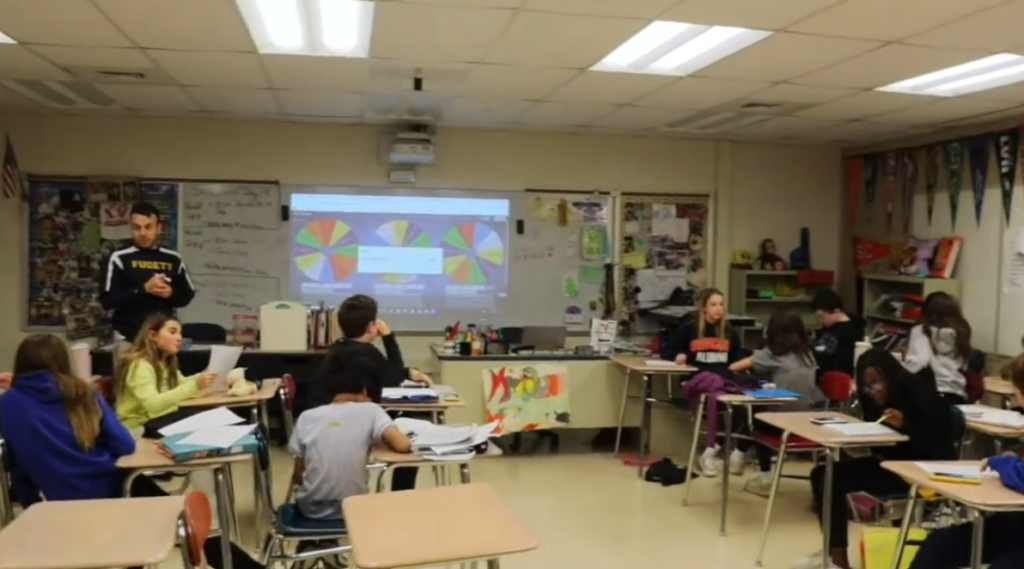
Despite all of their potential, it’s important to keep in mind that school-issued devices have a complicated history in the classroom. Nearly every student now has a Chromebook thanks to the pandemic-era rush to 1-to-1 computing, but test scores, by most accounts, remained unchanged. A middle school in Sapulpa, Oklahoma, polled its own instructors and parents regarding the use of technology. There was too much technology in the classroom, according to 70% of parents and an astounding 99% of staff. These figures did not originate from a think tank. They emerged from within the structure.
Concerns about generative AI in particular have intensified in Seattle. The 2024 publication of Washington State’s own AI framework for public schools has come under fire for its omissions. In an article published in The Seattle Times this spring, a philosopher from the University of Washington pointed out that the guidelines don’t address cognitive offloading, don’t address the emotional risks posed by AI companions, and offer privacy advice that essentially amounts to “continue to evaluate.” In the meantime, students are told in official state materials that they are “the ultimate AI tester.” Framing is hard for parents who create these systems on a professional basis.
This has a class component that no one wants to discuss too much, but it exists. Rich families are able to completely remove their kids from school and enroll them in private schools that prohibit screens and charge appropriately. However, they are now calling for public middle schools to provide the same option as a policy, not as a privilege. It’s possible that some of this enthusiasm is less about their own kids and more about a real discomfort with seeing AI tools—many of which are unproven—implemented widely on children whose families lack the time or technical know-how to object.
Whether the backlash becomes something lasting or burns itself out before making significant changes is the question that looms over all of this. In response to parent pressure, 74% of school districts nationwide report that they have not yet cut back on their investment in educational technology. However, a resolution to completely ban devices in first grade was recently passed in Los Angeles. A law was passed in Utah that allows parents to monitor their children’s usage of school devices and the websites they visit. Bills that would slow down classroom technology are currently being considered in at least 17 states.
It’s difficult to ignore the fact that those who were meant to be the most ardent supporters of technology are increasingly speaking up in this discussion. Something has changed when the engineers begin requesting the return of the pencils. The question of whether schools are prepared to listen remains largely unanswered.
