

The recent announcement of Deakin University’s restructuring has a detail that keeps coming up. In 2025, the university reported an operating surplus of A$56 million. Revenue increased by 10%. The earnings of international students increased by 15%. However, between those figures and the current situation, 130 to 150 staff positions are being eliminated, and over 620 workers have been informed that their positions are no longer available and that they must reapply for a smaller pool of positions. The official justification points to a “challenging operating environment.” It is more difficult to take that framing at face value because the excess sits there in silence.
Five days after the university began accepting comments on the proposed changes, Vice-Chancellor Iain Martin resigned with immediate effect on June 10. That departure’s timing is noteworthy. The statement made by Chancellor Claire Higgins to the staff that Martin had led Deakin through “the most difficult period in our recent history” and left it in a stronger position is likely accurate, but it is also somewhat irrelevant. A specific type of instability is absorbed by the organization when a senior leader abruptly leaves during a restructuring of this magnitude, encompassing over 1,800 positions. While the hunt for a permanent leader gets underway, Matthew Clarke, deputy vice-chancellor for research and innovation, has been named caretaker.
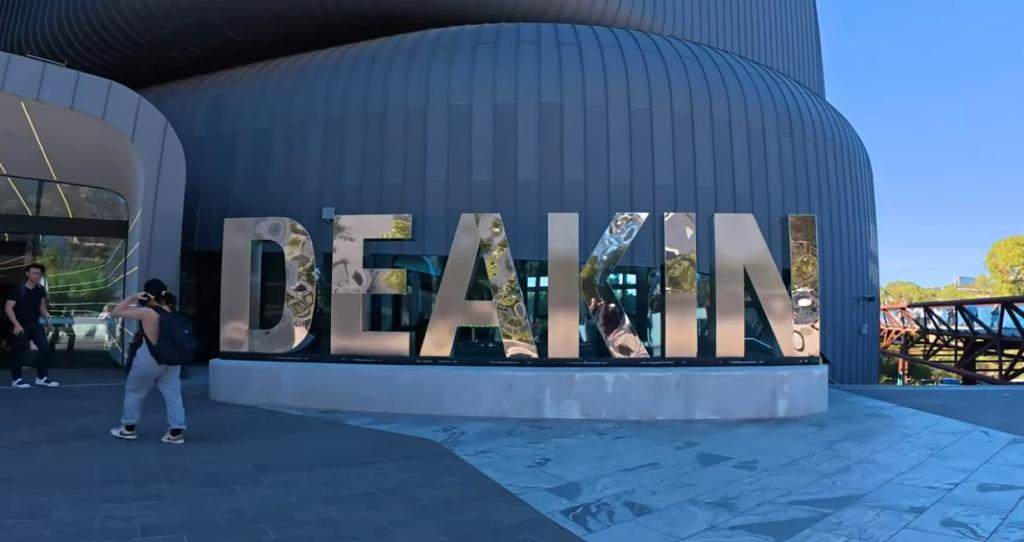
The cuts are concentrated in places that, until they heal, usually don’t feel noticeable. When you take into account what those teams actually do for students navigating coursework, deadlines, and the everyday challenges of university life, the term “completely decimated” is used by staff in educational support services, digital infrastructure, and library administration. Concerns regarding the outsourcing of student disability resources have been raised by the National Tertiary Education Union, indicating that the reorganization goes beyond merely reducing administration to directly impact services that students with particular needs rely on.
With campuses in Melbourne, Geelong, the second-largest city in Victoria, and Warrnambool, a regional coastal hub, Deakin is Australia’s seventh-largest university. Reece Walters, president of the NTEU branch, made an important point: layoffs at universities with regional campuses have an impact on the communities those campuses serve in addition to their employees. One of the bigger employers in a regional city is frequently a university. The effects of its contraction spread in ways that are not included in any calculation of operating surplus.
According to the university’s official statement, the procedure is a “genuine consultation” that lasts until June 19 and takes into account input prior to making any final decisions. Employees have heard that language before; Deakin eliminated 500 jobs following the pandemic, citing financial stability as well. The NTEU has pledged to examine the current proposals in “forensic detail.” Sarah Roberts, the secretary of the Victorian NTEU, called it “staggering” that cuts of this magnitude were being sought while a state parliamentary investigation into university governance was still in progress.
It’s difficult to ignore how well the official framing distinguishes between the cuts and the surplus, as if they were two distinct financial realities. Australian universities are dealing with real uncertainty regarding government policy and fluctuations in international enrollment. That is true. However, it is a decision, not an inevitable one, to absorb that uncertainty primarily through the workforce, and through support staff before academic staff. It’s still unclear if this reorganization will ultimately stabilize Deakin or erode some of its essential components. In a few days, the consultation period will end.
