

In toddler classrooms all over Queensland, and probably everywhere else, there is a seemingly common occurrence where a teacher crouches down next to a group of two-year-olds and says something like, “Look at that!” or, “Can you hear that sound?” It sounds insignificant. However, recent research from the University of Queensland indicates that it may be more important than previously thought for a child to hear “look” or “want” during those formative years.
Elizabeth Brook, a psychology honors student, led the study, which examined 182 playtime interactions between teachers and toddler groups at early childhood education and care facilities. Researchers were monitoring what is known as “mental state talk”—language that alludes to feelings, thoughts, desires, and perceptions. Most people don’t notice this kind of thing in conversation. However, it turned out that depending on the gender makeup of the group in front of them, teachers were acting differently.
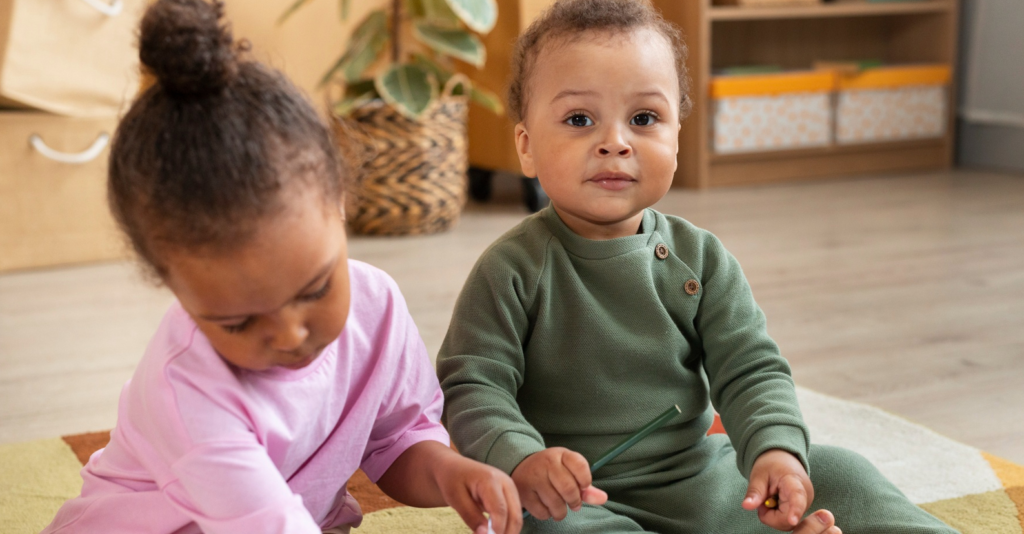
Perception-based words like “look,” “hear,” and “notice” were more common in groups with a higher proportion of boys. More desire-oriented words, such as “want” and “need,” were heard in groups with a higher proportion of girls. The difference appears to be negligible, almost insignificant. However, the researchers contend that those terms aren’t impartial. Words about needing and wanting assist kids in developing a functional model of intentions and goals, which is essential for their social and emotional growth. Seeing and noticing words are more about focusing attention on the outside world. Both are important. Whether kids are routinely receiving just one is the question.
The fact that it wasn’t about specific educators making deliberate choices makes the conclusion more difficult to reject. In these classrooms, no one made the decision to speak to boys in a different way than to girls. The point is that the pattern developed organically. The Queensland Brain Institute at UQ’s Dr. Aisling Mulvihill cautioned that the study shouldn’t be interpreted as a criticism of teachers. This goes deeper than that; it’s a pattern ingrained in the way we all talk to kids based on what we believe, consciously or unconsciously, boys and girls need from us.
The results are weighted by the larger context. Boys are almost twice as likely as girls to start school with quantifiable social and emotional vulnerabilities, according to national early development data from Australia. Researchers are unsure of the exact cause of this startling gap. This study raises the possibility that something as commonplace as the language used in a daycare center could be one contributing factor, but it does not draw any conclusions. The extent to which differential communication influences that vulnerability in comparison to other social and biological factors is still unknown. However, it is hard to overlook the correlation.
Children in some gender-coded language environments aren’t only experiencing this in one setting, as similar patterns have been observed in parent-child interactions at home. It follows them everywhere, from the play mat at the care facility to the breakfast table. Even in tiny doses, that kind of repetition has a tendency to compound.
The researchers were honest about the limitations of the study. It is based on observation. It finds a pattern but doesn’t explain where it came from or how it will affect things in the long run. Future studies must determine whether purposefully exposing every child to a wider variety of mental state language would affect developmental outcomes. However, the question’s direction seems significant. It implies that even the smallest linguistic units, such as a single word like “want” or “look,” may be doing more developmental work than they seem to, and that the children who hear them may not be hearing them equally.
