

On a weekday morning, if you drive down Laurel Canyon Boulevard, you’ll pass a campus that doesn’t make a big deal out of itself. No imposing gates. No billboard-style signage. It’s just a small school nestled into the hillside of Studio City that doesn’t reveal much about what goes on inside. That’s Campbell Hall, and the name carries a weight that the building’s exterior doesn’t really convey to anyone who has spent time in Los Angeles education circles.
Initially operating out of a church building on Radford Avenue, the school was founded in 1944 by the Reverend Alexander Campbell and offered kindergarten through sixth grade. It wasn’t attempting to establish itself as an institution. It was an attempt to place religion at the core of everyday education, which was a particular and thoughtful educational philosophy for Los Angeles in the 1940s. It expanded over the ensuing decades, adding junior high grades, a girls’ high school, and finally becoming fully coeducational in the middle of the 1980s. The moniker “Viking” endured. The gold and navy blue also did.
Perhaps no school in the Los Angeles region has produced an alumni list as diverse as this one. Campbell Hall honored Paul Thomas Anderson, the director of some of the most visually ambitious American movies of the past three decades. The Olsen triplets, Mary-Kate, Ashley, and Elizabeth, as well as Dakota and Elle Fanning, also did. NBA champion Jrue Holiday is a graduate. Justin, his brother, is as well. Washington, John David. Winter, Ariel. The list never ends, and it’s the kind of list that begs the question, “Is this a coincidence of geography, or does something about the place actually produce people who go on to do remarkable things?”
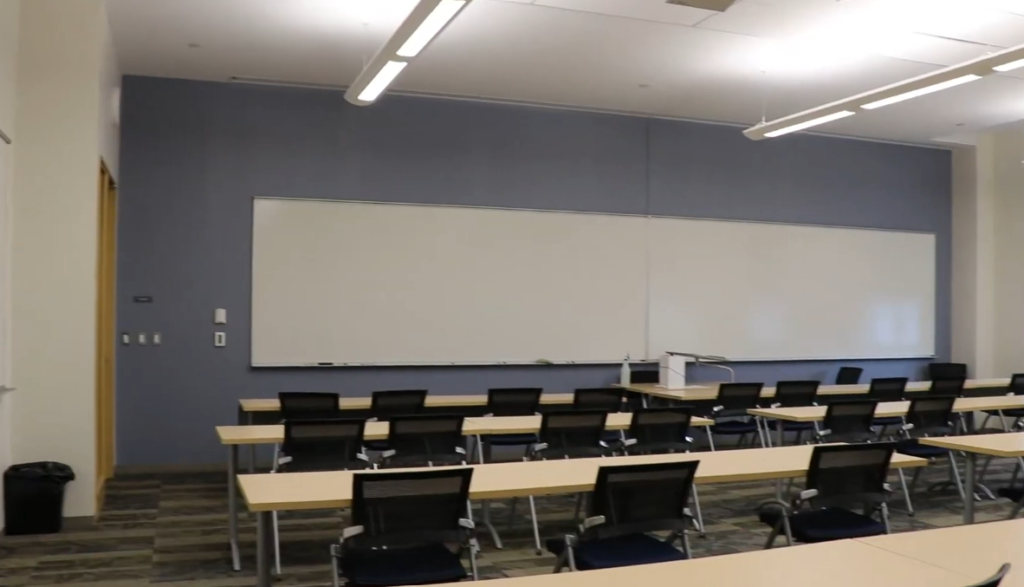
There is a feeling that the solution is most likely in the middle. In a very literal sense, Studio City is next to the entertainment industry; many working actors and directors simply reside nearby, and their kids go to the nearest school. However, the program at Campbell Hall isn’t taking advantage of its zip code. With a faculty-to-student ratio that enables real attention to each child, the school maintains an average secondary class size of about sixteen students. Orchestra, dance, voice, drama, and a World Music Program for senior students are all part of the performing arts program, which is not an elective. It’s incorporated into the curriculum starting in kindergarten, which may help to explain why so many graduates feel at ease in front of audiences and cameras.
For the 2026–2027 school year, the cost of tuition ranges from about $48,700 for elementary school to slightly over $57,000 for grades seven through twelve. Nobody brings up that number lightly. About 22% of students receive financial aid, with grants typically covering half of the cost of tuition. The school appears to recognize that this is a significant commitment. Although the school is by no means an open-access institution, the fact that it devotes more than three million dollars of its yearly budget to that endeavor suggests the administration is at least attempting to prevent the student body from turning into a purely economic monoculture. For a private Episcopal school in an affluent area of Los Angeles, it is noteworthy that students of color make up about half of the current student body.
The school’s own materials prioritize character and inquiry over doctrinal instruction, but the Episcopal tradition is still evident—chapel is still a part of school life. The motto, which translates to “Do Not Forget” in Latin, is inscribed somewhere in the institution’s DNA rather than being written on every surface. Depending on how you feel about private education in general, you may interpret that as a reminder to remain grounded or as a nod to tradition.
When you look at Campbell Hall from the outside, what sticks with you is how consistently it seems to produce creative professionals who have a certain self-possession. Making that is challenging. It’s either a selection effect from the families who choose it, or it’s ingrained in the local culture for more than eight decades. It’s probably both.
