

People who grew up close to Ontario’s wartime training airfields will always remember this sound. A low, throaty growl that appears to originate from deep within the apparatus; it is neither quiet nor polished, nor does it resemble the smooth hum of contemporary aircraft. The Harvard was that. And you begin to see why this aircraft will never be forgotten once you’ve heard it or read enough about what it meant to a generation of young men climbing into cockpits for the first time.
In 1937, the North American Harvard—also referred to as the Texan, the AT-6, or just the “Yellow Peril”—was created in response to a request for an advanced training aircraft from the U.S. Air Corps. The first fifty Harvard Mk were given to Canada. is in July 1939 at RCAF Sea Island in British Columbia. The Mk. II version, which had a completely metal fuselage in place of the previous tube-and-fabric design, was already being assembled in California by early 1940. A more resilient aircraft for a world rapidly losing its peace.
One of the most impressive manufacturing initiatives in Canadian aviation history ensued. In August 1938, Noorduyn Aviation of Montreal signed a licensing agreement with North American, which proved to be a wise move. Noorduyn was prepared for the official launch of the British Commonwealth Air Training Plan in December 1939. The company produced almost 2,800 Harvard Mk between 1940 and 1945. IIBs for the RAF and the RCAF. It’s difficult to ignore the fact that a nation the size of Canada essentially created the Allied air power’s training foundation during those years.
It was not a gentle aircraft, the Harvard. Pilots who have flown it frequently characterize it as rigorous, sometimes harsh, and utterly indifferent to negligence. Part of the point was that. The Harvard came into their lives like a harsh awakening after young recruits had earned their wings on lighter, more forgiving machines like the Fleet Finch and the de Havilland Tiger Moth. It served as a link between front-line fighters and primary trainers. Pilots switched to Hurricanes, Spitfires, and Mustangs after the Harvard. Many of those pilots would never have made it through their first actual combat mission if it weren’t for the Harvard.
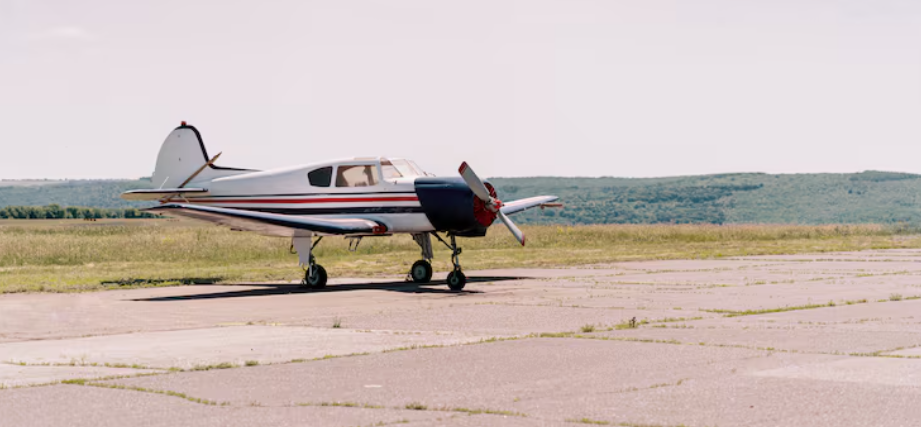
By the end of World War II, about 8,000 Allied airmen and 11,000 Canadians had trained to fly Harvards in Canada alone. The yellow-painted aircraft became almost symbolic throughout the fifteen Service Flying Training Schools of the BCATP, a warning-colored rite of passage. The moniker “Yellow Peril” was associated with both affection and a certain level of earned respect. Naturally, the mandatory yellow paint scheme for training aircraft made sense. However, there was something almost theatrical about all those bright machines roaring over the Canadian farmland and prairies, transporting young men to a war they could hardly fathom.
1945 was not the end of the Harvard story. After the war, the RCAF first sold off a lot of personnel, but it quickly regretted it as the Cold War altered world politics. By 1949, they were ordering an additional 270 Mk. IV Harvards from Canadian Car & Foundry in Thunder Bay and leasing T-6J Texans from the USAF. Before being retired in 1966, the aircraft was used for an additional fifteen years. Between 1938 and 1954, 20,110 Harvards were produced globally, with 3,370 of them assembled in Canada.
These machines are literally kept alive today by the Canadian Harvard Aircraft Association in Tillsonburg, Ontario. The organization, which will celebrate its 40th anniversary in 2025, maintains a collection that links the present to something that most people only read about in history books, flies its Harvards in formation, and provides public rides. There’s a sense that some machines have memory in their metal when you watch a Harvard bank over a peaceful Ontario airfield on a Saturday morning, that old engine growling steadily. This one does, for sure.
