

Walking out of college with one semester remaining in your sophomore year, no degree in hand, and staking everything on a sport where most people fail requires a certain kind of nerve. In retrospect, Jordan Spieth’s December 2012 action hardly seems like a risk at all. However, no one could have assured him that it would succeed at the time.
When Spieth enrolled at the University of Texas in the fall of 2011, he was already well-known. He was the nation’s top-ranked junior golfer, a three-time state champion from Dallas’ Jesuit College Preparatory School, and a two-time U.S. Junior Amateur champion with only Tiger Woods. He was followed to Austin by expectations. He got to know the majority of them. He led the Longhorns in scoring average, won three events, and assisted the team in winning the 2012 NCAA Championship in just his freshman year. In a single season, he won Big 12 Freshman of the Year, Big 12 Player of the Year, and first-team All-American honors. Most college golfers never put together a resume like that over the course of four years.
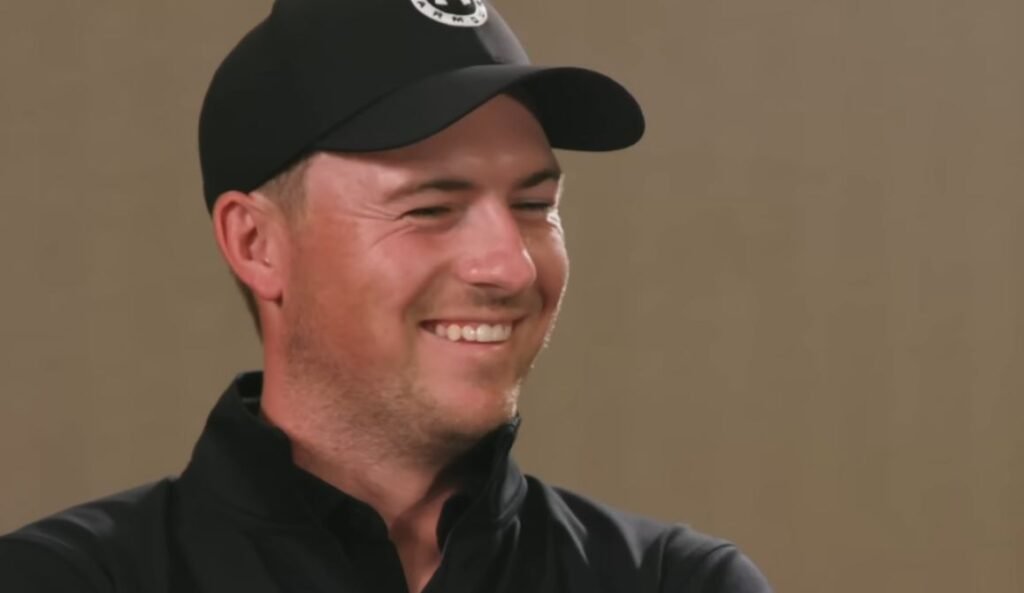
However, it’s easy to overlook how brief that time in college was. After failing to make it through PGA Tour qualifying school, Spieth played a freshman year and one semester of his sophomore year before turning pro in December 2012. It’s worth taking a moment to consider that particular detail. He didn’t depart after winning a final competition. Despite the immediate evidence to the contrary, he left after a setback on his own internal clock, certain that the timing was correct. That choice exudes a subtle confidence, the kind of self-assurance that doesn’t always appear astute at the time.
He never returned to complete the degree. More than ten years later, this fact still comes up in trivia questions and “did he graduate” searches, which speaks to how unique his path is in a sport that has become more and more collegiate. Nowadays, many tour pros graduate from four-year programs at Texas, Stanford, or Oklahoma State. Even in his own sport, Spieth’s shortened version—one full year and one half-finished semester—stands out as the less-traveled path.
The payout arrived quickly enough to dispel most skepticism. The 19-year-old Spieth became the youngest PGA Tour winner in 82 years when he won the John Deere Classic in a playoff seven months after leaving Austin. He won both the U.S. and the Masters two years later. Open in the same season and achieved the top spot in the world rankings. It’s difficult to ignore how short that timeline was—just three years from college dropout to the world’s greatest golfer.
In interviews over the years, he has largely avoided answering the question of whether he ever regrets missing the remainder of campus life. Perhaps there’s nothing to be sorry about. He won a national championship in college golf and had a brief, formative opportunity to compete against peers his own age. After that, the professional game gave him everything. It’s possible that both statements—that Texas was very important and that leaving it when he did was equally important—are simply true at the same time.
