

On June 22, three students entered the school in Tacloban City, Leyte, and failed to return home. It is said that two of their classmates, who were 14 and 15 years old, entered their classroom, raised their guns, and started shooting without saying anything. Later, about forty shell casings were found at the location. Three pupils lost their lives. Three were hit by bullets. In the frantic attempt to flee, four more people were hurt. It’s the kind of incident that is nearly impossible to comprehend, particularly in a nation where school shootings are, by most accounts, incredibly uncommon.
Colonel Allen Rae Co of the Philippine National Police claims that the purported motivation seems to have been a resentment stemming from bullying. This is more difficult to accept just because of that detail. Bullying is not a brand-new issue anywhere in the world, but it got worse here—quietly, with no one intervening—until it was too late.
A 9mm handgun that belonged to a police officer who is related to one of the suspects was one of the weapons used. She is currently being held. The other was a revolver with a caliber of .38. Jennelyn Badoria, the mother of a 15-year-old who was killed, stood outside the school and stated unequivocally that gun owners need to be held responsible. That is difficult to dispute. Teenagers do not obtain firearms without some sort of oversight, parenting, or safe storage failure. Three young lives were lost as a result of that failure.
The fact that the warning signs appeared to be visible makes this more difficult to ignore. One of the suspects, according to the police, posted violent videos of himself shooting a gun on social media. At a press conference, Co stated, “Very obvious red flags,” carefully pointing out that he wasn’t placing blame, even though the implication was obvious. This could have been seen by someone. Someone ought to have.
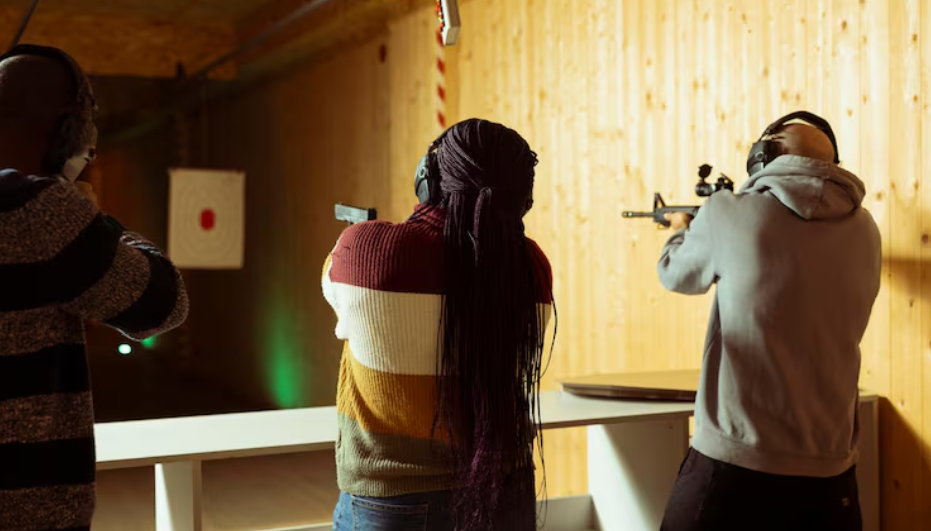
Following tragedies such as these, there is a propensity to discuss what “should” have been done in retrospect as if it were easy. It isn’t. For better or worse, unlike some Western institutions, schools in the Philippines and many other parts of Southeast Asia are not built around threat assessment or behavioral intervention frameworks. In addition to calling on authorities to review security procedures, bolster anti-bullying policies, and increase student mental health services, the Commission on Human Rights has already dispatched a team to conduct an investigation. These are the appropriate calls. As usual, the more difficult question is whether they result in real structural change.
The city where San Jose National High School is located is already familiar with collective grief. When Super Typhoon Haiyan ravaged the Visayas in 2013, killing about 6,000 people and leaving behind severe economic damage that many communities are still recovering from, Tacloban was among the worst-hit. This city bears a certain burden of bearing this specific type of loss. A location that recovered from one type of destruction must now make sense of another.
Due to their age, the two suspects are covered by the Juvenile Justice and Welfare Act. The Commission on Human Rights has made it clear that while accountability must be sought, children who are in legal trouble must also be given the protections they are entitled to. Even though they may seem that way when grief is still raw, these are not diametrically opposed ideals. Even though it receives less attention, what happens to these two teenagers—legally, psychologically, and socially—will be just as important as the investigation itself.
Whether the students who perished were even the intended targets is still up for debate. The whole thing feels more, not less, nonsensical because of that uncertainty. Investigators are still unsure of the target of forty shell casings found on a classroom floor. Even though it seems insignificant, that detail conveys something about the chaos of what transpired in that room and what the students who survived are now dealing with.
The office of President Marcos sent its condolences. Prayers were required, according to the Department of Education. Both answers make sense, but they are insufficient on their own. Making schools safer, not just in Tacloban but throughout the archipelago, requires persistent, unglamorous institutional work, which is always more difficult to accomplish. Two distinct stabbing incidents happened at Cavite schools in the same week, according to the Commission on Human Rights. This is not a singular, isolated incident. It is a pattern that begs to be taken seriously.
