

At the end of winter quarter, six student teams pitched their ideas to mentors and other students at the UC Davis Student Startup Center. The ideas ranged from making syrup from used coffee fruit that can be stored for a long time to creating digital tools that help patients get ready for GLP-1 medications. The room was calm and focused at the same time. These weren’t exercises in theory. What the students brought to their final presentation showed that they had spent ten weeks talking to farmers, doctors, food producers, and people who haul trash.
It was called “Innovation for Impact: Food Systems,” and it was the newest course in UC Davis’s “Hacking 4” series. The idea is simple: find someone who is actually having a problem with food and farming, and then make something that people will want to invest in. It seems easy. It’s not.
Associate instructor Alice Dien, who is working on her Ph.D. in biological systems engineering, helped run the course with Aaron Anderson, who is in charge of the Student Startup Center, and Dana Armstrong Hughes, who works for the Innovation Institute for Food and Health. Dien got into business by taking a pretty honest side trip. She worked for years on making better drying systems for agricultural products, which was useful and technically sound work. Then she realized she had been doing this for four years without ever going inside a drying facility or talking to the people who worked there. She became very worried about the difference between what engineers build and what the world really needs.
In engineering education in general, there is a tension like this. The training is precise, technical, and a lot of the time, great. The question of whether what you’re building is something people will actually use or pay for is something that it tends to leave out. Dien is honest: one of the main reasons startups fail is that they build to solve a problem they thought existed instead of one that was proven to exist. She says that this is especially likely to happen to technical people. Things can get built faster than people can think about whether they’re worth building.
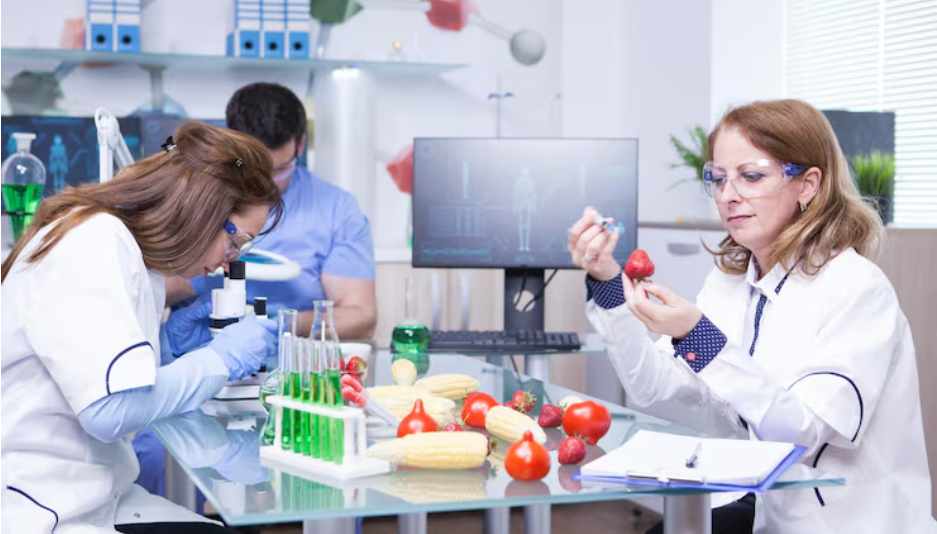
Through the Lean LaunchPad method, the course tried to fill that gap. This method requires teams to leave the classroom and talk to real stakeholders before choosing a solution. The group of 23 students did more than 150 interviews in ten weeks. Some groups went to partner businesses out in the field. Mentors from Ajinomoto, Nestlé Health Science, and a number of UC Davis startups met with teams once a week to make sure that the work was based on real problems in the industry and not made-up examples.
There was a surprising range of skills on the six teams that made it out. NitroPower was working on turning the ammonia that comes from breaking down manure into organic fertilizer. CoMatter was working on a way to certify agricultural waste like almond shells and legume hulls so that they could be used as raw materials in other products. Cascarify was making a syrup from coffee cascara, which is the fruit that is usually thrown away when coffee is processed. This could turn a huge amount of waste into a source of income. Midnight Munchers helped UC Davis students who were hungry by connecting people who had extra food with organizations that could use it.
The problems the students picked didn’t seem to be picked at random. They were shaped by their mentors, the area, and UC Davis itself, which has a history of agricultural research and is surrounded by farms, processors, and a growing group of food and agriculture startups. You can’t help but notice how much the environment itself is used to teach.
But Dien didn’t find any particular business model or product pitch to be the most important thing. She had seen the shift in the room happen over the past three months. Soon, when a guest speaker—often a CEO or an experienced innovator—came in, Dien spoke for most of the time. In the last few weeks, the students were in charge. They were asking pointed, specific questions that were based on the problem their own business was facing. She says that was her real teacher moment. Not a PowerPoint or a graded presentation, but seeing students take over a meeting with a business leader and ask the important questions.
She says that information can be learned and remembered. It’s harder to behave. You can’t learn how to deal with negative feedback, change your plans when a competitor does the exact same thing you planned, or make a choice when you don’t have all the facts. You have to learn these skills on your own. They come from being there.
A lot of the student teams are going to keep going after class is over. Five of them have entered competitions or are still working on their projects. That seems to be the most accurate way to tell if this kind of course works.
