

It was never just a building. Anyone who has walked up Renfrew Street in Glasgow on a cloudy morning and seen the Mackintosh facade—that strict, beautiful grid of windows rising against the Scottish sky—knows this to be true. The Glasgow School of Art is more than just a spot in the city’s map. For almost 180 years, it has shaped what people think of as creative in Scotland.
The school was founded in 1845 as the Glasgow Government School of Design. It changed its name several times before settling on its current, famous name. It moved several times and grew slowly until it finally found a home on Garnethill, a neighborhood that was first built in the early 1800s. This is where it would create something that students, architects, and art lovers would travel from all over the world to see.
The building, which was designed by Charles Rennie Mackintosh and finished in stages from 1896 to 1909, quickly became the most important part of the school. It was one of the first buildings in what is sometimes called the “Modern Style,” which is Britain’s version of Art Nouveau. Mackintosh’s style was so unique that the building still feels very different today. It’s precise without being cold. People who knew the building well said that the library was one of the most beautiful rooms inside in all of Europe. Take a moment to think about that. Not in the UK. In Europe.
Then 2014 came along. When the fire started in the basement, students were getting ready for their Degree Show. The fire quickly spread through the building’s original timber-lined walls and ventilation ducts. In the end, the cause was found to be a canister of expanding foam that was used near a hot projector. At first, it was thought that the projector itself was to blame. There was damage to the library. The archive had a lot of damage from water, but it was later air- and freeze-dried. The fact that no one was hurt made the loss of the space feel even stranger and more unique. The library’s interior was carefully recreated using original wood species like longleaf pine and tulipwood as the restoration work began.
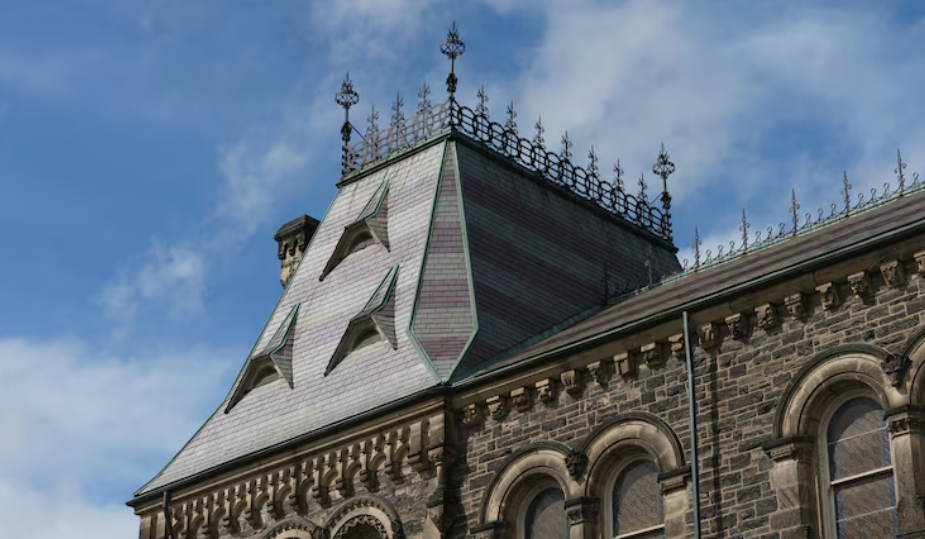
Then there was a second fire in June 2018. It was worse this time. The only part of the Mackintosh building that was left was its shell, which burned down and ended up on a hill. The restoration work that had already been done was also gone. Still, it’s not clear when the full rebuild will happen, but there are plans to rebuild the building according to Mackintosh’s original plan. In Glasgow, it seems like people are waiting for more than just a building. They want something to be given back to them.
Not only is the school’s famous building interesting, but so is what goes on inside it, and this has always been the case. Since 2005, thirty percent of all Turner Prize nominees and six winners have come from the Glasgow School of Art. They are Simon Starling, Richard Wright, Martin Boyce, Duncan Campbell, Charlotte Prodger, and Jasleen Kaur, who won in 2024. It’s amazing how many well-known artists have come from one school in one Scottish city over the course of twenty years. The Mackintosh School of Architecture is always highly regarded by its peers, and Design Week has called the School of Design a leader in design education, which sounds like a real compliment rather than an attempt to sell something.
These days, the school is split into four academic areas: Design, Architecture, Fine Art, and Technology and Innovation. It also has open studio programs for adults and kids. The University of Glasgow gives out all degrees. For some reason, this institution has managed to stay both prestigious and alive—not frozen in amber, but actually making artists who change culture in ways that can still be seen.
It’s hard not to feel sad when you walk by the burned-out shell of the Mackintosh building today. You can’t help but notice that school kept going, though. Students kept coming in. Making art kept happening. It’s possible that the Glasgow School of Art’s honesty is best shown by its persistence rather than any one building.
