

When a witness says something that cannot be retracted, a certain kind of silence falls in the courtroom. On the tenth day of Lindsay Clancy’s murder trial at Plymouth Superior Court in Massachusetts, Dr. Jennifer Tufts, the psychiatrist who provided Clancy with 14 telehealth sessions, acknowledged that she was “surprised” to discover that her patient had made two calls to a suicide hotline while they were collaborating. Then she said, almost softly, that she didn’t believe she had ever inquired.
Lindsay Clancy was treated by Dr. Tufts from September 2022 until January 23, 2023, the day before Clancy attempted suicide by strangling her three children and jumping from a second-story window. All of those sessions were conducted via video. 25 minutes apiece. electronic forms. No in-person meetings. Clancy’s full medical records from previous outpatient care are not accessible. There is no intrinsic problem with video appointments, and telehealth has increased millions of people’s access to mental healthcare, so it is possible to envision a scenario in which that strategy was reasonable. However, as the cross-examination progresses, it’s difficult to avoid feeling that something more essential than a face-to-face meeting was lacking.
As Clancy’s symptoms worsened during their sessions, defense lawyer Kevin Reddington spent about three hours questioning Tufts about her techniques, her knowledge of postpartum psychosis in particular, and the number of medication changes she made.
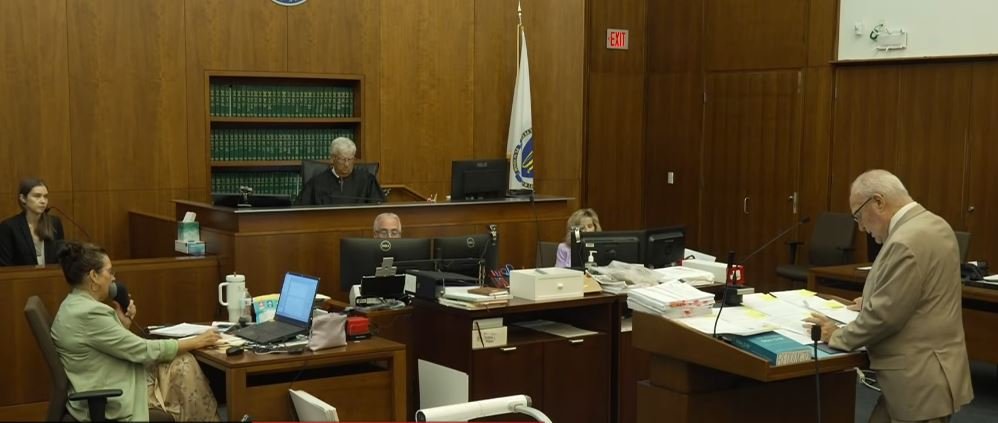
Reddington once blatantly suggested that she was functioning like a “robot” that checked boxes, modifying prescriptions, recording observations on standard forms, and so forth. Tufts refuted that description, and to be fair, she did mention informing Clancy that “hope” and “treatments exist.” However, Tufts said that speaking over video “didn’t seem like an issue” and that she didn’t feel like she was missing anything when Reddington asked if she had ever recommended Clancy visit her in person. This case will probably be followed by that response for a very long time.
Clancy was diagnosed by Tufts with adjustment disorder with depressed mood and generalized anxiety disorder. She failed to diagnose postpartum psychosis and bipolar disorder, which the defense contends was the real illness destroying Clancy from the inside out. According to Tufts’ testimony, Clancy never mentioned hearing voices, never disclosed manic episodes, and displayed no overt symptoms of psychosis during their sessions. That might be the case. It’s also true that, according to several accounts, Clancy struggled to maintain her composure in front of every professional she came into contact with, despite writing in her personal journal that she felt like a zombie and needed a mental vacation. No 25-minute video call could ever adequately convey the tension between what Clancy was presenting and what she was actually experiencing.
The treatment Clancy received, according to the civil lawsuit naming Tufts and other providers, amounted to a disjointed and insufficient response to a patient in critical decline. In her testimony, Tufts also acknowledged that she was unaware of Clancy’s inpatient psychiatric stay, which took place in January 2023, a few weeks before the killings, until after Clancy had been released. She hadn’t looked for those documents on her own. She had relied on Clancy to tell her what was pertinent. Clancy has now spent significantly more time in courtrooms over this case than she ever did during those sessions, according to a Reddit commentor who noted that Tufts treated her for about nine hours in total. It lands, and that observation is dark.
In the larger context of this trial, it is still unclear how the jury is interpreting Tufts’s testimony. The prosecution has taken care to clarify that this is not a referendum on the mental health care system. However, it seems more and more like it is—not just for Lindsay Clancy, but for every postpartum mother who entered a telehealth session, responded to the questions posed to her, and left still in a state of quiet distress. Regardless of the criminal jury’s verdict, Tufts is named in a malpractice lawsuit that will go forward. When this trial is over, the question of whether she failed Lindsay Clancy won’t go away. It’s only getting started, if anything.
