

It’s difficult to forget the moment Lily Collins described in an interview. After months of closely watched weight loss for her 2017 Netflix movie To the Bone, she was noticeably thinner as she left her apartment when someone her mother’s age gave her a thorough examination and remarked, “Oh wow, look at you.” Collins attempted to clarify that it was for a role, but the woman dismissed her with a wave. “I want to know what you’re doing, you look great.” As Collins and her mother got into the car, Collins muttered, “That is why the problem exists.”
More can be learned about Hollywood’s weight debate from that exchange than from any tabloid headline.
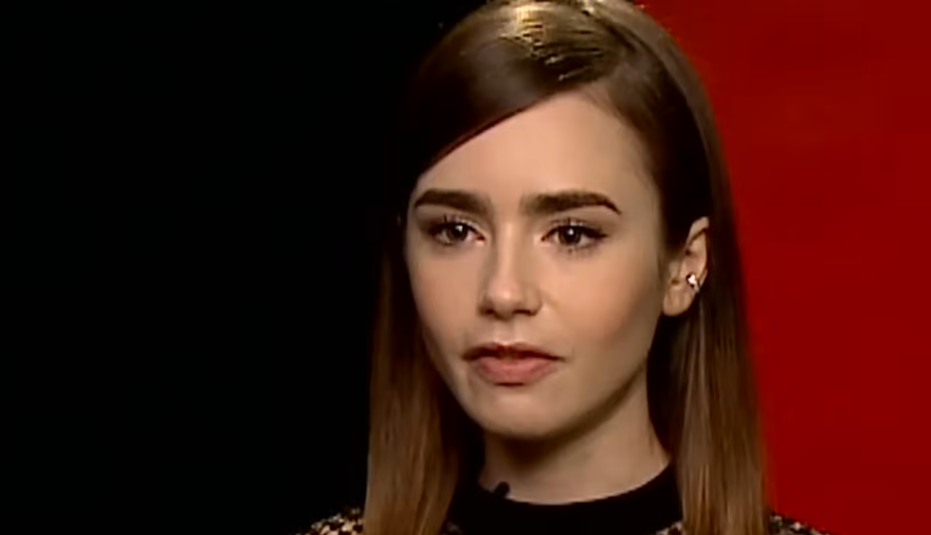
Collins, who is currently 36 years old and well-known for her performance in Emily in Paris, has been open about her history of eating disorders in a way that is uncommon in the entertainment business. She claims that her battle with bulimia and anorexia started at the age of sixteen, coinciding with the divorce of her father, singer Phil Collins. She has characterized it as a time when eating ceased to feel like a natural aspect of life and instead became something she had to control, manage, and eventually punish herself for.
Collins had to shed an estimated twenty pounds in order to play Ellen, a young woman receiving inpatient treatment for anorexia in To the Bone. Most actors might find that request uncomfortable. Collins saw it as something quite different. She described it as a “scary process,” but she also admitted that she was held responsible the entire time, working with a nutritionist in the company of a supportive group. The oversight was important. Although it made the experience safer, it wasn’t any easier.
She took the role of that character very seriously, both emotionally and physically, which is noteworthy. Before taking on Ellen’s role, she had spent years in her own recovery. Reading thru her interviews over the years gives the impression that she was approaching the role more as a reckoning than as a performance exercise.
After To the Bone wrapped, the discussion about her body continued. Collins wrote on Instagram in early 2026 during Eating Disorder Awareness Week about how sharing her past has been “terrifying but rewarding.” Recovery, according to her, is “an ongoing process” rather than a benchmark you reach and then move on. This framing is important, particularly in a time when changes in a celebrity’s weight are captured on camera, examined, and discussed online within hours.
It’s still unclear if the media’s portrayal of bodies has actually improved since 2017 or if its language has simply changed. Open admiration for thinness has mostly been replaced by concern-framing, but the obsession persists. Collins has been at the center of that cycle on multiple occasions. Concern over her appearance in Emily in Paris has been the subject of headlines and Reddit threads, which are frequently written by people who may not have realized they were acting in the same way as the woman outside the apartment.
Over the years, in interviews and Instagram posts, she has repeatedly stated that no one must suffer in silence. The message is straightforward, perhaps even self-evident. However, she made the offer from a location that seems lived in.
