
Close Menu
WorldomepWorldomep
  • Home
  • Privacy Policy
  • Disclaimer
  • Terms of Service
  • About
  • Trending
  • Worldomep
  • News
WorldomepWorldomep
Subscribe
  • Home
  • Privacy Policy
  • Disclaimer
  • Terms of Service
  • About
  • Trending
  • Worldomep
  • News
WorldomepWorldomep
Home»Schools»Banning Cellphones in Classrooms: The Highly Unpopular Policy That Actually Works Wonders
Schools

Banning Cellphones in Classrooms: The Highly Unpopular Policy That Actually Works Wonders

Nelson RosarioBy Nelson RosarioApril 28, 202605 Mins Read
Share Facebook Twitter Pinterest Copy Link LinkedIn Tumblr Email Telegram WhatsApp
Share
Facebook Twitter LinkedIn Pinterest Email Copy Link

After having to tell students to put their phones away four times in a single class period, teachers experience a particular kind of exhaustion. Not exactly rage. Something more akin to resignation combined with real concern.

Before smartphones became pocket-sized dopamine dispensers, the classroom was a different place, noisier in some ways, quieter in others, but fundamentally more present, according to anyone who began teaching. The pupils were present. They aren’t anymore, more and more.

Topic Overview: Cellphone Bans in Schools
Policy TypeCellphone restriction / full ban in school premises
Countries ImplementingFrance, United States, United Kingdom, Australia, Italy
Age Groups AffectedPrimarily students under 15; some policies extend to all grades
France Law Year2018 — banned smartphones, tablets, smartwatches for under-15s
US School Statistics80% of U.S. schools ban phones for nonacademic use
Teen Phone Addiction Rate50% of teenagers report feeling addicted to their smartphones
Hourly Check Compulsion78% of teens feel the need to check their phone at least once per hour
New Term CoinedNomophobia — fear of being without a mobile phone
Key Concern Driving BansDeclining attention spans, cyberbullying, reduced physical activity
Key Critic ArgumentSafety concerns — students can’t contact parents in emergencies
Neuroscience FindingKorea University study linked smartphone addiction to elevated neurotransmitter levels associated with anxiety and poor focus
Education Minister (France)Jean-Michel Blanquer — called the ban “a law for the 21st century”
Known Effective Tool Used in SchoolsKahoot (interactive quiz platform) — a rare approved phone-based classroom tool

For years, no one wanted to fully commit to the policy of prohibiting cellphones in classrooms. Honor systems, phone pockets on the wall, and the hopeful “use it as a learning tool” strategy were examples of middle-ground approaches that schools tried. With the idea that if you can’t overcome the addiction, you might as well reroute it, educators turned to apps like Kahoot. In certain schools, phones are permitted during lunch but not during class. Others issued ambiguous guidelines, which teachers applied with wildly uneven vigor. Thankfully, the outcomes of all these experiments were inconsistent. Pupils are creative. The pull of a notification seems to outweigh most classroom management techniques, and a phone in the pocket is still a phone.

France concluded that it had had enough. A law prohibiting students under the age of 15 from using smartphones, tablets, or smartwatches on school property was passed in 2018. Jean-Michel Blanquer, the minister of education, put it in an intriguing way by saying that it prepares kids for modernity. The claim that technology is flawed was not made. It was that it is detrimental for kids to have unlimited access to it during the times when they should be honing their concentration and social skills. It may not seem important, but that distinction is crucial.
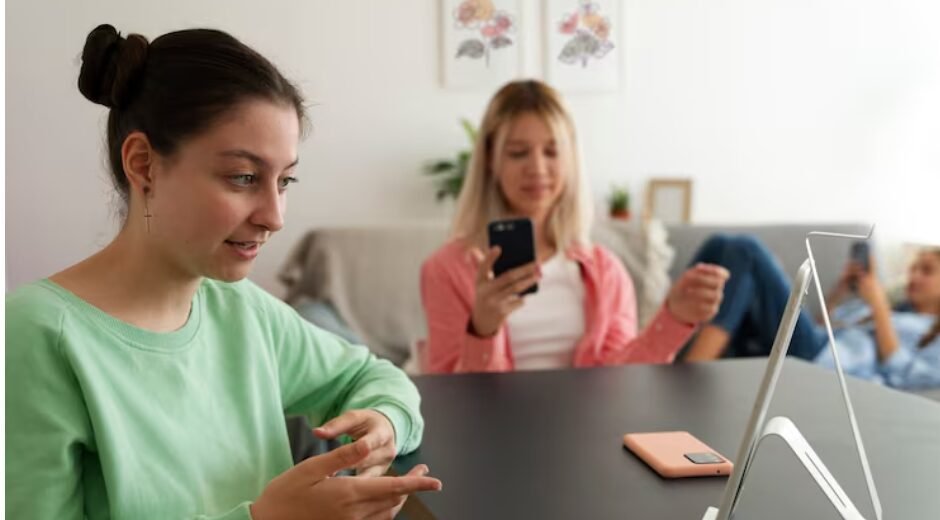
Banning Cellphones in Classrooms

Critics retaliated right away, and for good reason. The biggest worry was safety; parents want their kids to be reachable in case something goes wrong at school. Others brought up the fact that a lot of educators already forbade cell phones in their own classrooms, making a national law seem more like theater than reality. Additionally, there was the more general philosophical question of whether protecting teenagers from the digital world they are about to enter is a good idea. There might be some truth to that. However, it’s also possible that the argument has been used for years as a handy excuse to sidestep the more difficult task of actually removing the devices.

Silently, the science continues to accumulate on one side. According to a Korea University study, kids with smartphone addictions had higher levels of a specific neurotransmitter linked to anxiety and trouble focusing. Of all teenagers, half identify as addicts. According to 78% of respondents, they are forced to check their phones at least once every hour. The anxiety people experience when they are away from their devices is known as nomophobia, which is now a recognized clinical term. These are not statistics from the periphery. A generation is described by them.

The most startling thing is probably what occurs in schools where complete bans are actually implemented—not the lax, ineffective regulations, but the ones where a phone is confiscated if it is visible. Teachers in these settings talk about children chatting to one another during lunch, which sounds almost nostalgic. Students are looking at each other. Even though they are still not as long as they were twenty years ago, attention spans have significantly improved. It’s still unclear if these improvements will last over time or if the benefits vanish as soon as students leave the school and return to their screens. Even though the whole picture is still unclear, educators who have closely observed this feel that the direction is correct.

It’s difficult to ignore the fact that this discussion has been going on for a while, and the organizations that finally took decisive action instead of continuously debating appear to be the ones seeing results. It turns out that the unpopular policy may have been the right one all along.

Cellphones Classrooms
Follow on Google News Follow on Flipboard
Share. Facebook Twitter Pinterest LinkedIn Tumblr Email Copy Link
Nelson Rosario

    Nelson Rosario is an Editor at worldomep.org and a law school student who has found, somewhere in the intersection of legal theory and human development, a cause worth building a career around: ensuring that every child has access to quality education and the healthcare they need to thrive. Nelson approaches child advocacy with the analytical precision of a person who has been taught to analyze systems, spot flaws, and make the case for change. His knowledge of how policies are made, where they fall short, and what it would take to hold institutions accountable for the children they are meant to serve has improved as a result of his legal education. His support, however, goes beyond academics. It stems from a sincere belief that early childhood health and education are not being adequately addressed by the legal and social frameworks in many places. Nelson adds a legal and policy perspective to discussions about child welfare through his contributions to worldomep.org, asking not only what ought to be done but also what can be required, safeguarded, and upheld.

    Related Posts

    Study Uncovers How Elite American Schools Circumvent State Suspension Bans to Punish Minority Students

    April 28, 2026

    The ChatGPT Election: How Deepfakes in the Classroom are Forcing a Media Literacy Reckoning

    April 28, 2026

    From Village Elders to Global Policy: The Untold History of Early Childhood Care and Education

    April 28, 2026
    Add A Comment
    Leave A Reply Cancel Reply

    You must be logged in to post a comment.

    Agentic AI Explained: MIT Sloan’s Guide to the Future of Independent Machine Learning

    Nelson RosarioApril 28, 2026

    A few years ago, generative AI was hardly discussed outside of a few research labs.…

    Study Uncovers How Elite American Schools Circumvent State Suspension Bans to Punish Minority Students

    April 28, 2026

    Banning Cellphones in Classrooms: The Highly Unpopular Policy That Actually Works Wonders

    April 28, 2026

    The ChatGPT Election: How Deepfakes in the Classroom are Forcing a Media Literacy Reckoning

    April 28, 2026

    Why MIT’s Largest Math Dataset Could Revolutionize How Machines Teach Calculus to Teenagers

    April 28, 2026

    The Economic Value of Policies and Programs to Support Children’s Surging Mental Health Needs

    April 28, 2026

    Investing in the Early Years of Life and Gender Equality: Why the World Can’t Afford to Wait

    April 28, 2026
    Most Popular

    Early Years Training of Children: What Most Parents Get Dangerously Wrong

    April 28, 20262 Views

    Study Uncovers How Elite American Schools Circumvent State Suspension Bans to Punish Minority Students

    April 28, 20261 Views

    Banning Cellphones in Classrooms: The Highly Unpopular Policy That Actually Works Wonders

    April 28, 20261 Views

    From Village Elders to Global Policy: The Untold History of Early Childhood Care and Education

    April 28, 20261 Views

    Agentic AI Explained: MIT Sloan’s Guide to the Future of Independent Machine Learning

    April 28, 20260 Views

    The ChatGPT Election: How Deepfakes in the Classroom are Forcing a Media Literacy Reckoning

    April 28, 20260 Views
    Disclaimer

    All content published on WorldOmep.org — including articles, opinion pieces, research summaries, news updates, and commentary — is intended for informational and educational purposes only. We publish opinions and third-party perspectives as they are, and in no way do we endorse, verify, or recommend acting upon any political, financial, scientific, educational, legal, or medical information presented on this platform without first seeking qualified professional advice.
    Third-party articles, quotes, and opinion pieces published on WorldOmep.org are the sole views of their respective authors. We present them in the spirit of open dialogue and informed public discourse, and their publication does not imply our endorsement.

    About
    About

    WorldOmep.org is an independent digital publication dedicated to the advocacy of early childhood education, child health care, and the holistic wellbeing of young children around the world. We are proudly aligned with the mission and values of OMEP — the World Organization for Early Childhood Education — the oldest and most far-reaching international organization devoted to early childhood education and care since its founding in Prague in 1948.

    • Home
    • Privacy Policy
    • Disclaimer
    • Terms of Service
    • About
    • Trending
    • Worldomep
    • News
    © 2026 ThemeSphere. Designed by ThemeSphere.

    Type above and press Enter to search. Press Esc to cancel.