

Somewhere in Beirut, a child is learning how to control her anger before she has even learned to read. The room is small, underfunded, and hidden inside a camp for Palestinian refugees. The program taking place in that room is a part of something much bigger than it appears. It links to a group of scientists, educators, and development experts who have spent years making the case—which sounds almost too optimistic to be true—that peace can be taught and that it must begin at a young age through a network of research and silent resolve.
The Early Childhood Peace Consortium, or ECPC, was founded on a fundamental observation that most international organizations have taken a while to fully comprehend: that millions of children are currently caught in cycles of violence, displacement, and conflict, and that the harm done during those early years of life does not just go away. For decades, science has been saying this. The ECPC is an effort to make that science useful, long-lasting, and truly worldwide in scope.
| Category | Details |
|---|---|
| Full Name | Early Childhood Peace Consortium (ECPC) |
| Founded On | Principle that children and families are key agents of change for peace |
| Core Focus | Early Childhood Development (ECD) linked with peacebuilding and violence prevention |
| Research Base | Bio-behavioral, social, and environmental sciences |
| Active Regions | Lebanon, Jordan, Canada, Colombia, Brazil, Pakistan, and Timor-Leste |
| Key Collaborators | Grand Challenges Canada, Aga Khan University, Universidad del Norte, Gates Foundation |
| Notable Programs | Mother and Teacher Support (Brazil), Pisotón (Colombia), Youth-led School Readiness (Pakistan) |
| Funding Sources | Office of the President of Colombia, Ministry of Education, Gates Foundation Grand Challenges Brazil |
| Alignment | UN 2030 Agenda for Sustainable Development, Sustaining Peace Resolutions |
| Platform | Interactive online hub sharing research, podcasts, webinars, and blogs |
The ECPC may differ from other initiatives of a similar nature in that it takes the evidence very seriously. This is not a sentimental campaign based on nebulous notions of harmony. In order to create actual interventions that are intended to yield quantifiable outcomes, such as randomized controlled trials, program evaluations, and governance analyses, the consortium draws on bio-behavioral and environmental research. Grand Challenges Canada and Aga Khan University are funding a rigorous testing of a youth-led school readiness program in rural Pakistan. Researchers and the Colombian government collaborated to create an index that assesses the standard of early childhood services across the country. These aren’t covert pilot projects. They are important pieces of evidence.
Observing the ECPC‘s work spread across continents gives the impression that this historical moment is especially significant. Every member of society has been officially urged to take part in peacebuilding by the UN’s Sustaining Peace Resolutions and the 2030 Agenda for Sustainable Development, including families, educators, and communities in addition to governments and armies. The ECPC has embraced that language and run with it, claiming that a child’s early years offer both a developmental window and a political opportunity. The consortium maintains that there are causes for violence. Before kindergarten, those roots start to grow.
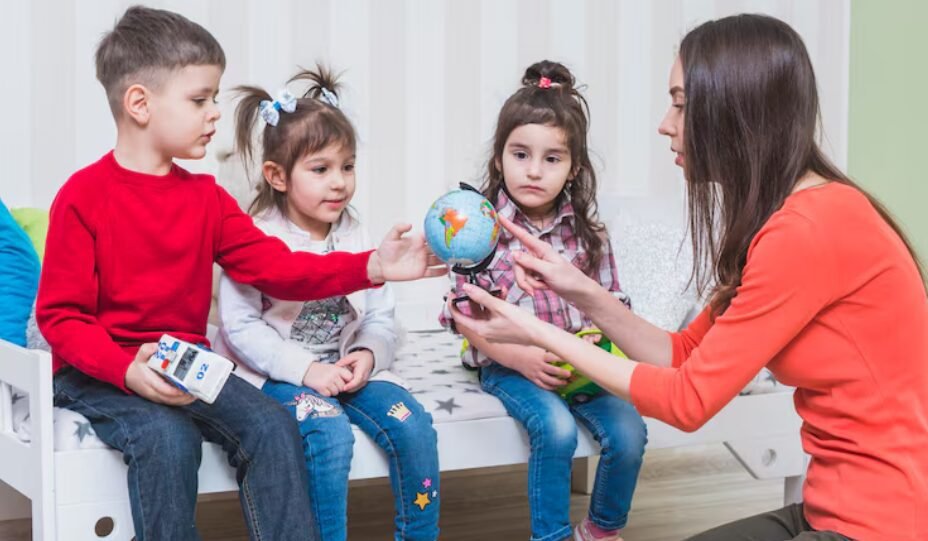
In the impoverished area of Embu, outside of São Paulo, a program supported by the Gates Foundation’s Grand Challenges In addition to addressing domestic violence and maternal wellbeing, the Brazil initiative has been working concurrently with mothers and educators to improve children’s cognitive and communication skills. The ECPC’s overarching belief that a child’s development is inextricably linked to their surroundings is reflected in this design decision. It has never worked to fix one without the other.
It’s difficult to ignore how uncomfortable the consortium’s goals are given the scope of the issue. Millions of kids. Numerous ongoing disputes. Limited resources, unreliable political will, and a research community that still struggles to translate findings into lasting policy. The ECPC is aware of this. The project is presented as a movement rather than a solution, with the goal of gathering sufficient proof, alliances, and political impetus to change the way the world community spends its resources. It is genuinely unclear if that is sufficient.
The fact that the science supporting this strategy is becoming more solid appears to be less ambiguous. There is now ample evidence linking early exposure to violence to long-term social dysfunction. In its meticulous, methodical approach, the ECPC is arguing that this knowledge demands action, and that action must start in the rooms where young children are discovering the world for the first time rather than in boardrooms or peace summits.
