
Close Menu
WorldomepWorldomep
  • Home
  • Privacy Policy
  • Disclaimer
  • Terms of Service
  • About
  • Trending
  • Worldomep
  • News
WorldomepWorldomep
Subscribe
  • Home
  • Privacy Policy
  • Disclaimer
  • Terms of Service
  • About
  • Trending
  • Worldomep
  • News
WorldomepWorldomep
Home»Schools»The International Journal of Early Childhood Is Rewriting What Early Education Looks Like Globally
Schools

The International Journal of Early Childhood Is Rewriting What Early Education Looks Like Globally

Nelson RosarioBy Nelson RosarioApril 30, 202603 Mins Read
Share Facebook Twitter Pinterest Copy Link LinkedIn Tumblr Email Telegram WhatsApp
Share
Facebook Twitter LinkedIn Pinterest Email Copy Link

The International Journal of Early Childhood is frequently mentioned in discussions that seem to have nothing to do with academic publishing. A Nairobi policy brief. A curriculum review in Bogotá and a pedagogy debate in Helsinki. The journal, which is the type of publication that researchers take off the shelf when they need something reliable to rely on, sits quietly beneath a large portion of it.

It is currently published by Springer Nature, but its true foundation is OMEP, the World Organization for Early Childhood Education, which was established in 1948 in war-torn Europe. That’s a lineage. It’s evident in the writing.

FieldDetail
Journal NameInternational Journal of Early Childhood (IJEC)
Founding BodyOMEP — World Organization for Early Childhood Education
Year OMEP Established1948
PublisherSpringer Nature
Focus Age GroupBirth to 8 years
Editorial ScopeComparative ECEC research, policy, pedagogy, sustainability, inclusion
Member Countries (OMEP)Over 70 countries worldwide
UN StatusSpecial consultative status with UN and UNICEF
Peer ReviewDouble-anonymous, minimum two referees
Aligned FrameworkUN 2030 Agenda for Sustainable Development
Sister PublicationInternational Journal of Early Years Education (Taylor & Francis)
IndexingScopus, ERIC, Web of Science

IJEC’s publication choices provide insight into the direction the field is taking. The scope resembles a map of current concerns related to childhood. Children’s experiences in different cultures. sustainability in terms of the environment and the economy. Policy analysis between nations that frequently have quite different views on what a four-year-old ought to be doing on a Tuesday morning. Indigenous viewpoints have shifted from the field’s periphery to its center. Then there are the more recent themes that weren’t around twenty years ago, like postdigital learners, the dangers of AI in early childhood education, and the messy convergence of politics, technology, and climate that toddlers are inheriting whether or not it was anticipated.

The journal seems to take kids seriously in a way that is still a little out of the ordinary. Instead of viewing them as empty brains, it treats them as citizens. That theme runs through the articles on children’s agency, democratic classrooms, and dialogic education. This may stem directly from OMEP’s older heritage, the postwar belief that children’s rights were essential to establishing peace. That conviction was never truly removed from the journal.
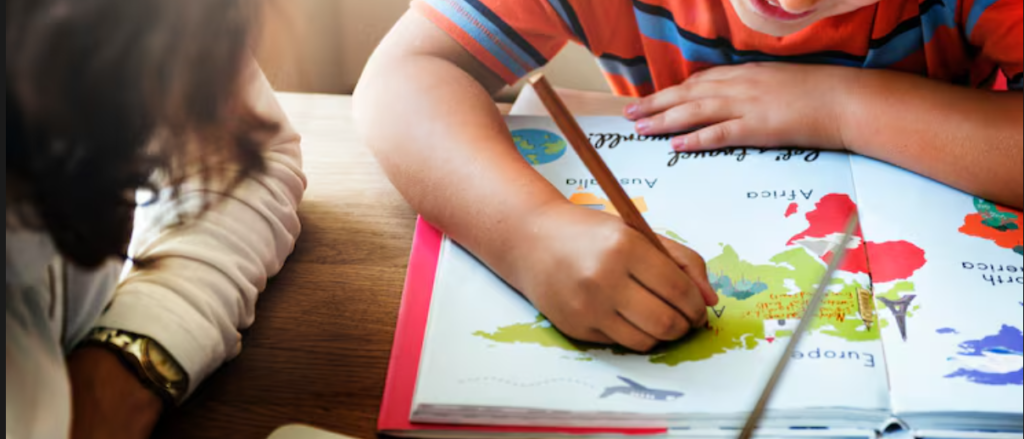
International Journal of Early Childhood

Every IJEC issue has contributors from all over the world. a group researching preschool transitions in Ghana. A Norwegian researcher is studying outdoor education. Someone in South Korea wrote about kindergarten-level standardized testing and parental anxiety. The approaches are arranged in a non-hierarchical manner, with large-scale comparative studies next to ethnographies. Double-anonymous peer review with a minimum of two referees is a standard procedure, but it’s important to note because it keeps the journal from turning into a single-region echo chamber.

A slightly different role is played by the companion publication, the International Journal of Early Years Education, which is more practitioner-focused and concentrates on creative classroom projects. When combined, they provide a nearly comprehensive picture of the state of early childhood research worldwide.

It’s interesting to see how this has changed over time because early childhood education was once thought to be a soft subject. Adorable, significant, but not quite serious. Journals like IJEC are partially responsible for this change in perception. These days, investors in educational technology pay attention. OMEP papers are cited by policymakers. It’s still unclear if all that attention will result in more research or better funding for preschools. However, the journal continues to take young children seriously enough to conduct thorough research on them, just as it has done since the beginning. That still seems uncommon on its own.

Childhood International
Follow on Google News Follow on Flipboard
Share. Facebook Twitter Pinterest LinkedIn Tumblr Email Copy Link
Nelson Rosario

    Nelson Rosario is an Editor at worldomep.org and a law school student who has found, somewhere in the intersection of legal theory and human development, a cause worth building a career around: ensuring that every child has access to quality education and the healthcare they need to thrive. Nelson approaches child advocacy with the analytical precision of a person who has been taught to analyze systems, spot flaws, and make the case for change. His knowledge of how policies are made, where they fall short, and what it would take to hold institutions accountable for the children they are meant to serve has improved as a result of his legal education. His support, however, goes beyond academics. It stems from a sincere belief that early childhood health and education are not being adequately addressed by the legal and social frameworks in many places. Nelson adds a legal and policy perspective to discussions about child welfare through his contributions to worldomep.org, asking not only what ought to be done but also what can be required, safeguarded, and upheld.

    Related Posts

    Inside the $53K High School Innovation Competition That SVSU Hosted in Michigan

    April 30, 2026

    Thousands More Preschoolers to Receive Free Health and Development Checks Across NSW

    April 30, 2026

    Floyd County Students Just Won Top Honors at a Watershed Innovation Symposium. Their Teacher Had Never Won Anything Before.

    April 30, 2026
    Add A Comment
    Leave A Reply Cancel Reply

    You must be logged in to post a comment.

    Inside the $53K High School Innovation Competition That SVSU Hosted in Michigan

    Nelson RosarioApril 30, 2026

    The floor wax, nervous perspiration, and stale coffee from the volunteer table by the door…

    ExxonMobil Qatar and TFQ Are Advancing STEM Innovation in Ways That Should Embarrass American Corporate Education Partners

    April 30, 2026

    The UNICEF Report on Afghan Girls’ Education Is the Most Alarming Document Published in 2026. Nobody Is Acting On It.

    April 30, 2026

    Thousands More Preschoolers to Receive Free Health and Development Checks Across NSW

    April 30, 2026

    Floyd County Students Just Won Top Honors at a Watershed Innovation Symposium. Their Teacher Had Never Won Anything Before.

    April 30, 2026

    Lawsuit Filed Against Guilford County School Board After Ex-Teacher Accused of Heinous Child Crimes

    April 30, 2026

    How CSUN’s New AI-Powered Inclusive Innovation Initiative Could Become the Most Important Education Program in California

    April 30, 2026
    Most Popular

    From Village Elders to Global Policy: The Untold History of Early Childhood Care and Education

    April 28, 20265

    Early Years Training of Children: What Most Parents Get Dangerously Wrong

    April 28, 20263

    The International Journal of Early Childhood Is Rewriting What Early Education Looks Like Globally

    April 30, 20262

    How CSUN’s New AI-Powered Inclusive Innovation Initiative Could Become the Most Important Education Program in California

    April 30, 20261

    Why Sustainable Stories in Early Childhood Are Quietly Reshaping Classrooms

    April 30, 20261

    The Quiet Crisis in Early Childhood: When Did Playgrounds Become Optional?

    April 30, 20261
    Disclaimer

    All content published on WorldOmep.org — including articles, opinion pieces, research summaries, news updates, and commentary — is intended for informational and educational purposes only. We publish opinions and third-party perspectives as they are, and in no way do we endorse, verify, or recommend acting upon any political, financial, scientific, educational, legal, or medical information presented on this platform without first seeking qualified professional advice.
    Third-party articles, quotes, and opinion pieces published on WorldOmep.org are the sole views of their respective authors. We present them in the spirit of open dialogue and informed public discourse, and their publication does not imply our endorsement.

    About
    About

    WorldOmep.org is an independent digital publication dedicated to the advocacy of early childhood education, child health care, and the holistic wellbeing of young children around the world. We are proudly aligned with the mission and values of OMEP — the World Organization for Early Childhood Education — the oldest and most far-reaching international organization devoted to early childhood education and care since its founding in Prague in 1948.

    • Home
    • Privacy Policy
    • Disclaimer
    • Terms of Service
    • About
    • Trending
    • Worldomep
    • News
    © 2026 ThemeSphere. Designed by ThemeSphere.

    Type above and press Enter to search. Press Esc to cancel.