

It was supposed to be an easy Friday afternoon. the final day of classes prior to Memorial Day weekend. With their backpacks bouncing, children leave Grand Prairie Elementary School on Caton Farm Road in Joliet, Illinois, feeling the particular relief of summer at last. Nobody anticipated that something was already underway a few miles away; without a single phone call, the outcome could have been drastically different.
The Will County Sheriff’s Office reports that a relative found a young person carrying a gun while he was en route to carry out a shooting at Grand Prairie Elementary. That family member didn’t think twice. After pinning the adolescent to the ground, they called 911. Just before 1 p.m., deputies arrived at the 2400-block of Helmar Lane in Plainfield Township. When they arrived, they discovered a Glock handgun, a backpack filled with several magazines, knives, an accelerant, gloves, and other items that would have stopped anyone cold. This was not a moment of impulse. Someone was ready for this.
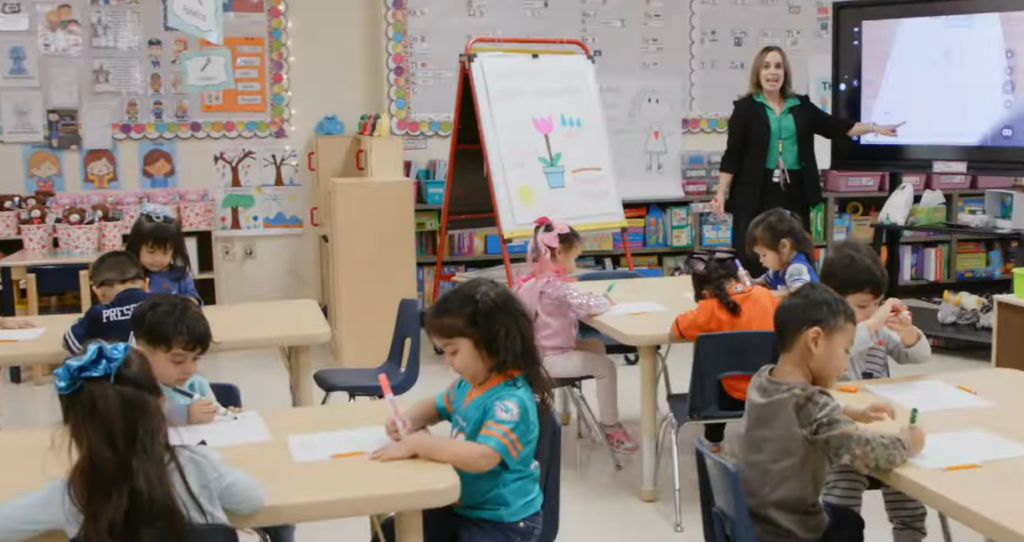
Children in pre-kindergarten through second grade are served by the school. The youngest pupils there are hardly old enough to learn to read. The disparity between the potential victims’ ages and the deliberate nature of what was placed in that backpack is a detail that keeps bothering me. Sitting with that without experiencing a certain kind of dread is difficult.
The young person, who was identified as a freshman at Plainfield High School-Central Campus, had not gone to school since December. The student had a documented history of low attendance, according to Plainfield School District 202 Superintendent Glenn Wood. This raises a number of challenging questions about potential warning signs and what, if anything, was done in response. How long this plan had been developing and whether anyone outside the family had observed anything concerning in the months prior to Friday are still unknown.
Illinois schools have been struggling with this larger context for years. Whether legitimate or not, threats against schools have become a disturbing trend in the country’s news cycle. Who stopped it is what, at least somewhat, makes this case feel different. Not a security camera. not a group that evaluates threats. Not a metal detector, not a resource officer. A family member who is close enough to see that something is wrong, courageous enough to step in physically, and calm enough to simultaneously call for assistance. Even though it’s practically too simple to acknowledge as the mechanism that saved lives, here we are.
The young person was taken to a hospital for assessment after allegedly making suicidal and homicidal remarks to first responders. As of the first reports, no charges had been brought. The complete picture of what led a 14-year-old to this point is still being put together because the investigation is still ongoing. Attendance collapse, loneliness, and mental health crises are rarely obvious.
In the meantime, the school continued with its final day of classes. It’s odd to read about a building full of five and six-year-olds, but there was an increased police presence on campus for the rest of the afternoon. Building a school culture around what she refers to as ROAR values—Respect, Ownership, Accountability, and Responsibility—is something that principal Cherie Moss has previously discussed. It seems like the right instincts. There is no satisfactory answer to the question of whether any school culture framework is sufficient to counter what was apparently being built somewhere off-campus.
There is no doubt that a community is currently bearing the burden of what nearly occurred. And maybe wondering, not irrationally, what will happen the next time no one is near enough to notice.
