

In late May, Devon Park takes on a certain atmosphere. It feels a little bigger than a college athletic event because of the Oklahoma City heat, the crowded stands, and the sound of metal bats. Given the teams traveling to OG&E Field, the 2026 Women’s College World Series, which begins on May 28, appears to have the potential to be truly memorable.
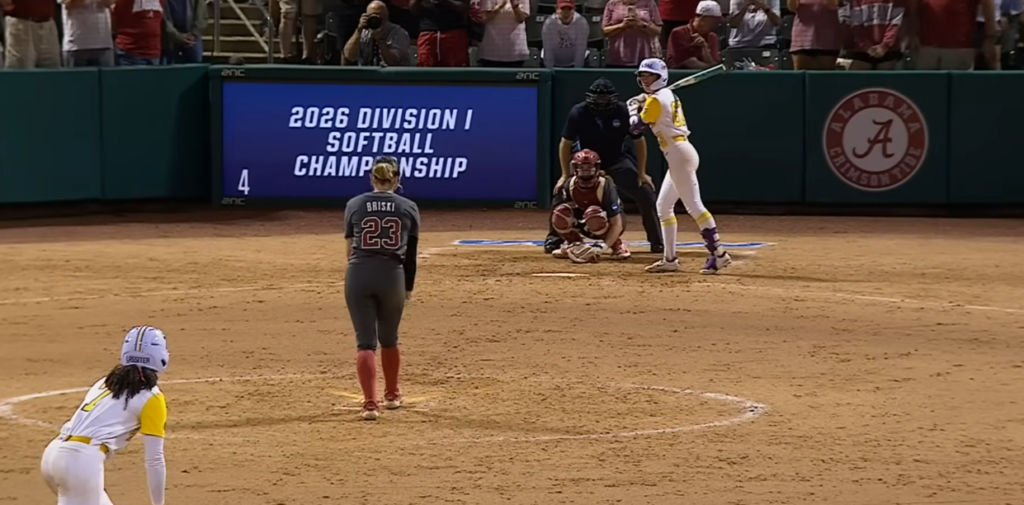
Alabama secured its 16th Women’s College World Series appearance on Saturday by defeating LSU 4-1 in Tuscaloosa, earning its spot the hard way. Even by postseason standards, the game was unusual; a lightning delay lasted almost two hours, followed by another delay, and the two teams had to wait a total of four hours before play could resume. A team’s momentum could be undermined by something like that. Alabama didn’t appear to be shaken. In the fourth inning, Alexis Pupillo hit her 19th home run of the year, Salen Hawkins drove in two more with a single to left, and the Tide’s pitching staff kept LSU to just one run throughout the entire contest. The bullpen’s streak of shutout relief innings in NCAA Tournament play was maintained through 33 frames thanks to the combined efforts of Vic Moten and Jocelyn Briski, the SEC Pitcher of the Year.
Head coach Patrick Murphy spoke about his team with the kind of warmth that feels earned rather than performed, despite the fact that he has been here so many times that it may seem routine. He discussed the months that coaches spend with players rather than their own families, as well as grit and selflessness. Observing this Alabama team gives the impression that they are playing with something to prove to one another rather than to the outside world.
In contrast, Arkansas is crafting a distinct narrative. Everyone in Fayetteville is aware of the significance of the Razorbacks’ upcoming first-ever Women’s College World Series. It wouldn’t be possible for programs like Arkansas to reach this stage without doing something exceptional for a whole season. They managed to survive the kind of harsh SEC schedule that would break most teams in the nation, finishing the season 45-11 and ranked 10th nationally. First appearances at the WCWS are typically exhilarating rather than paralyzing, at least in the early rounds, though it’s still genuinely unclear if they have what it takes to compete inside the final eight.
From top to bottom, Oklahoma City’s field is formidable. With a 49-6 record and victories in both the Big Ten regular season and tournament, Nebraska entered the season as the top team in the nation. With a 51-8 record, Oklahoma is the reigning conference champion. After defeating Georgia 2-1 in a close regional final, Tennessee became the first team to secure a WCWS bid. The Big 12’s leading team, Texas Tech, which finished 55-6, Florida State, and UCLA, which finished 50-8 in the regular season, complete a bracket that is difficult for anyone to win.
The depth of talent this year is evident from top to bottom. In an almost cinematic moment at the Big Ten tournament in May, Megan Grant of UCLA broke the Division I single-season home run record with her 38th of the year. Pitching matchups will be crucial because of the exceptional hitting on this field. In OKC, games are frequently decided by single runs in situations that happen so quickly that the spectators hardly have time to catch up.
The 2026 Women’s College World Series double-elimination phase concludes on June 4, with the final potentially moving to June 5 due to an extra day. Next Thursday, Devon Park will host eight teams. Only one takes home the title. It’s possible that this tournament will produce something that women’s softball fans will remember for a very long time, given what has already happened this postseason—the weather delays, the first-timers, the record-setters.
