

There is a school on Wellington Road in Parktown, Johannesburg, that has more history than the majority of the city’s structures. The original building, which features wide hallways, red brick, and long-lasting architecture, is now recognized as a provincial heritage site. It seems as though generations of boys have come through these gates with the same red and black blazers, the same worries, and perhaps even the same aspirations. It began in 1920 in an Auckland Park police barracks that had been converted. Parktown Boys’ High School continues to produce individuals who go on to accomplish noteworthy things over a century later.
The Zylstra family has donated R20 million to Parktown Boys, according to the most recent information released by the school. A number like that demands attention. Such large-scale private donations to public schools are rare in South Africa, and they raise issues as much as they inspire goodwill. These issues include equity, what it means for a state school to draw philanthropy that most government institutions could never hope for, and what the money will truly accomplish. It is evident that the Zylstra family’s goals extend beyond leaving a lasting legacy. According to reporting on the donation, there is a declared belief that giving is an act rather than a transaction. The school community might also interpret it in that manner.
The alumni list of Parktown Boys appears to be a rather remarkable representation of South African public life. These grounds were walked by tennis player Wayne Ferreira, who won an Olympic silver medal and advanced to the fourth round of Wimbledon. Tabraiz Shamsi, one of the more creative spin bowlers in cricket today, also did. In 1982, Jake White, who led the Springboks to the Rugby World Cup in 2007, started his coaching career here with the first team. Another name on the list is guitarist Trevor Rabin, who later joined the rock group Yes and wrote soundtracks for Hollywood blockbusters. The group is truly eclectic, and its diversity speaks volumes about the area.
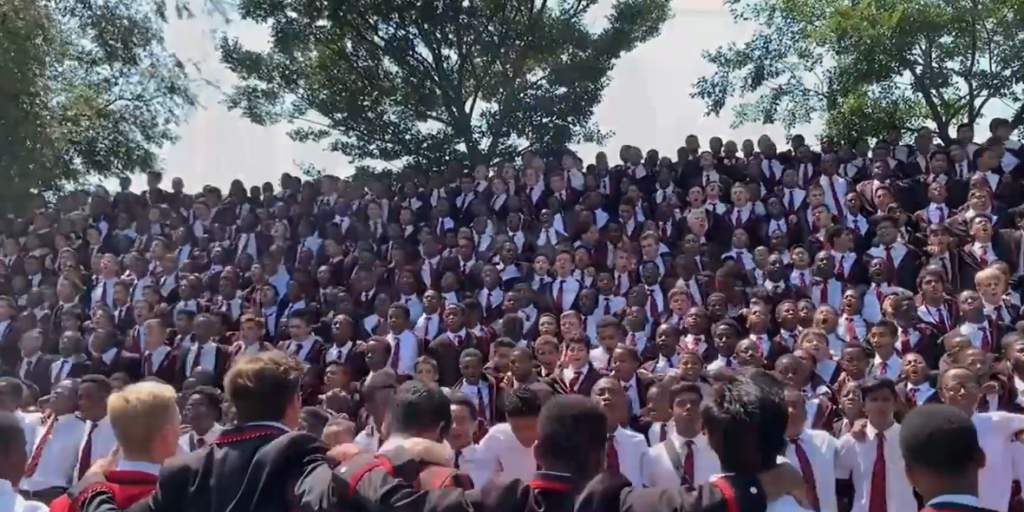
Outsiders may find the school’s unique culture perplexing at times. Instead of their grade, students are referred to by their form year. The cadet program, which consists of drill, push-ups, and discipline, is still in place every week even though most South African schools have long since dropped it. Formies, or new Grade 8 students, wear colored buttons on their blazers that represent their status and house. An Old Pot, an older student, is assigned to each formie to help them through the initial months. These are not the hallmarks of a school attempting rapid modernization. They are the intentional preservation of something that the school obviously thinks is valuable.
It would be dishonest to ignore the darker chapters as well. Collan Rex, a water polo coach, was sentenced to 23 years in prison after entering a guilty plea to 144 charges of sexual assault against several students in 2018. Enock Mpianzi, a 13-year-old boy, drowned at an orientation camp outside of Pretoria two years later. After investigations turned their attention to the lodge where the incident took place, the principal who had been fired was later reinstated. Many people who followed the story are still unsure if the entire weight of institutional responsibility was ever adequately investigated. Parktown Boys’ is not exempt from the observation that schools with strong reputations occasionally receive less attention than they ought to.
It is truly unclear what the school will do with the next century. The R20 million donation, along with the school’s current infrastructure, which includes an international-standard water-based AstroTurf—the first ever installed in a South African school—indicates that the institution is taking its future seriously. There are more than 900 students enrolled. The annual cost of boarding can reach R90,000. By all accounts, it is a school with significant resources in comparison to the larger public education system. The question worth keeping an eye on is whether that advantage contributes to a broader educational culture in Johannesburg or just produces successful individuals.
