

In Sandton, most drivers pass a corner without slowing down. In one of Johannesburg’s wealthiest neighborhoods, Rivonia Road and Grayston Drive meet at a bustling, sun-bleached intersection where office buildings and shopping malls typically draw the most attention. However, Sandown High School, a public coeducational institution that has been in operation since 1970 and still operates in the middle of a suburb more known for private education and corporate headquarters than government education, is tucked away behind the commotion of that intersection.
To be honest, it’s a unique location for a public school. Sandton is pricey. The majority of state schools are unable to match the facilities and budgets of the nearby institutions, some of which are independent and some of which are private. Nevertheless, Sandown High continues to operate, employing 40 teachers, serving more than 1,000 students, adhering to the National Senior Certificate curriculum, and reporting a matric pass rate of roughly 73%. That figure is lower than you might anticipate given the school’s location. It is difficult to determine from the outside whether that is a reflection of the school’s student intake, resource limitations, or something more complex. However, it’s a figure to consider.
When Chris Dlamini, the founder of FC Pro Athletico Junior Soccer, returned to the Sandown High grounds in January 2026 with something to prove, the school reentered the local discourse. The excitement of the 2010 FIFA World Cup gave 41-year-old Dlamini the impetus to start his youth academy in 2009. The academy was silent for years after the school added more classrooms and utilized the soccer field for construction overflow. It seems as though Dlamini has been considering this moment for a long time as he returns to those same grounds and reintroduces himself to the Sandton community with a kind of deliberate calm.
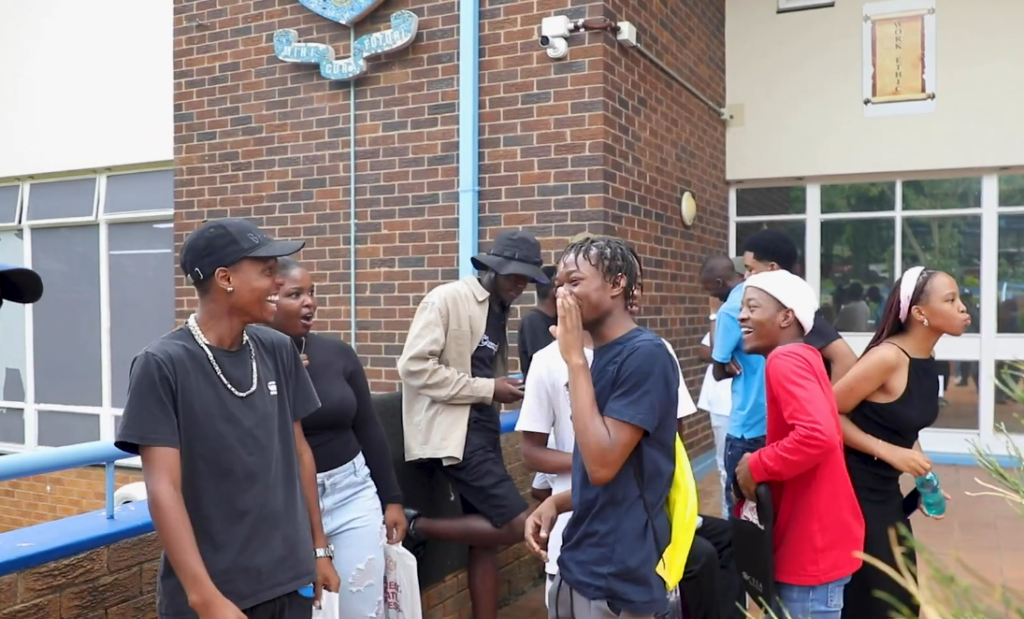
His argument is straightforward but unsettling. Too many kids are being discouraged from playing football, not because they aren’t talented, but rather because adults have made the game more about the aspirations of adults than it is about the enjoyment of kids. Dlamini believes that high dropout rates, early talent labeling, and costly training programs for children who are hardly teenagers are all signs of a system that is subtly undermining something significant. “Too often, children are pushed into rigid systems where winning, labels like elite, and adult ambition take priority over enjoyment and development,” he said. Many Sandton parents who pay hefty tuition to get their kids into prestigious academies might object to that. However, the statistics on South African football’s youth dropout rates indicate that Dlamini is making a valid point.
Under Dlamini, FC Pro Athletico’s strategy is based on a different priority: let kids enjoy the game first, and let development come from that enjoyment. It sounds clear. When put simply, the majority of things that are actually challenging to accomplish sound simple. Maintaining that balance is difficult when every aspect of youth sports, including school competitions, parental expectations, and commercial academies, pulls in the opposite direction. The field at Sandown High School, which has been reopened for his sessions, serves as a test to see if that philosophy can withstand interaction with the real world.
Inequality is evident everywhere in the district where the school is located. Nearby private schools charge tuition that is far higher than what the majority of South African families make each year. A difficult-to-define middle ground is occupied by Sandown High, a fee-paying public school without boarding facilities. In a suburb that is still, in many respects, figuring out what it wants to be, it serves a truly diverse student body. The school has been in operation for fifty-five years. Refiloe Mpakanyane, a journalist and radio host, is at least one prominent media personality that it has produced. As recently as the Class of 2025 graduation cycle, the school’s media team printed the motto, Mihi Cura Futuri, which roughly translates to “My care is for the future.” A Wikipedia stub and a pass rate don’t fully address the question of whether the institution actually upholds that motto, especially for students from underprivileged backgrounds.
