

The fact that Cynthia Erivo hardly ever pursued a career in acting is somewhat amazing. It wasn’t because she wasn’t talented—anyone who has heard her sing knows that was never a problem—but rather because her initial course took her in a completely different direction. Erivo, then seventeen, started studying music psychology at the University of East London in 2004. It’s an intriguing detail that is simple to ignore. psychology of music. Not theater, not musical theater, not performance. the study of the psychological effects of music. In retrospect, it almost seems as though she already knew something that everyone else did not.
She was there for a year. One year of lectures, student cafeterias, campus hallways, and the everyday grind of east London academic life. She then applied to and was accepted into the Royal Academy of Dramatic Art (RADA), an organization whose name alone carries some weight in British theater circles. Everything changed as a result of that silent decision made by a teenager who was probably unsure if she was making the right choice. She moved away from the psychology books and started the kind of training that RADA has been putting actors through for more than a century.
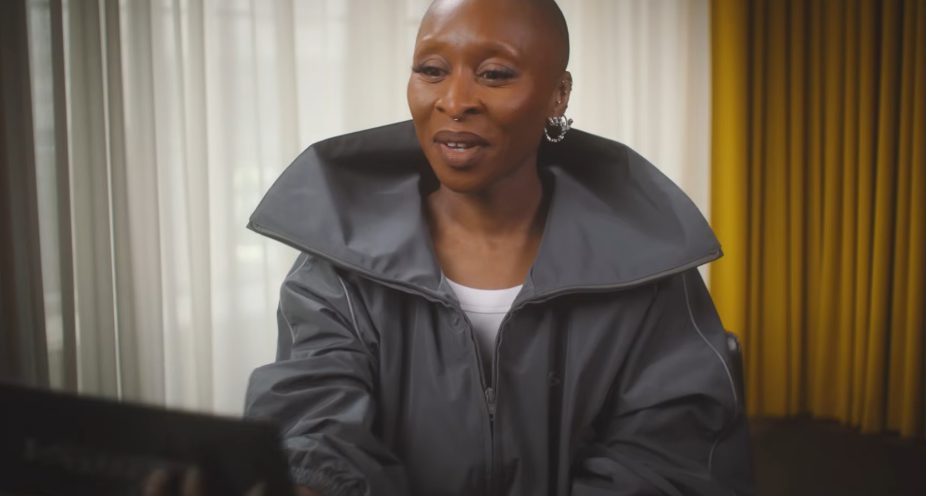
After earning a bachelor’s degree in acting in 2010, Erivo has spoken candidly rather than flatteringly about her time there. She described the experience as difficult, not in a nostalgic, character-building sense, but rather in a way that implies she truly felt uncomfortable. She said, “I just didn’t think I fit,” while promoting Wicked: For Good on NPR. She doesn’t seem to be self-deprecating for effect when you listen to those words. The sensation of not being understood, of living in an environment that wasn’t exactly created with her in mind, that seems authentic rather than manufactured. It’s difficult to ignore how closely that experience resembles Elphaba, the role she would later play to widespread praise.
There were earlier signals prior to RADA. Erivo was already performing in plays at La Retraite Roman Catholic Girls’ School in Clapham Park, where she finished her secondary education. Bertolt Brecht’s Caucasian Chalk Circle was one of them; it’s not exactly light material for a school production, which may indicate something about the environment she was navigating at the time. She also made an appearance in the television series Trust Me, I’m a Teenager. little things. Early appearances were dispersed and didn’t yet add up to anything clear.
Erivo’s educational trajectory is intriguing because, despite appearing improvised from the outside, it appears to have landed on purpose. She didn’t go in a straight line. She began a degree program, gave it up after a year, enrolled in one of Britain’s most competitive drama schools, and graduated in 2010 with a degree and an unproven sense of purpose. 2011 saw the West End debut. In 2015, Broadway came next. The Tony Award was given out in 2016.
Beyond technique, it’s still unclear exactly what RADA gave her. It’s unclear if the experience’s challenges—the friction of not fitting in—sharpened something she already had or if it forced her to develop the kind of independence that subsequent work required. Most likely both. It is rare for training to be one-sided. What is certain is that Erivo left formal education with a quiet, unmistakable confidence in her own voice—something the institution had not fully offered voluntarily. As they say, the rest came after.
