

When someone stops fighting something they are powerless to change, a certain kind of peace descends upon them. It is silent, almost hesitant. And for centuries now, the phrase “que sera, sera” has been able to encapsulate that emotion nearly flawlessly.
Doris Day introduced the phrase to the majority of people. In 1956, she was cast by Alfred Hitchcock in The Man Who Knew Too Much, a movie about a mother frantically attempting to contact her son who had been abducted inside a foreign embassy. She sits down at a piano and starts singing loudly in one of the film’s more subdued, heartbreaking scenes, hoping that the well-known tune will find her child through the walls. Yes, it does. He responds with a whistle. At that point, the song isn’t about giving up. It is about bonding, about love persevering in the face of adversity. That subtlety is often overlooked.
The phrase itself is at least four centuries older than the movie. It can be found in English heraldic records dating back to 1559, carved in brass at a church in Surrey, and reappeared in Christopher Marlowe’s Doctor Faustus in 1590. A variation of it served as the family motto of the influential English aristocracy known as the Russell family. The fact that the phrase is incorrect in both Spanish and Italian, the two languages to which it is most frequently attributed, is genuinely intriguing and somewhat humbling. Jay Livingston, who co-wrote the song with Ray Evans, took the Italian phrase che sarà, sarà from a 1954 Hollywood movie and spelled it in Spanish because, as he explained, more Americans knew Spanish. Thus, the most well-known statement in the world about accepting fate was based on a tiny, imaginative error. That seems appropriate in some way.
It’s fairly easy to translate literally: whatever will be will be. However, people’s interpretations of it are far from straightforward. It is used in waiting areas, following job interviews, on choppy flights, and in the midst of unresolved disputes. People seem to reach for it when language itself begins to feel inadequate—that is, when the situation has become too big for them to handle. It does not imply apathy. The majority of those who say it are very concerned. They are simply deciding to stop tugging on the rope, at least for the time being.
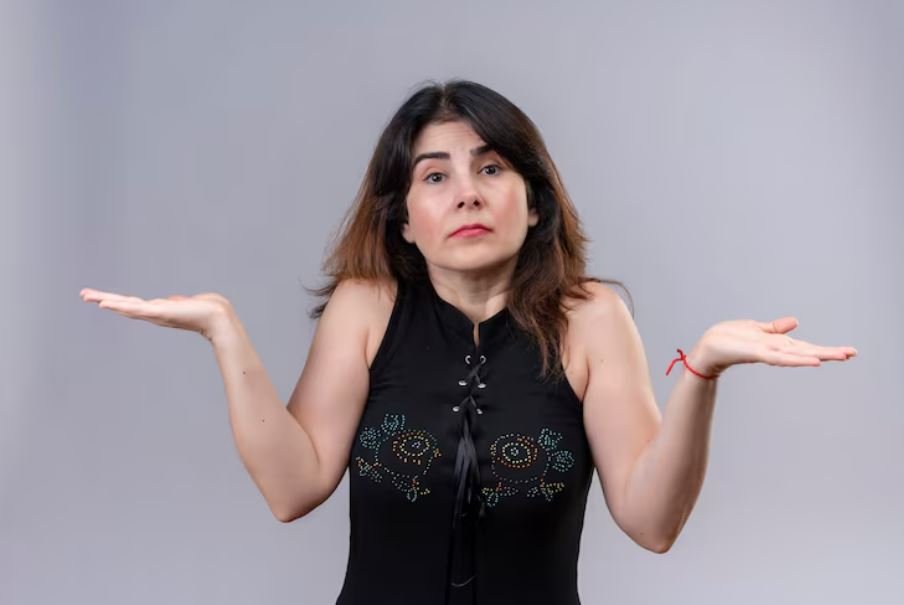
However, it is worthwhile to sit with the distinction. The phrase is sometimes characterized as an expression of cheerful fatalism, which is that exact mix of lightheartedness and acceptance that avoids hopelessness. It might be said by a student who has completed the test, submitted it, and is currently awaiting the results. When a parent witnesses their adult child make a choice they discreetly disagree with, they may think it. It serves as a tiny act of self-preservation in those situations, shielding your nervous system from uncontrollable outcomes. The police captain who forgets to lock a cell and dismisses it with a “que sera, sera” is a completely different animal, and most people can relate to that.
Probably because it doesn’t pretend that the uncertainty doesn’t exist, the phrase has endured. It admits it. Other comforting phrases attempt to reassure you that everything will be alright. This one doesn’t promise anything like that. It merely states that something will occur and that it will be what it is. That kind of honesty has a remarkable enduring power when it is presented in a melody that most people can hum from memory.
Whether cheerful fatalism and sincere effort can coexist is the deeper question, the one worth pondering for a while. History consistently indicates that they can. It’s not really a que sera, sera tale about Thomas Edison’s unwavering, relentless perseverance in the face of thousands of unsuccessful attempts. However, there is also a part of acceptance that acknowledges that he had no complete control over the outcome on any given day. The phrase may be more of a practice of letting go of things you are unable to control than a philosophy of passivity. After completing the task, you let it go. What’s going to happen will happen.
Observing the phrase’s widespread use in restaurant names, book titles, movie scores, and Japanese-sung children’s songs gives one the impression that it has evolved into something akin to a universal human prayer. Not specifically addressed to anyone. simply released the breath into the atmosphere. A tiny, flawed line from a Surrey brass plaque, given a melody by two Hollywood songwriters, sung by a mother attempting to communicate with her child through a wall, and somehow still present—reminding everyone who comes across it that the future is still, obstinately, its own.
