

On a Tuesday morning, you notice a certain kind of silence as you pass a nature-based daycare. There are no cartoon jingles coming from the windows. Behind the glass, there is no blue glow. It was just children fighting over a stick in the backyard. It sounds almost archaic. That’s exactly the point.
Early childhood education in the US is undergoing a gradual but noticeable change. Teachers, pediatric researchers, and parents are resisting the increasing normalization of screen time for young children by focusing on something much older, messier, and seemingly more productive: outdoor time. The movement behind it, known as “green time,” has its origins in journalist Richard Louv’s 2005 book Last Child in the Woods, in which he first used the term “nature-deficit disorder.” Twenty years later, discussions about child development, mental health, and what we’re really doing to the youngest generation have incorporated that phrase from environmental circles.
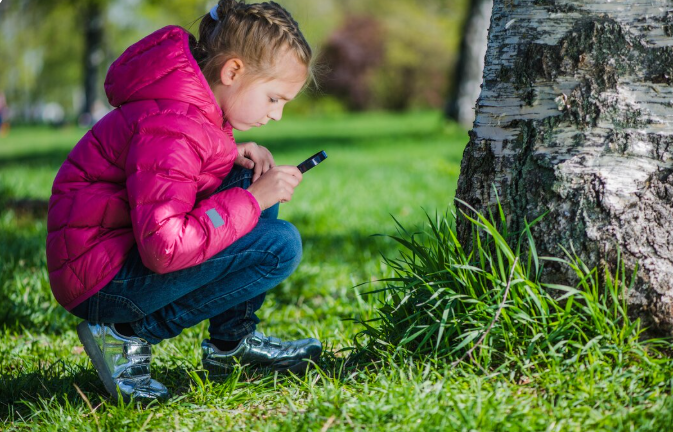
It is now more difficult to ignore the research supporting this change. High screen time was consistently associated with negative psychological outcomes for children and adolescents, whereas green time showed the opposite pattern, according to a 2020 systematic scoping review that drew on 186 studies from various countries. One particularly startling discovery that receives far too little attention is that exposure to nature may actually mitigate some of the psychological harm brought on by excessive screen time. It should be buffered rather than replaced. That’s a significant distinction, implying that parents may be unaware of the significance of even modest increases in outdoor time.
Speaking with educators in this field gives me the impression that something that was already developing was accelerated by the pandemic. When daycare centers reopened following months of remote learning, many educators observed kids who appeared less able to handle boredom, less at ease with unstructured time, and less accustomed to just being somewhere without a screen mediating the experience. It’s actually unclear if that’s a correlation or a cause. However, it was difficult to ignore the pattern.
Green Schoolyards America’s founder, Sharon Danks, is based in Berkeley and has studied school grounds all over the world for years. Her main point is almost disarmingly straightforward: children’s physical surroundings shape who they become. One thing about a child’s worth is conveyed by asphalt. They learn something completely different from a garden filled with mud and beetles. She contends that altering those settings has an impact on developmental, emotional, and academic outcomes. Even with its flaws, the research tends to back her up.
It’s not just the science that makes this movement intriguing. Beneath it is a subtle cultural tension. By most accounts, American parents are nervous individuals raising kids during a nervous period. Both children and, let’s face it, adults trying to put dinner on the table find solace in screens. It is not neutral to ask families to forgo that convenience in favor of muddy boots and scraped knees. It also has implications for class. Like many wellness ideas, green time runs the risk of being primarily available to families who have the means and location to pursue it.
Instead of hurrying past that issue, it is worthwhile to sit with it. For years, José González, who started Latino Outdoors to provide outdoor spaces to Latinx communities, has argued that just because someone writes a report about the advantages of nature doesn’t mean that everyone has equal access to it. The study demonstrates that children from low-income families are disproportionately impacted by both excessive screen time and insufficient green time—a compounding disadvantage that cannot be overcome by awareness alone.
Something is still moving, though. There is a growing number of daycares that integrate outdoor play into their formal curricula as core programming rather than recess. To be honest, it’s still unclear if this turns into a true transformation or if it stays a specialty option for those who have already converted. However, those children fighting over a stick out back appear to be alright. Actually, it’s more than fine.
