

You might completely miss it if you stroll down Oxford’s Merton Street on a calm morning. Unlike some of its larger neighbors, Corpus Christi College does not make a big deal out of its location between Merton and Christ Church. By Oxford standards, the entrance is modest, with a tower over the main gate and a honeyed stone facade that gives the impression that the building has existed for a longer period of time than your current concerns. It has. The college was established in 1517, making it older than Shakespeare, the Protestant Reformation, and the notion of England as a naval power.
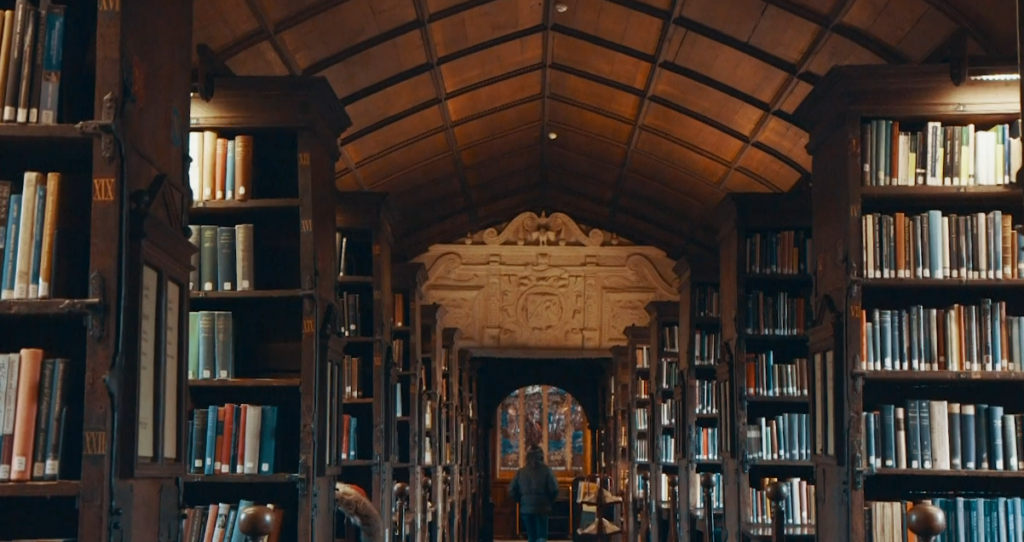
At a time when European intellectual trends were changing, Richard Foxe, Bishop of Winchester, founded Corpus Christi. Humanists wanted students to read Greek and Hebrew alongside the church fathers, challenging the medieval model of education that included Latin, theology, and monastic discipline. After working for Henry VII and Henry VIII for many years as a political manipulator, Foxe made the decision to create something new. He purchased a garden, two inns, a nunnery, and a few halls from Merton College. Using that improbable assortment of property, he established what is widely regarded as Oxford’s first Renaissance educational institution. The library was hailed by Erasmus as one of Britain’s greatest beauties. Surprisingly, early printed books and chained manuscripts are still in active use at that library.
The size of the space is worthwhile. There are about 100 postgraduates and 265 undergraduates at Corpus Christi. It is among the university’s smallest colleges by practically all standards. Nevertheless, it is hard to overestimate its impact over the course of five centuries. Reginald Pole, the final Catholic Archbishop of Canterbury, was one of the founding fellows. The King James Bible was conceived and translated by John Rainolds, who was elected president in 1598. Richard Hooker was a deputy professor of Hebrew whose writings influenced Anglican theology. In the 1520s, Mary Tudor was tutored by Juan Luis Vives, a Spanish humanist. There, Isaiah Berlin attended school. Both Miliband brothers did the same. For a college this size, the list is so extensive and diverse that it almost seems unreal.
The Pelican Sundial, a tall pillar built in 1581 that, despite its name, has twenty-seven sundials, is difficult to miss when standing in the Front Quad. In keeping with the college’s name, Corpus Christi, the Body of Christ, the gold-painted pelican at the top alludes to Foxe’s personal coat of arms and the Christian concept of selflessness. There are two sundials in America, one at Princeton and another at Pomfret School in Connecticut. The father who donated them in 1912 apparently believed that his son’s graduation called for an exact replica of an astronomical device from the sixteenth century.
Tended for decades by gardener David Leake in a style he described as “much less formal than most other colleges, but sympathetic to the atmosphere,” the gardens behind the college are notoriously messy in the best possible way.”Avoid using herbicides. Self-seeded plants are permitted to remain. A mannequin named Madame Lulu is part of a greenhouse designed by Rick Mather; this is the kind of detail that most likely wouldn’t make it through a committee meeting at a larger institution.
dditionally, the college maintains living mascots in the form of tortoises, which it races against other colleges’ tortoises every year in a charity event that commemorated its 50th anniversary in 2024. The combination of competitive tortoise racing and Renaissance humanism may be unique in higher education, and it has a subtle allure. Corpus Christi does not aim to be the largest or most well-known. If you happen to be strolling down Merton Street and have nowhere specific to go, it is still worthwhile to visit. It simply keeps going, semester after semester, century after century.
