

There is something quietly unsettling about walking past a school in a conflict-affected neighborhood—anywhere from Beirut to Baltimore—and realizing that the child stepping over rubble or through a metal detector shares the same legal status under international law as one walking into a classroom in Helsinki or Wellington. At least in theory. In reality, the gap between those kids is huge and continues to widen.
2024 marked both the 35th anniversary of the International Convention on the Rights of the Child and the centenary of the Geneva Declaration on the Rights of the Child. Two milestones that should have felt celebratory. Instead, they arrived against a backdrop of genuine alarm—UNICEF data pointing to a measurable retreat in children’s rights globally, with poverty deepening, conflicts intensifying, and climate disasters displacing tens of millions of young lives.
Into this context, the OMEP Framework—developed under the World Organization for Early Childhood Education, which counts 78 member countries—has emerged as one of the more serious international attempts to translate children’s rights into actual policy. It draws on the participation model developed by Professor Laura Lundy at Queen’s University, Belfast, whose 2007 paper became one of the most cited academic works in the field. Her concept—that children deserve not just a voice, but a real audience and genuine influence—sounds simple. It has proven remarkably difficult to implement.
Mercedes Mayol Lassalle, who served as World President of OMEP through 2025, has spent years working at the intersection of early childhood policy and human rights. Her work with UNESCO and the Global Campaign for Education reflects something the data keeps confirming: the early years are not a warm-up. They are, in almost every measurable way, the whole game. And yet globally, only 57% of pre-primary teachers in low-income countries have received adequate training. The teachers simply aren’t there.
It’s possible that the U.S. resists frameworks like OMEP’s because they imply obligations—legal, financial, moral—that domestic politics finds inconvenient. The United States remains the only country in the world that has not ratified the Convention on the Rights of the Child. That fact tends to produce a kind of diplomatic awkwardness at international forums, the sort where everyone in the room knows the number but no one says it plainly. America represents perhaps 4% of the world’s children and has, by some measures, the most expensive early education system on earth—and yet childhood poverty touches one in five kids in many of its cities.
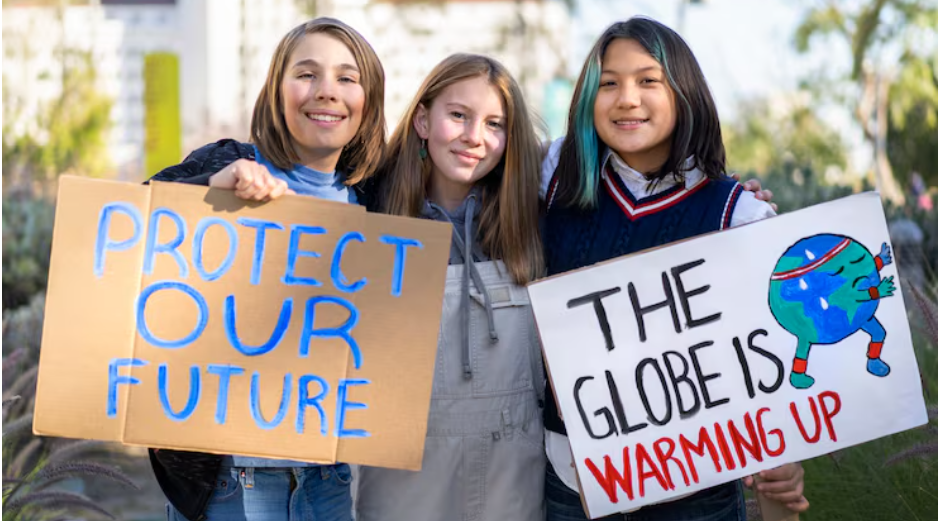
The climate dimension makes the picture bleaker still. Over one billion children currently live in countries classified as “extremely high risk” for climate change effects. Between 2016 and 2023, more than 62 million children were internally displaced by extreme weather alone. These aren’t projections. They already happened. There’s a sense that international frameworks like OMEP’s exist partly because individual governments, left to their own political cycles, tend to underprice the future.
Steven Barnett at Rutgers, whose long-term research on programs like Perry Preschool helped establish the economic case for early childhood investment, has been making this argument since the 1980s. The data has only gotten stronger. High-quality early education produces measurable benefits across a child’s entire life—not just academically, but socially, economically, in health outcomes. Governments that invest early spend less later. That math is not controversial. Acting on it, apparently, is.
Watching this debate play out across international education summits, there’s a feeling that the gap isn’t really about knowledge. Everyone has the research. The gap is about political will—and perhaps, in the American case, a lingering reluctance to see childhood as a public responsibility rather than a private one. Seventy-eight countries have decided otherwise. The question isn’t whether the OMEP Framework works. It’s whether the holdouts are willing to look honestly at what their absence actually costs.
