

Imagine a group of three-year-olds on a Tuesday morning in January in a Norwegian barnehage. Even though the temperature is a few degrees below zero and there is snow on the ground, the kids are still outside carrying little backpacks, exploring the trees, and navigating icy areas without much help from adults. The instructors are not hovering, but they are close by. Letters are not being drilled. No one is being evaluated. According to Norwegian law, this is essentially what early childhood should entail.
This is not up for interpretation under Norway’s Kindergarten Act. The national framework is clear: early childhood education should be play-centered, holistic, and based on the notion that childhood is valuable in and of itself rather than merely serving as a springboard for academic achievement. Children don’t start formal education until they are six years old. Prior to that, the system places a high priority on social development, outdoor exploration, emotional control, and what Norwegian educators refer to as “friluftsliv”—a deeply ingrained cultural attachment to being in nature that appears to begin before kids can tie their shoes.
It is difficult to discount the outcomes of this strategy. According to a Boston College study that looked at over 60,000 kids enrolled in Norway’s universal early education program, publicly funded care, beginning at age one, produced quantifiable improvements in language skills and specifically reduced the gap between kids from high-income and low-income families. In areas where early care center enrollment had increased, that disparity had significantly decreased by the age of three. Some of the first extensive evidence that public early education in infancy can be crucial for language development, according to the lead researcher. Although it’s possible that the results overstate how simple it is to replicate them elsewhere, the underlying reasoning—that high-quality, universal, early access levels the field before disadvantageous compounds—is consistent with numerous independent studies.
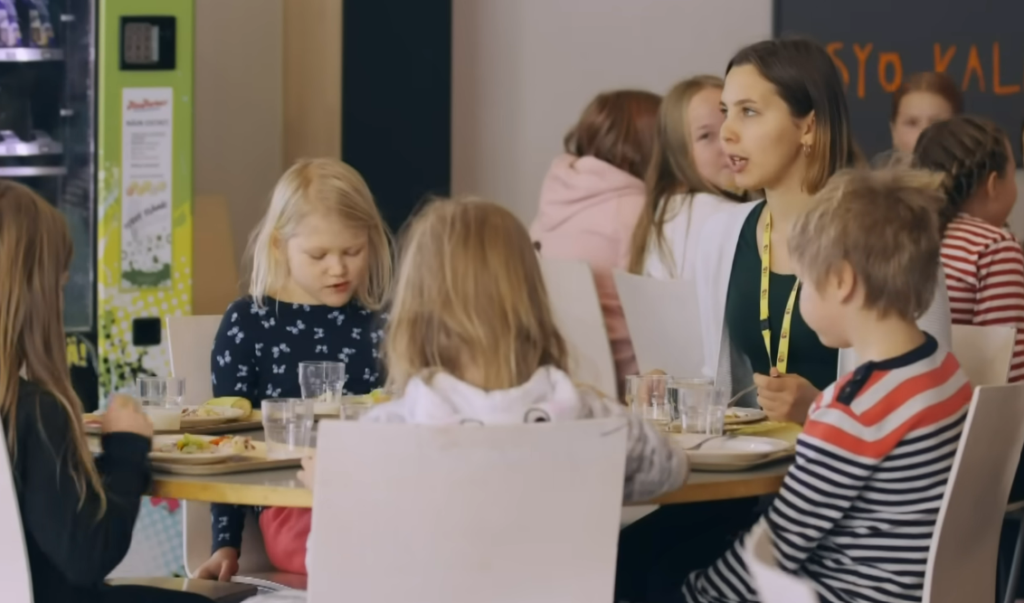
The comparison with America becomes genuinely awkward when it comes to the teacher question. Early childhood educators in Norway have three-year bachelor’s degrees in early childhood pedagogy. In contrast to the American reality, where the median childcare worker makes about $14 per hour, about half of the country’s workforce is eligible for some kind of public assistance, and staff turnover makes it very difficult to maintain consistency of care, they are unionized, fairly compensated, and professionally respected. Observing the two systems side by side gives the impression that one nation views early education as infrastructure, while the other views it as a convenience sector.
America’s opposition to all of this is genuinely perplexing because it isn’t mainly due to a lack of knowledge. For many years, there has been research on play-based learning, outdoor activities, and early investment for children from low-income families. Political will and a different set of underlying presumptions about who is responsible for raising young children are what are lacking, not evidence. A long shadow was cast by the Nixon veto in 1971, which killed a national childcare system on the grounds that it would weaken American families. Even as the costs of that assumption continue to mount in the data, the implicit argument that childcare is a private family matter rather than a public investment continues to dominate federal policy.
The Norwegian system is not flawless. The inflexibility of barnehage routines irritates families who don’t fit the conformist mold. There is now a real domestic debate about the food served in some centers, which is heavy on processed bread and salami. Furthermore, Scandinavia’s cultural homogeneity, which facilitates some policy decisions, does not translate well to a nation as big and diverse as the United States. These are genuine issues. However, it’s important to be clear about what the comparison actually demonstrates: children who receive well-funded, play-centered, universally accessible care during their early years are in better shape when they enter formal schooling, and the children who benefit the most are the ones who had the least to begin with. It’s not a peculiarity of culture. The data simply indicates that.
