

Admitting that the system you’ve created, no matter how well-meaning, was only ever telling half the story requires a certain level of intellectual bravery. A small but tenacious group of early childhood educators and researchers in New Zealand seem to be struggling with that realization. For many years, the Aotearoa New Zealand chapter of the World Organization for Early Childhood Education, or OMEP, has quietly opposed the inclination to treat Western academic frameworks as the standard in early childhood research, arguing that Māori knowledge systems are a parallel and equal source of understanding rather than a supplement.
OMEP was established in Prague in 1948 as a result of a postwar world that recognized, at least in theory, the significance of safeguarding children’s rights and development across national boundaries. Currently, the organization maintains affiliations with the UN, UNICEF, and UNESCO while operating in more than 70 countries. Its Aotearoa New Zealand chapter has assimilated that global mandate while firmly rooting it in something distinctly local: the bicultural reality of a nation where Te Tiriti o Waitangi shapes, or is intended to shape, almost all public institutions.
Anyone who has spent time in New Zealand education circles will instantly recognize the tension that OMEP Aotearoa has been striving to resolve. Te Whāriki, the nation’s early childhood curriculum framework, is highly regarded worldwide for incorporating Māori ideas of contribution, wellbeing, and belonging into its core principles. However, Western academic conventions continue to stubbornly shape the research infrastructure surrounding it, including the funding mechanisms, tertiary institutions, and accrediting bodies. In its submissions to policy reviews, OMEP has made it clear that this gap is very important. In the classrooms where three-year-olds are discovering their identities, this is true both practically and philosophically.
A portion of what OMEP Aotearoa appears to be aiming for is captured by the idea that researchers sometimes refer to as “Two-Eyed Seeing”—which is derived from Mi’kmaq tradition and is increasingly mentioned in educational literature worldwide. The goal is to hold both viewpoints concurrently, allowing each to highlight what the other might overlook, rather than combining Indigenous and Western knowledge into a flattened hybrid. The “braided river,” a metaphor derived from the landscape itself—two streams flowing together, separate but intertwined—is frequently used as the equivalent framing in New Zealand. That might be the most accurate representation of the goal of bicultural education.
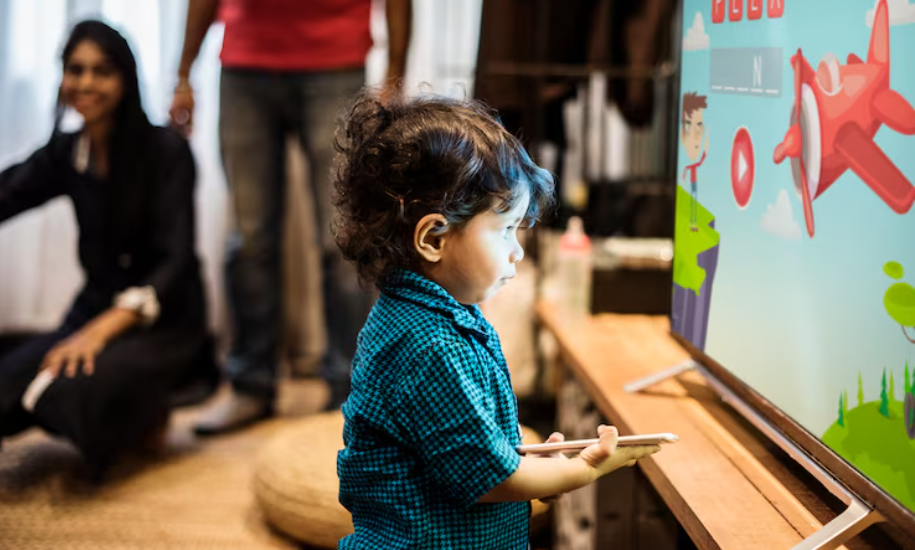
OMEP Aotearoa’s insistence on relating these concepts to the structural realities of teacher education is what elevates its work beyond symbolic. Proposals to divide initial teacher education into shorter, modular formats have caused the organization to voice serious concerns. It’s not an abstract concern. Culturally complex values are transmitted through mentoring relationships, in which a lecturer follows a student over the course of three years of training, observing their growth and occasionally struggles. That cannot be delivered in a short burst of nano-courses. Reading OMEP Aotearoa’s submissions gives the impression that the authors have witnessed promising pedagogical ideas being undermined by efficiency-focused reforms in the past and are unwilling to allow it to happen again.
The stakes are genuine. The UN Declaration on the Rights of Indigenous Peoples imposes obligations on New Zealand that go beyond mere rhetoric. They suggest certain knowledge and skills that a certified early childhood educator should possess, such as an awareness of Indigenous data sovereignty, who is in charge of information about Māori children and communities, and what it means to teach in a way that truly respects those frameworks. An increasing amount of research indicates that something changes when students participate in place-based learning that integrates Indigenous knowledge with Western science. Relationships grow stronger. The content begins to feel more like identity than information.
Looking at what OMEP Aotearoa has been developing, it’s difficult to ignore the fact that the organization is doing something that most large institutions find genuinely challenging: maintaining complexity in a time that rewards simplification. It is still unclear whether the policy environment will eventually catch up.
