

It would have been reasonable to wonder how long the experiment would last when St. Columba College opened in 1997 with 207 students and a truly unique founding concept—a coeducational school jointly established by Anglican and Catholic Archbishops. After almost thirty years, the school now has about 1,450 students, a $20 million secondary building at Andrews Farm in South Australia, and two Archbishops have unveiled a commemorative plaque. It is difficult to overlook the symmetry.
The new structure is large. There are twelve classrooms, outdoor learning spaces, a Wellbeing Hub, a dedicated Diverse Learning Center, and—most importantly—a specially designed dark room for photography that shows that someone gave careful thought to what students actually do with their time. Alongside the new construction, existing middle school facilities were renovated, including covered sports courts and a performing arts theater that appears less like an afterthought and more like an acknowledgement that education goes far beyond desks and textbooks.
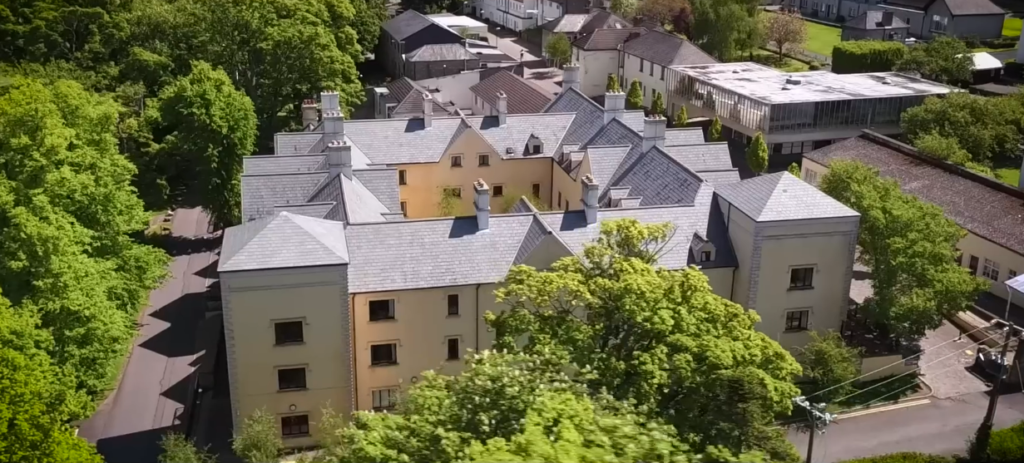
The expansion is part of a larger master plan, according to principal Darren Pitt, and these announcements typically use language from master plans with a thud. However, it has some weight here. It is not intended for a school that started out as an ecumenical experiment with a few hundred students to become the center of education for a developing suburb. The fact that it has says something about the area and most likely about the families relocating to Andrews Farm who are looking for something more than the closest option.
There was a fittingly historic vibe to the opening ceremony. Like their predecessors Ian George and Leonard Faulkner, who founded the college in the first place, Anglican Archbishop Geoffrey Smith and Catholic Archbishop Patrick O’Regan jointly unveiled the commemorative plaque. There is something genuinely unique about a school that can trace its founding logic back to a specific moment and still have that logic appear in the ribbon-cutting decades later. It’s possible that this kind of symbolic continuity matters more to institutions than to students.
The project appears to be at a specific intersection of community investment and government interest in how rapidly expanding suburbs are resourced, as evidenced by the presence of ministers for both education and planning at the opening. Andrews Farm has a long history of education but is not a wealthy postcode. It’s still developing, and schools like this one play a role in determining whether localities like it develop into cohesive communities or merely attract residents.
It’s difficult to ignore how much the building conveys confidence in the school’s identity, enrollment growth, and the notion that northern Adelaide students should have facilities that don’t feel like a compromise. It’s unclear if the master plan’s subsequent phase will be similar to this one. For the time being, the campus has a tangible declaration of intent that is hard to dispute.
