

On paper, a certain type of math seems cold, but in reality, it can be disastrous. According to UNICEF’s most recent estimate, Afghanistan may lose over 25,000 women by 2030—roughly 20,000 female teachers and 5,400 healthcare workers—whose absence will be felt long after the headlines have faded. Until you imagine a real classroom that is half-empty or a maternity ward in Kabul that has no women left to staff it, the number seems abstract.
Although the politics surrounding it are complex, the mechanism behind this is not. Afghanistan has prohibited girls from attending secondary school since September 2021. Over a million of them have already missed that opportunity. In a nation that already has some of the lowest rates of female literacy in the world, UNICEF predicts that if the policy continues through the end of the decade, the number will double, leaving over two million girls without an education beyond the primary grades.
The framing of a dual crisis is what sets this warning land apart from others. Afghanistan’s girls are not the only ones lacking in education. At the same time, it is witnessing its current pool of skilled women age out of the workforce, retire, or quit, with no one to replace them. Between 2023 and 2025, the percentage of women in the civil service fell from 21% to 17.7%, a sharp decline in just two years. During the same period, the number of female basic education teachers decreased from approximately 73,000 to roughly 66,000, a decrease of more than 9%.
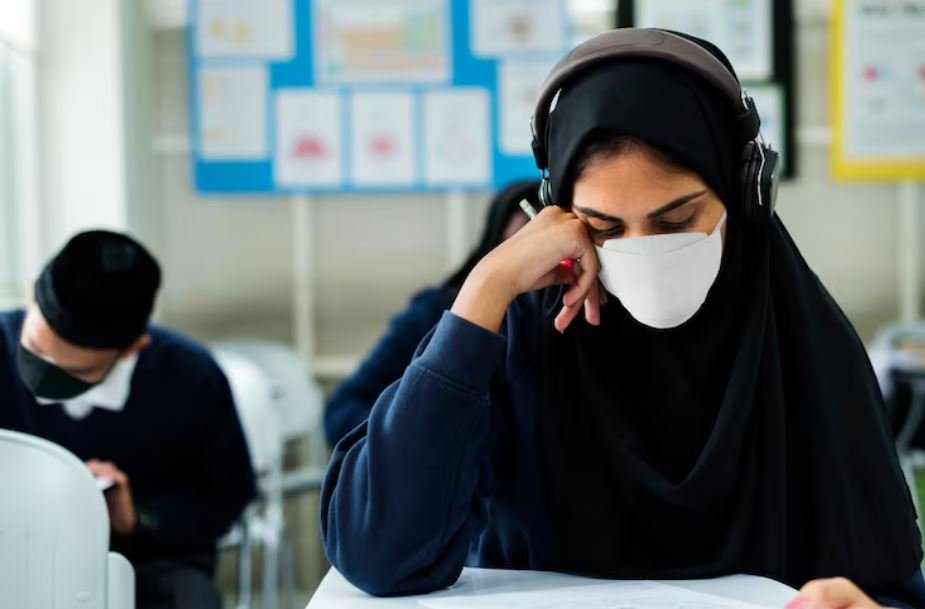
Beyond the obvious moral argument, it is worthwhile to consider why this is important. When a woman teaches girls in Afghanistan, there is a statistically significant increase in their likelihood of continuing their education. If the teacher is removed, you lose more than just one job; you also lose the circumstances that initially attracted other girls. compounds that have an impact. Reading UNICEF’s analysis gives the impression that the organization is more concerned with a feedback loop that keeps getting tighter than with a single bad policy.
Perhaps a more acute version of this issue exists in the healthcare industry. In many parts of Afghanistan, social norms still prohibit women from receiving medical care from male physicians. As a result, a lack of female healthcare professionals can not only reduce a workforce but also prevent women and children from receiving care at all. Health services for mothers and newborns are the most vulnerable. It’s difficult to ignore how subtly this kind of harm spreads, manifesting itself in unattended births and postponed prenatal visits rather than in dramatic headlines.
Additionally, there is a cost associated with it, which often attracts attention where moral arguments by themselves have not. According to UNICEF, the current yearly cost of these restrictions is approximately $84 million in lost economic output; this amount is predicted to increase as more women retire from their careers and no replacements become available. It’s unclear if that figure puts anyone in a position to alter policy. So far, it hasn’t.
Afghanistan cannot afford to lose the future teachers, nurses, doctors, midwives, and social workers that the nation still needs, according to UNICEF Executive Director Catherine Russell. After reaching hundreds of thousands of children—mostly girls—through unofficial channels, the organization continues to run emergency support programs and community-based learning initiatives. It’s a temporary solution, helpful but constrained, the kind of endeavor that maintains a tiny light without resolving the more significant blackout.
Looking at report after report on this, the most striking thing is how predictable the trajectory already appears to be. Here, no one is speculating about the result. The data points in one direction, and that’s probably where it will go unless policy is reversed.
