

The house at 1440 Chequessett Neck Road in Wellfleet, Massachusetts was easy to love. Shingled exterior, sweeping views of Cape Cod Bay, an oversized kitchen that photographed well, and enough en-suite bathrooms to make any guest feel at home. It was the kind of property that makes people throw logic out the window.
John G. Bonomi Jr. threw quite a bit out the window in November 2021. A retired New York attorney, Bonomi paid $5.5 million for the house — full asking price — despite the fact that local newspapers had already described it as “endangered.” The foundation sat roughly 14 feet from the edge of a Wellfleet bluff that was eroding at a rate of six to seven feet per year. At that pace, the math wasn’t difficult. The house was going into the bay long before any standard mortgage would mature.
Less than four years later, it did — or nearly. In February 2025, Bonomi had the structure demolished before it could collapse on its own. By then he had already spent roughly $250,000 tearing it down and another $500,000 trying to slow the erosion. The land it sat on was later assessed at $385,000. He still owes $3.85 million on the mortgage.
So Bonomi did what lawyers sometimes do. He sued. Filed in October 2025 in the U.S. District Court for the Southern District of New York, Bonomi’s lawsuit against JPMorgan Chase makes two central arguments. The first is that he was experiencing an “uncontrollable manic psychosis” at the time he signed the mortgage — a symptom, his attorneys argue, of his diagnosed bipolar disorder, which has been documented since 2009.
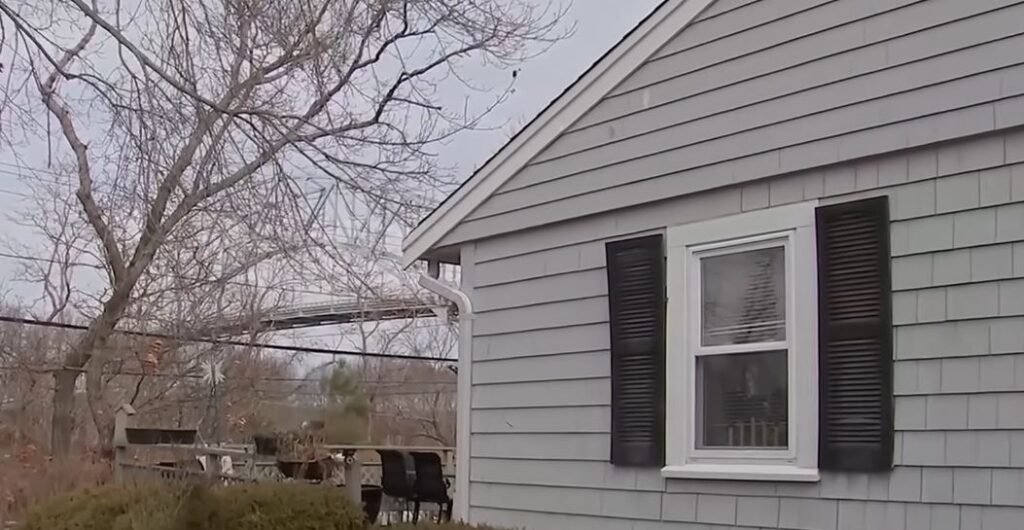
The second is that the bank should have known better. The suit alleges JPMorgan Chase commissioned appraisals and demanded engineering documentation, meaning it had access to the same erosion data that was already circulating in local media. “No rational person,” the complaint states bluntly, “would have considered purchasing the Property, and certainly not at the full asking price.”
It’s a striking argument for a retired attorney to make about himself. The lawsuit essentially says: the bank saw what everyone else saw, lent millions anyway, and should now bear the consequences. JPMorgan Chase has denied the allegations, stating it acted “at all times in good faith and in accordance with reasonable commercial standards.” The bank initially sought to have the case dismissed, but in May 2026 filed a formal answer, leaving Bonomi, as the response tersely put it, “to his proofs.”
There’s a legal question here worth taking seriously, even if the case invites skepticism. In New York, courts have allowed mental health conditions to serve as grounds for voiding contracts under certain circumstances. The bar is high, legal scholars note, but it’s not impossible. Bonomi is seeking a jury trial, which suggests his attorneys believe the human dimension of the story — a man in psychiatric crisis making a catastrophic financial decision — carries weight beyond the paperwork.
But there’s a broader question the lawsuit raises that goes well beyond one man and one eroding cliff. How does a $5.4 million mortgage get approved on a property that local news had already labeled at existential risk? The answer, it turns out, may be less about negligence than about how coastal real estate markets actually function. Appraisals are driven by comparable sales, not longevity projections. And along Cape Cod, buyers have been paying millions for oceanfront homes even as erosion worsens. Median listing prices in Wellfleet more than doubled between 2019 and 2024. When the market keeps climbing, the paperwork tends to follow.
Marine economists who study coastal property values point to a persistent tension: the ocean view that makes a property worth millions is often the same thing quietly eating away at its foundation. Those two facts are, as one researcher put it, very difficult to separate in an appraisal. Buyers absorb the risk. Banks price against current demand. And in a rising market, the hazard can look like it has no present value impact at all — until it does.
Watching this case move through federal court, it’s hard not to feel that it exposes something the real estate and lending industries would prefer to keep quietly unresolved. Bonomi’s situation may be unusual in its scale and its legal framing. But coastal properties facing accelerating erosion are not unusual at all. A 2018 report estimated 10,000 Cape Cod homes were at risk of chronic flooding by 2100. Some of those homes are being bought today, with mortgages, at record prices.
Whether Bonomi wins or loses, the case is likely to make some lenders a little more careful about what they put their name on — and what the waterfront view is actually worth when the bluff beneath it is disappearing.
