

The concept has an almost antiquated feel to it, which may be precisely why it works. One of the sustainability badges offered by OMEP UK, the British division of the World Organization for Early Childhood Education, is based on the seemingly simple requirement that a child be able to name three wild birds before entering a primary school. not commit a multiplication table to memory. not be able to identify letters on a flashcard. Simply identify what a wood pigeon, robin, or magpie is observing.
It sounds modest—almost too modest for an award program for education. That’s the point, though. The ability is part of a program called the Education for Sustainable Citizenship passport, where kids can earn stickers for small, consistent acts of environmental awareness, such as sorting recyclables or identifying habitats. One of the first challenges is bird identification, which OMEP UK views more as a gateway habit—the kind of thing that, once a child starts doing it, tends to lead somewhere bigger—than as trivia.
Even though OMEP UK doesn’t always use scholarly language, there is research to support this. Researchers conducted a six-week bird-feeding project in eight primary schools in Brighton and Hove, and after just a few weeks of observation, children who had previously hardly noticed birds showed genuine, quantifiable improvements in both knowledge and attitude, according to a widely cited study. The kids who had the least amount of exposure to nature at the beginning benefited the most. That particular detail is important. It implies that the benefit has nothing to do with birds. Giving kids a reason to look up is important, especially for those who live in apartments and cul-de-sacs with little green space.
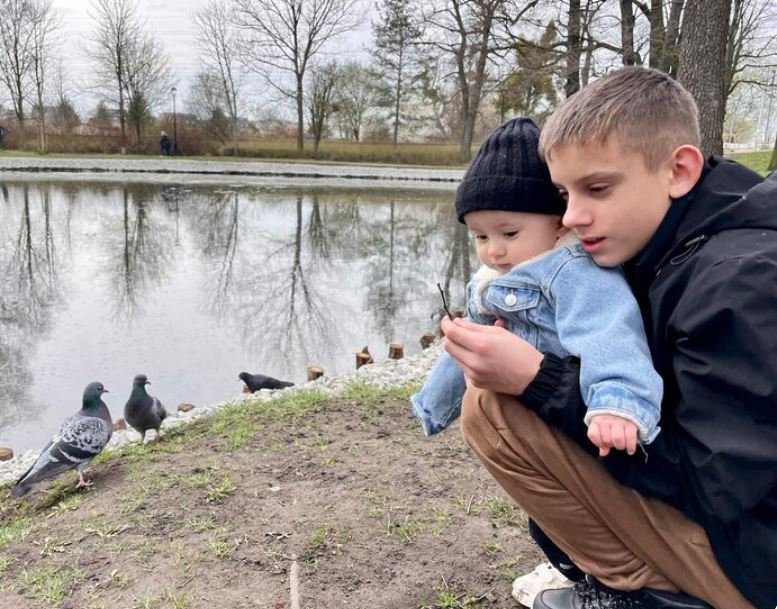
It’s easy to picture how this would actually work when you stroll past a nursery on a gloomy Tuesday morning. A blackbird picking through wet grass is pointed out by a staff member. The name is repeated by a four-year-old, who may make a mistake the first time and then tries again. Right now, it’s not particularly noteworthy. However, when a nursery chain like Tops Day Nurseries, which adopted the OMEP framework as part of its own sustainability push, repeats this small practice every day for an entire term, it begins to add up to something like fluency with the outdoors.
It is reasonable for skeptics to wonder if this is merely nostalgia disguised as policy, a yearning for a Britain of ramblers and hedgerows that isn’t quite like the lives of most children today. That’s a valid question, and OMEP UK doesn’t provide a complete response. The organization does contend that sustainability education is ineffective when it is added to a curriculum as an afterthought, based on its own audit work conducted in ten countries between 2010 and 2014. It cannot be taught; it must be lived. Giving a bird a name is a small act of attention, and when attention is given enough times, it becomes care.
It’s genuinely unclear if this type of badge-based learning truly alters behavior in later life or if three birds are the right number. The Brighton study only monitored results for a single year, and once the novelty wears off, enthusiasm for bird feeders does tend to wane. However, there is a subtle logic to beginning environmental education with a sparrow rather than a catchphrase. It has a good chance of sticking because it asks very little of a four-year-old.
