

Benito Antonio Martínez Ocasio was quietly uploading music to SoundCloud in between shifts while bagging groceries at an Econo supermarket in Puerto Rico before he was selling out stadiums or performing at Super Bowl halftime. It’s worth pondering that picture of a young man silently constructing something massive while working a checkout line. Compared to most biographies, it provides more information about his journey.
Growing up, Bad Bunny lived in Vega Baja, a small town that he has said is definitely not a city. He enrolled in the University of Puerto Rico at Arecibo’s audiovisual communications program after graduating from high school in 2012. The course addressed broadcasting, media production, and the practical aspects of creating content for viewers. By all accounts, his goal was to work as a radio host. Given that he eventually hosted Trap Kingz, Beats 1’s first Spanish-language radio program, in 2017, there’s something almost circular about that now. He arrived, but not via the path that anyone had intended.
He did not complete his degree before leaving UPR-Arecibo. It’s a small biographical detail between the record deal and the supermarket job that is almost always mentioned as a footnote in most profiles. It’s worth stopping, though. Seldom is dropping out a wise choice. Usually, it’s an uncomfortable, uncertain wager made under duress. That wager ultimately paid off for Martínez Ocasio in ways that seem almost unbelievable: six Grammy Awards, a historic Spanish-language Billboard 200 chart-topper, and the first Spanish-language album to win Album of the Year in 2025.
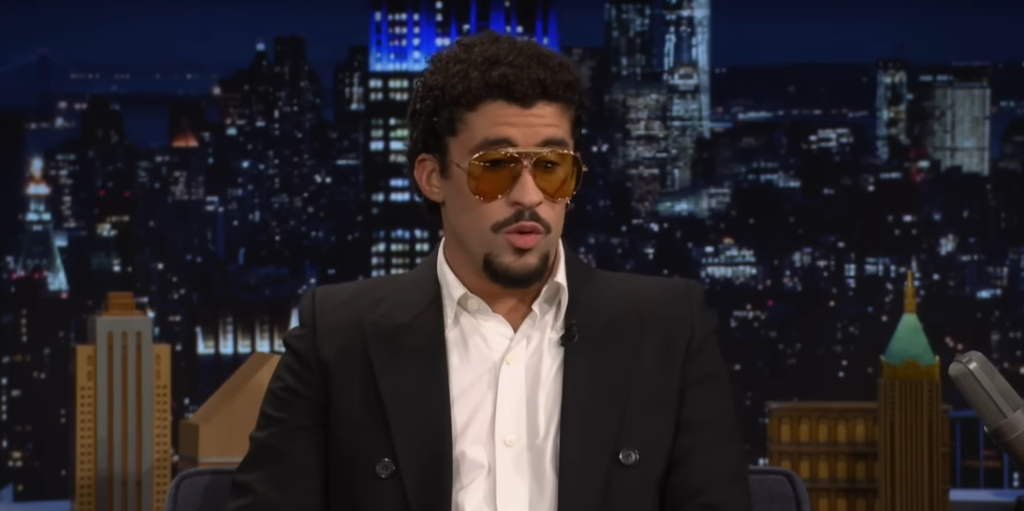
Years later, the education discourse surrounding Bad Bunny has completely changed, which is truly fascinating. Not only are universities recognizing him, but they are also researching him. According to reports, the first college in the nation to offer a course devoted to his work was Wellesley College. According to associate professor Petra Rivera-Rideau, the course, “Bad Bunny: Race, Gender and Empire in Reggaeton,” is more intense than it first appears. There’s more going on in that class than just lyrics analysis. The longer history of colonialism on the island, gentrification, U.S. tax policy, and Puerto Rico’s debt crisis are all issues they are dealing with. There, Bad Bunny is more of a doorway than a topic.
A similar strategy has been adopted by Loyola Marymount University. Chicana/o and Latina/o Studies assistant professor Vanessa Díaz created a course titled “Bad Bunny and Resistance in Puerto Rico.” One of his songs is the focus of each week’s content. Students navigate the political aspects of reggaeton, issues of racial identity, gender fluidity, and what it truly means to be authentically yourself in public through that framework. Next was San Diego State University. The Romance Studies department at Duke University has also taken an interest in his work. Scholars are discovering that his catalog facilitates discussions that sometimes drier course materials are unable to. This has become something of a pattern.
Observing all of this, it seems as though Bad Bunny’s own educational path, which is unfinished by conventional standards, has become strangely instructive in and of itself. He studied communication, left before earning his degree, and went on to communicate with hundreds of millions of people in ways that influenced the global spread of Spanish-language music. Perhaps he received more from the UPR-Arecibo audiovisual program than is acknowledged. Or perhaps he would have managed to find his way anyhow. Most likely, both statements are true simultaneously.
His story subtly illustrates what universities appear to understand: authentic learning and formal education don’t always coexist. The child who studied media production while dreaming of something greater, who sang in a Catholic church choir until he was thirteen, and who committed Daddy Yankee’s rhythms to memory from the radio—that child took in an education that no curriculum fully prepared for him. In a way, the professors who are now creating classes based on his life are merely making up for what has already occurred.
