

It’s pretty amazing that LeBron James, whose name is now on a school of education at a university, never went to college. In 2003, he skipped all the normal steps and went straight from St. Vincent–St. Mary High School to the NBA. And yet, not many people his age have done more to make education the most important thing in their public life.
LeBron didn’t have a stable childhood in Akron, Ohio. Gloria, his mother, was only sixteen years old when he was born. The family moved around the city’s rougher areas, looking for a stable place to live. From what he said, the environment was harsh at times. Friends died young. The odds were not in our favor. When he finally moved in with the Walker family, where he started playing basketball around age nine, things changed. Structure showed up. The goal did too.
His time at St. Vincent–St. Mary was less about grades and more about shaping him. By his second year, he was on the cover of Sports Illustrated, which made NBA scouts come to his high school gyms. It was never a question of if he’d turn pro, but when. As a senior, he scored more than 31 points per game on average, won three state titles, and graduated in 2003 without having any extra seasons. For him, college wasn’t the right choice. It was the NBA.
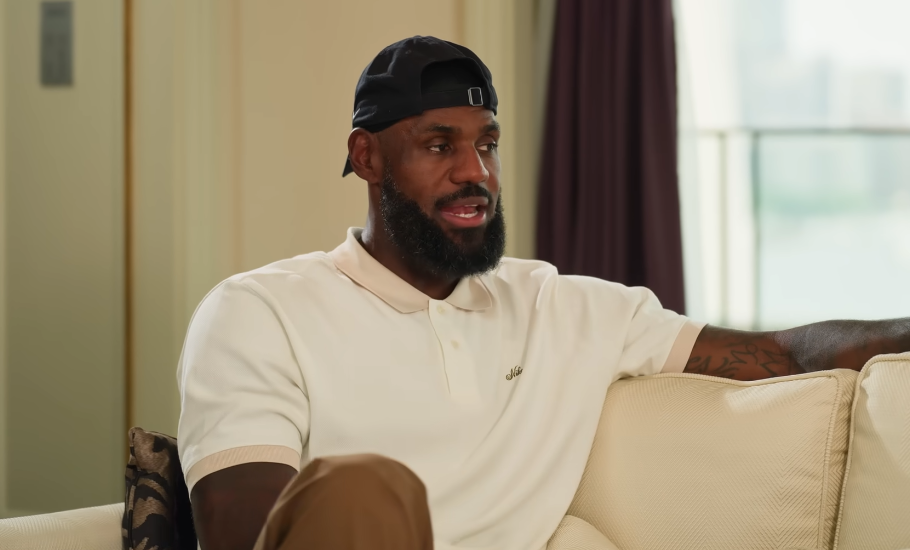
The interesting thing is that his choice to skip college never seemed to limit his thinking. If anything, his life lessons learned through hard times don’t show up on his transcript. He has said that he felt bad about seeing people from his childhood fall into cycles of crime or poverty and wondered why his story didn’t go the same way. This kind of question doesn’t belong in a classroom. It’s what you get from living through something.
The I Promise School, which opened in Akron in 2018, seems to be the best reflection of everything LeBron learned as a child. It’s a public school in the Akron system that was built just for kids who are in danger. The kids who go there have problems that remind him of his own childhood: things going wrong at home, school being interrupted, and stress from things they can’t change. It seems like LeBron didn’t build the school so that people would praise it. It was built by him because Akron is still Akron and some debts are hard to leave behind.
Since then, the University of Akron has named its School of Education after the LeBron James Family Foundation. It is a full-fledged college with programs to get teachers’ licenses, bachelor’s degrees, and ways to get to graduate school. There are real requirements to get into the program, clinical placements, and faculty oversight. The name that goes with it is important, not because of how well he scores, but because the foundation has been stable and rooted in the community for years.
Still, it’s worth wondering if LeBron’s story of getting educated fits neatly into any one story. He dropped out of college. In terms of money and work, he didn’t need to. He didn’t give up on the idea that education is important, though. His story is probably more honest than most because it is torn between his personal path and his work for the public good. He never says that he is smart. He says he cares about kids who make him think of himself. That difference seems real.
He has built something important in Akron and has had a career that most people will spend decades talking about. Education isn’t just what goes on in school. It can happen when housing is unstable or when someone sees someone make a bad choice and decides not to do it again. That being said, LeBron James may not have gone to college, but there’s a strong case that he learned everything he knew from something harsher and used it all.
