

There is a big number that keeps coming up in the field of education research. It stops people in the middle of their sentences. 17.8 quadrillion dollars. As a direct result of COVID-19 school closings, this generation of kids is expected to lose that much in living wages over the course of their lives. It’s not just a guess made out of thin air. It comes from a report that the World Bank, UNESCO, and UNICEF put together together. It is a lot worse than the $10 trillion estimate that those same groups made in 2020.
The space between those two numbers tells a story by itself. At first, researchers and policymakers thought the damage was bad but not too bad. When schools started up again, kids would catch up, and the systems would deal with the problems. It turned out that assumption was more hopeful than true.
It’s harder to accept what the new data shows. Before the pandemic, 53% of children in low- and middle-income countries were in what researchers call “Learning Poverty,” which means they couldn’t read or understand a simple text by age ten. Based on the new modeling, that number may now be closer to 70 percent. This isn’t a number about test scores. This sentence is about the future.
Simulations have been warning about this for over a year, and now proof is coming from Brazil, Pakistan, rural India, South Africa, and Mexico. There is a real, measurable loss of learning, and in some countries it is roughly related to the length of time schools were closed. Teenagers and young adults in two Mexican states did much worse in both reading and math. Reading losses were not as bad as math losses. And younger kids, girls, and students from low-income families were hit the hardest. Which, if you think about it, is pretty much what you would expect when a crisis takes away the one thing that many of these kids had that helped them feel like they belonged.
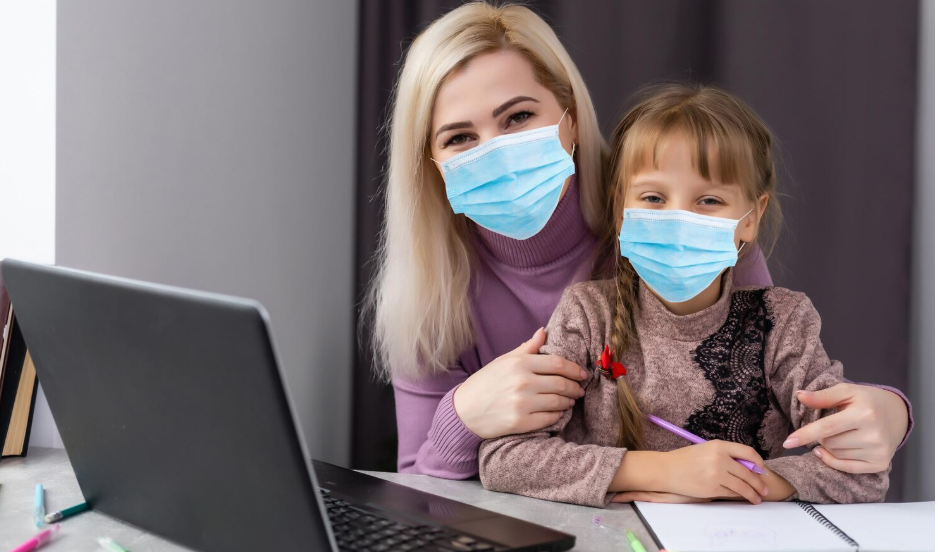
Let’s take a moment to think about that last point. And for millions of kids around the world, school is more than just a place to learn. It keeps you safe. By working as a child. From getting married young. From violence against women. That safety took away when schools closed. Girls lost ground very quickly, and not just in reading and math. They also lost the safety and stability that come with going to school. This has a kind of compounding vulnerability that is hard to fully describe in percentage points.
It was tried almost everywhere to learn online. It was put in place by almost every government in some way. But the quality was very different, and most of the time it was only a partial replacement for real classroom instruction. More than 200 million students in low- and lower-middle-income countries live in places that were not set up to provide meaningful remote education. These places don’t have any devices, reliable electricity, or internet access. Video calls were made by kids from wealthier homes. Each week, the kids in the poorer ones fell further behind.
Researchers are now struck by how unevenly the crisis’s damage was spread. They never really shared their pain in the same way. Children who were already on the outside took on the most loss because they were already behind the most.
The report suggests three ways to move forward: combining curriculums, making class times longer, and, most importantly, using targeted instruction, in which teachers teach based on where students are instead of where the curriculum thinks they should be. It seems pretty clear. To make it work, a lot of money needs to be spent on teacher training, tests of learning, and data systems, which most of the countries that are affected don’t have right now.
Education got less than 3% of the money that governments spent on pandemic stimulus packages. That number tells you a lot about how seriously this crisis was taken.
There is still time to stop the worst things from happening. But not much, and not until there is a real change in the political will. Some of the kids who fell behind during these years are still in school. They need to know if the systems around them will change fast enough to make a difference.
